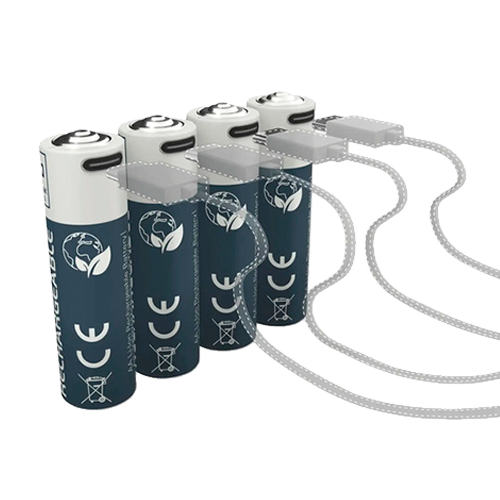
We’ve all been there: the moment you need a device, the batteries are dead. Or how often do we throw away alkaline AA or AAA batteries, especially in things like wall clocks, remote controls, or flashlights?
Far too often, unfortunately. The concept of disposable batteries has never been the best, especially from an environmental perspective. So how can we remedy this?
There are rechargeable batteries in the common AAA and AA sizes, based on nickel-cadmium (NiCd) or modern nickel-metal hydride (NiMH) technology. In the latter case, Panasonic’s Eneloop batteries* are worth mentioning, although they are now manufactured to a lower standard than before and have some side effects.
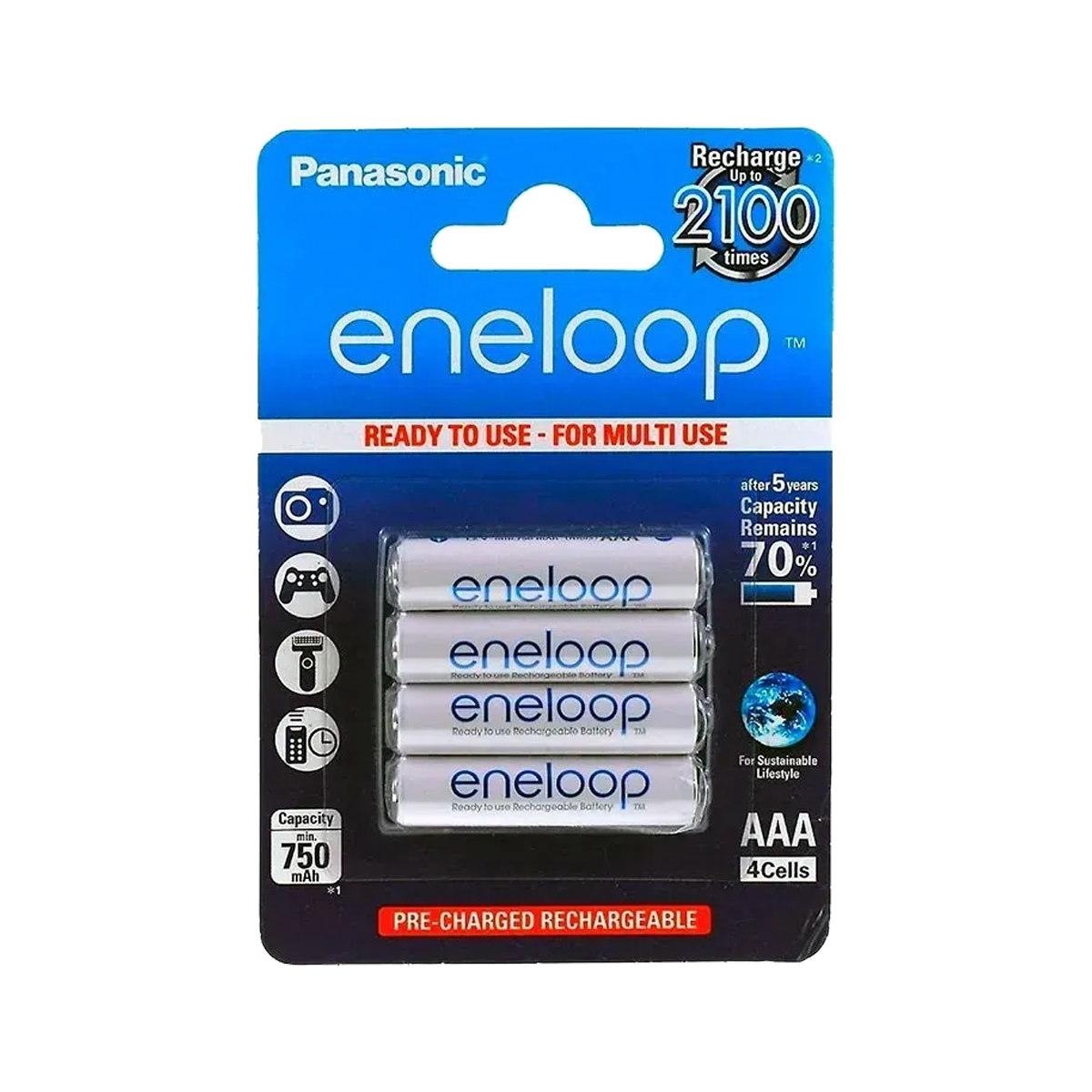 ⧉ Panasonic
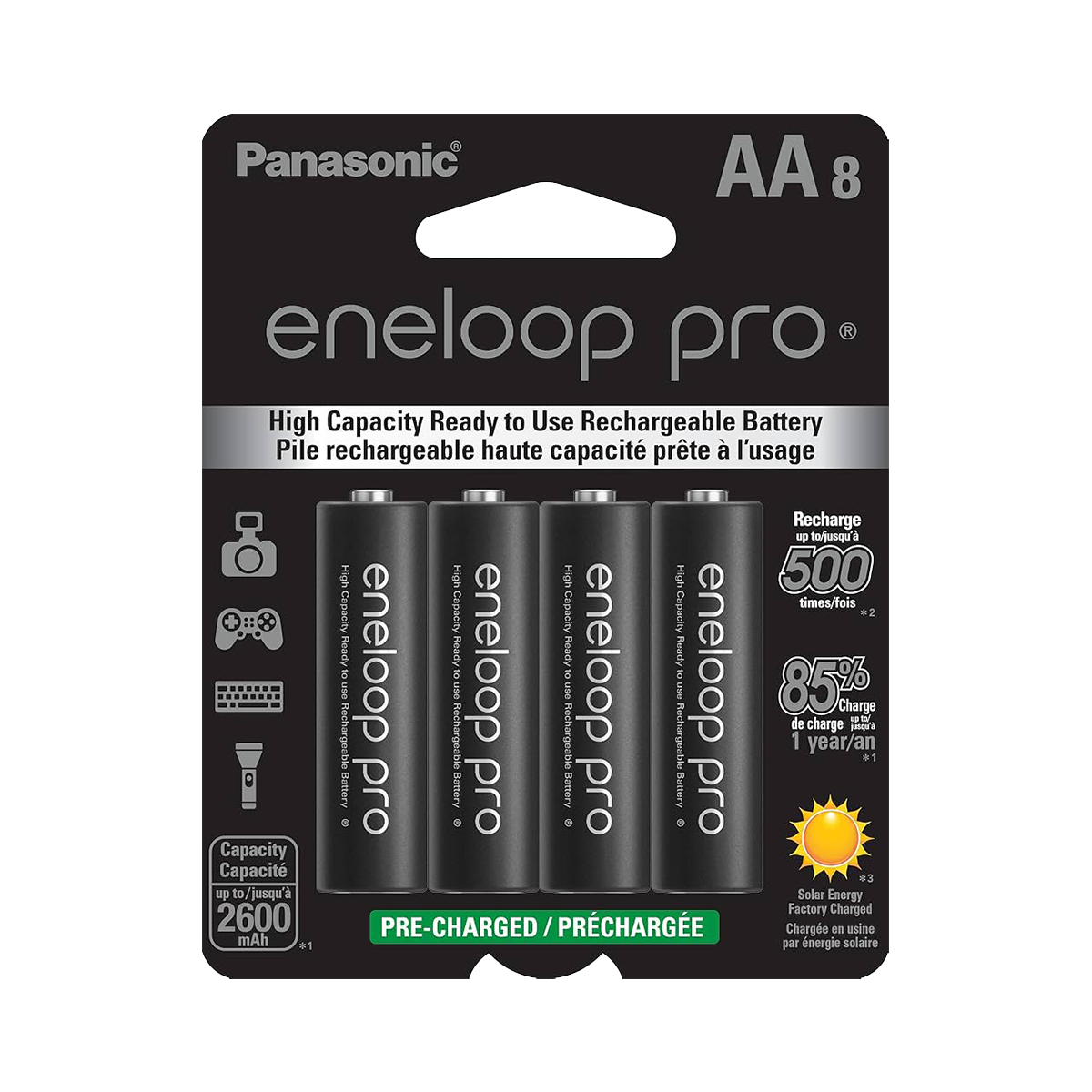 ⧉ Panasonic
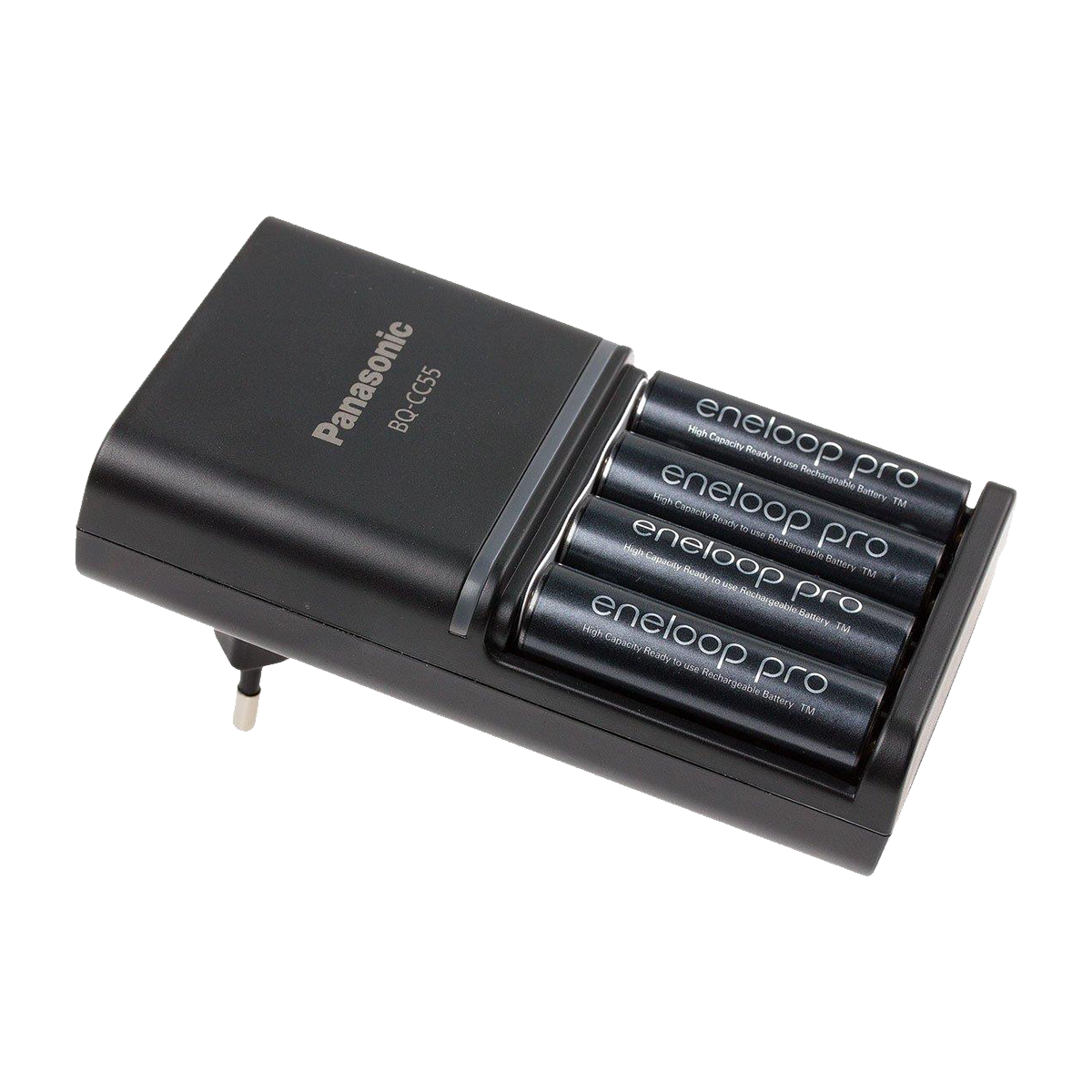 ⧉ Panasonic
Both types of cell chemistry have the peculiarity of delivering only 1.2 volts when fully charged, instead of the 1.5 volts expected by many devices from a standard alkaline battery. If several batteries are required, the discrepancy naturally multiplies. In my case, the problem was most noticeable with our Brother PT-D600VP*, a label printer that can be powered either by a power supply or AA batteries. A total of six batteries are required, which, at 0.3 volts less per cell, amounts to a difference of 1.8 volts. So you could say that for this device, slightly more than one cell is already empty.
Of course, the label printer also works with NiMH AA batteries, but noticeably for a shorter time. The difference is not visible, as there is no charge level indicator. The situation is different with some flashlights or, for example, Nintendo’s GameBoy, which only show a charge level of 2/3 with full NiMH batteries from the outset, because the voltage is simply lower than expected and the batteries are therefore never completely discharged.
In addition, both NiCd and Ni-MH batteries require special chargers, and it is possible to charge or store these batteries incorrectly, causing damage. It is also worth mentioning that both of these battery types have a certain degree of self-discharge, meaning that they become emptier over time when charged but unused.
What to do?
For several years now, there have been new types of AAA or AA batteries that have a lithium-ion polymer battery inside, together with BMS and control electronics in the positive pole cover. This is not ideal from a technological point of view, as these batteries also have cycle limits and wear out. From an electronic point of view, this is a good solution, but not for every application.
These new batteries are usually charged via a USB-C socket built into each battery, using a standard USB-C cable. A status LED that either changes color or flashes provides information about the current status. In my case, it is a green LED that flashes when charging and stays lit when the battery is full.
The big advantage is that these cells deliver a constant 1.5 volts thanks to an integrated DC-DC step-down converter, which is also the biggest disadvantage of many of these new types of batteries—the device cannot detect the decreasing capacity and the devices suddenly switch off because the battery itself delivers 1.5 volts until the end and then switches itself off.
There are some models that circumvent this problem by slowly lowering the output voltage. I was fortunate, if you can call it that, and use models from Verico (Pollin) and Lumak Pro (Hornbach), both of which simulate this behavior. Such models are also available on Amazon, even from well-known manufacturers*.
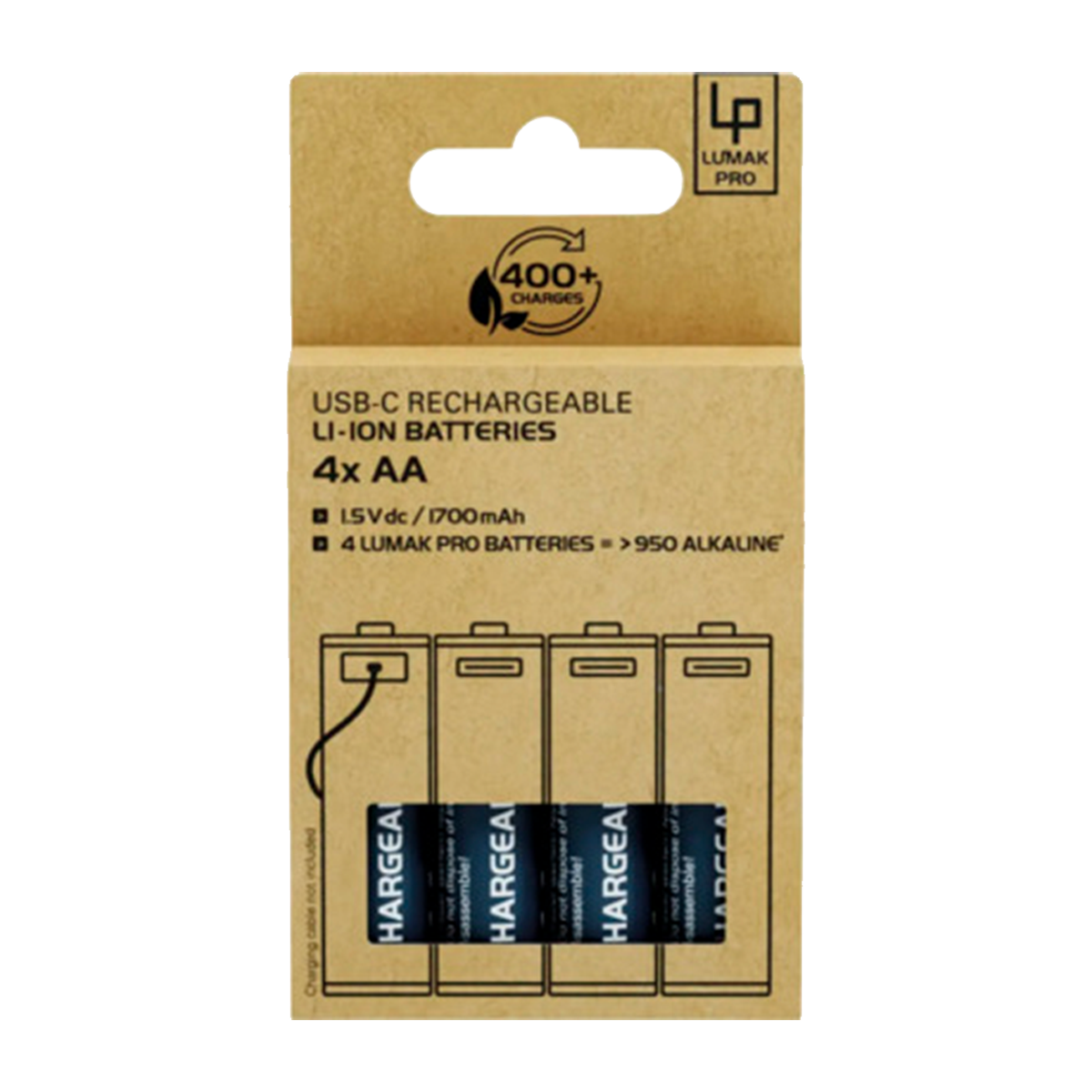 ⧉ Lumak
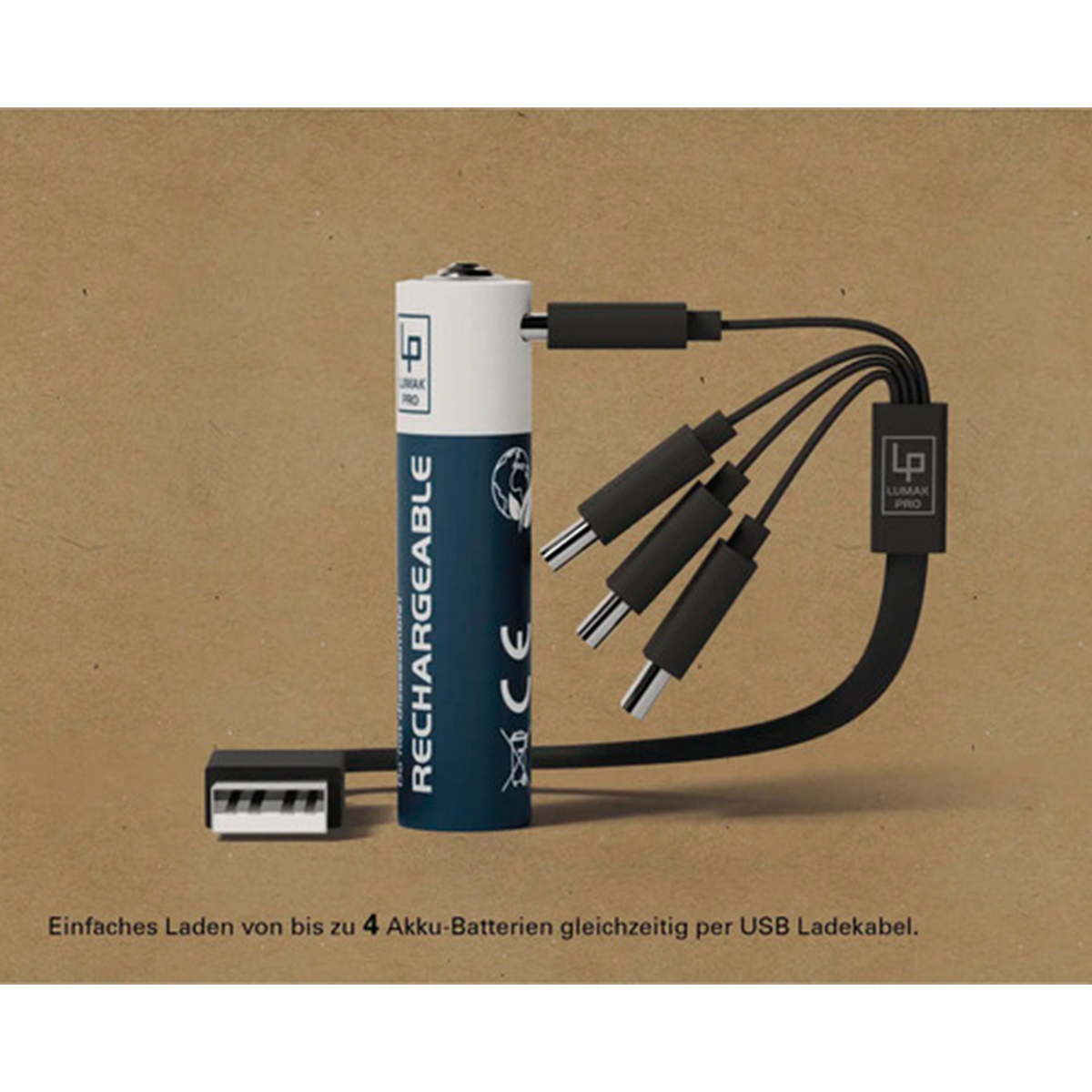 ⧉ Lumak
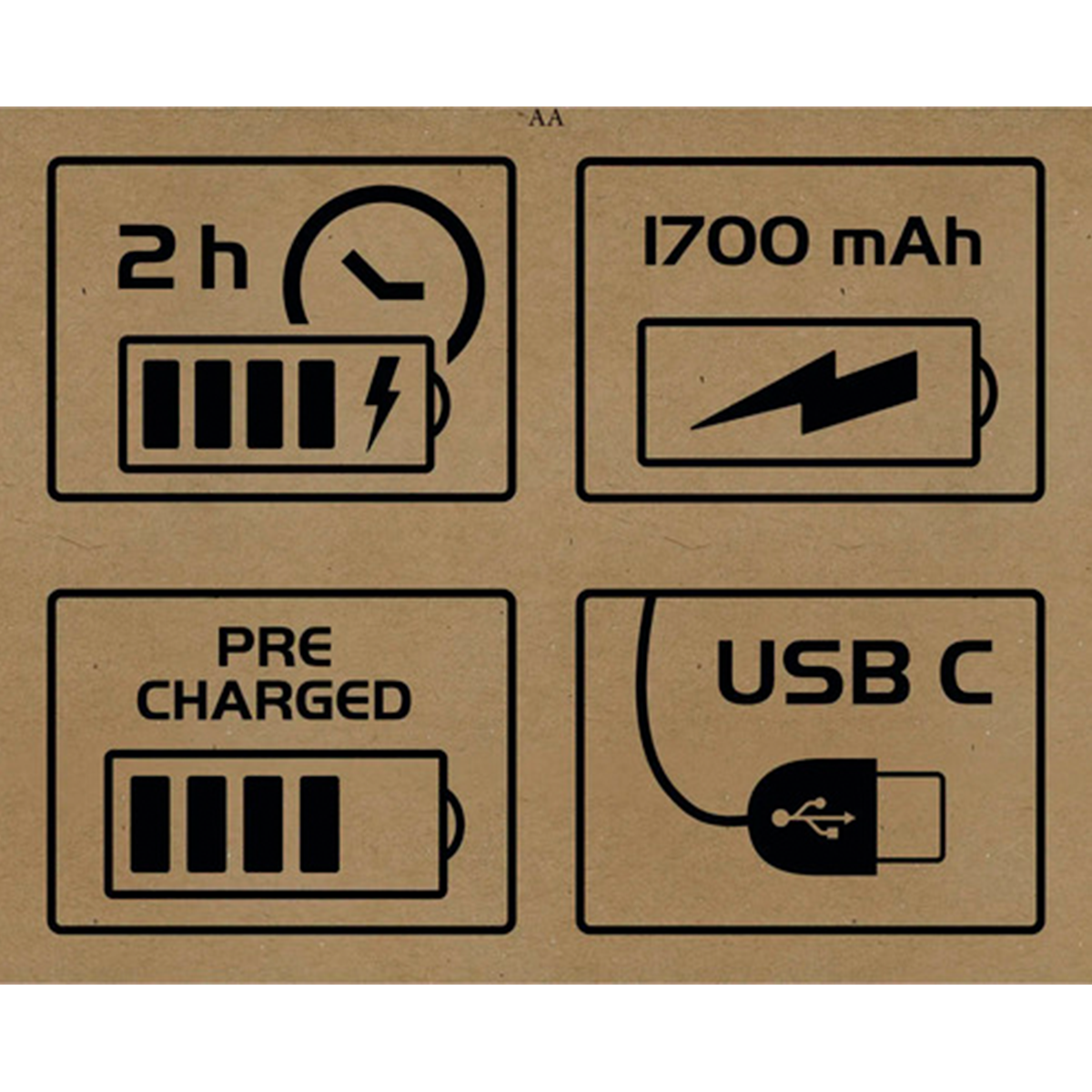 ⧉ Lumak
It is also important to note that the self-discharge rate of these Li-ion batteries is significantly lower than that of other battery types in AA and AAA formats.
Areas of application
There are areas of application where these new batteries are clearly superior to alkaline, NiCd, or NiMH batteries:
- Remote controls
- Controllers (Nintendo Wii, XBOX, PlayStation, etc.)
- Mobile consoles (GameBoy Pocket, Color, Advance)
- Wall clocks
- Temperature sensors and displays
- Smart heating thermostats
- Wireless mice and keyboards
- Flashlights
- Decorative lights
- Mobile BT speakers
- Various small power tools
- Instant photo or label printers
…basically anywhere where there are no thermal issues for Li-ion batteries and you can live with rapidly declining capacity towards the end.
Conclusion
These new batteries are great – but they’re usually also very expensive. To get started, I would recommend the very affordable AA batteries from Lumak Pro; you can’t go wrong with the price. However, the charging cable must be purchased separately. The price is due, among other things, to the relatively low capacity and the lack of accessories. We use several of these batteries everywhere and can highly recommend them.
There are also disadvantages. For example, these batteries are more susceptible to damage due to the integrated USB-C port, so you should handle them with care. Dirt can also cause problems. If the intended use is rather rough or wet, I would rather resort to Eneloop or alkaline batteries.
Only time will tell whether the specified charging cycles can be achieved.