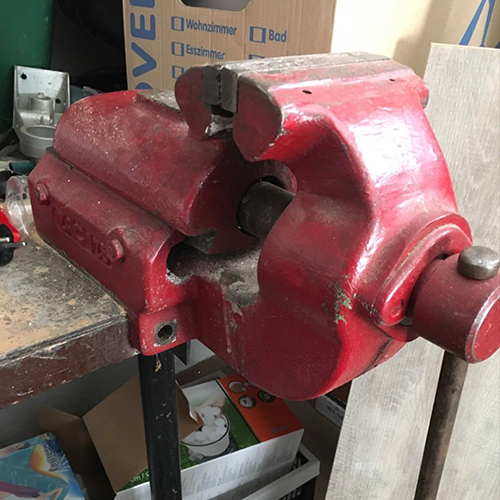
I had to make a decision for our workshop: new or used vise?
It had to be a solid design. If new, only something like Heuer* would be an option. I’ve had bad experiences with very cheap welded constructions.
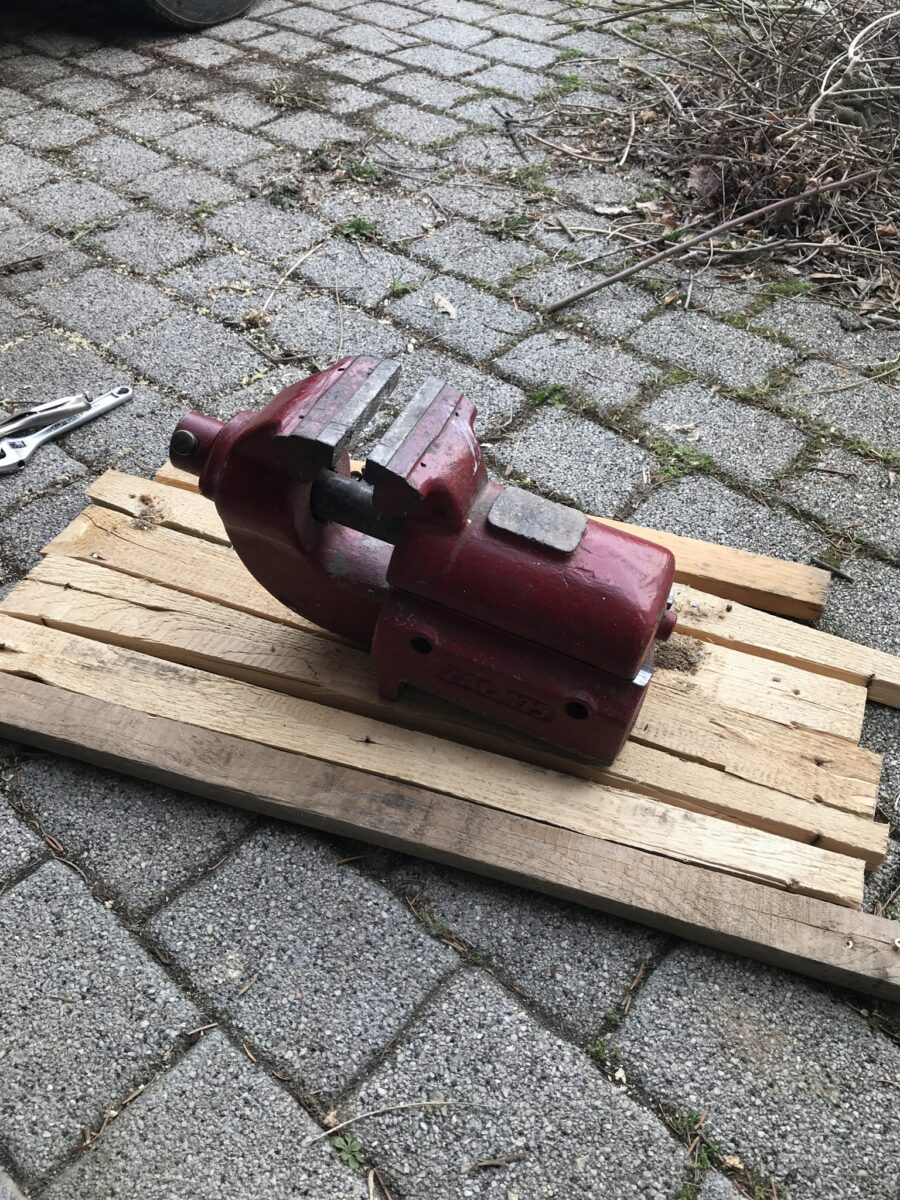
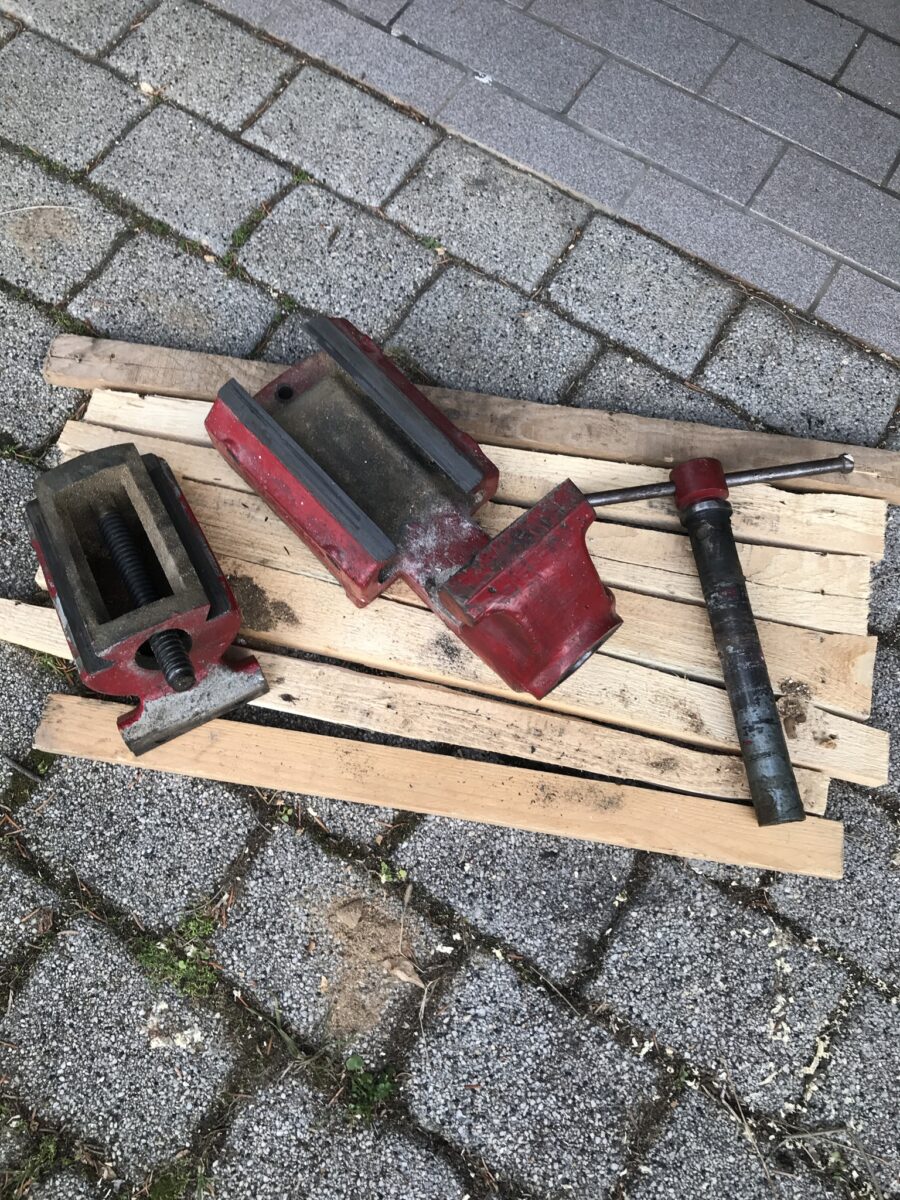
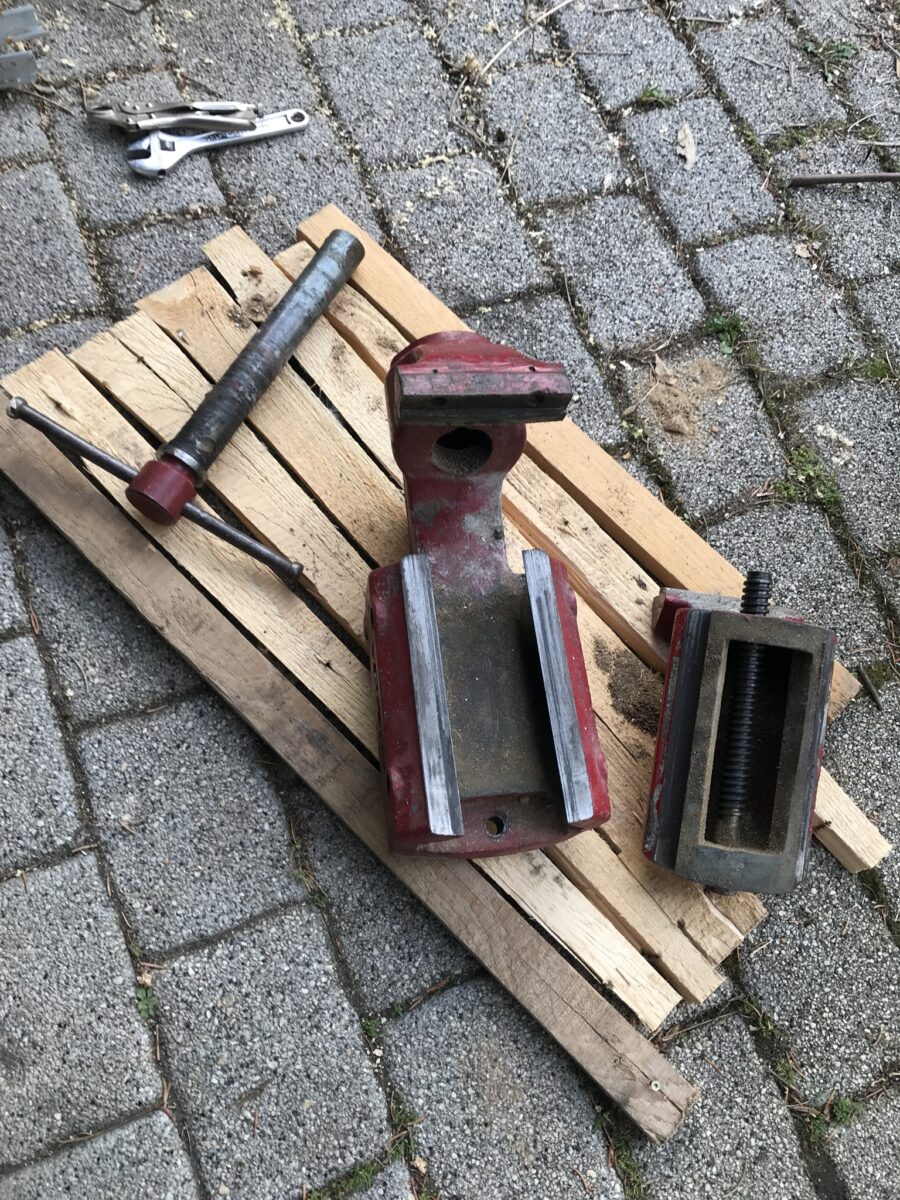
In the end, I opted for a used gray cast iron vise and bought it cheaply (€50) from a private ad. It would have been possible to use it as it was, but since I tend to clean and overhaul everything I buy second-hand, I took it apart straight away:

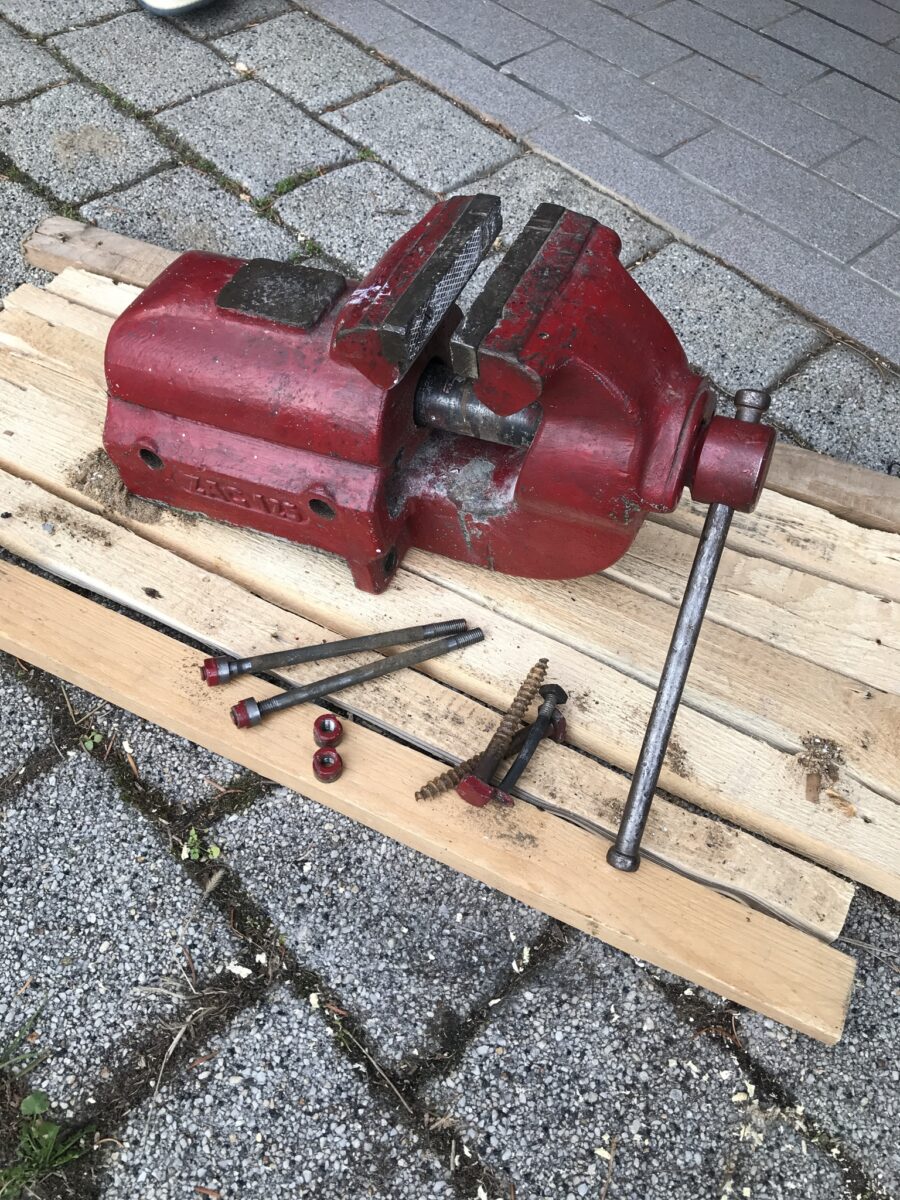

Cleaning
Then it was time to remove the old paint with a wire brush attachment* and thinner*, producing a lot of dirt in the process. This gray cast iron vise is quite heavy, which makes it a little difficult to handle—in the truest sense of the word. Underneath, everything actually looked fine, with no cracks or similar damage:
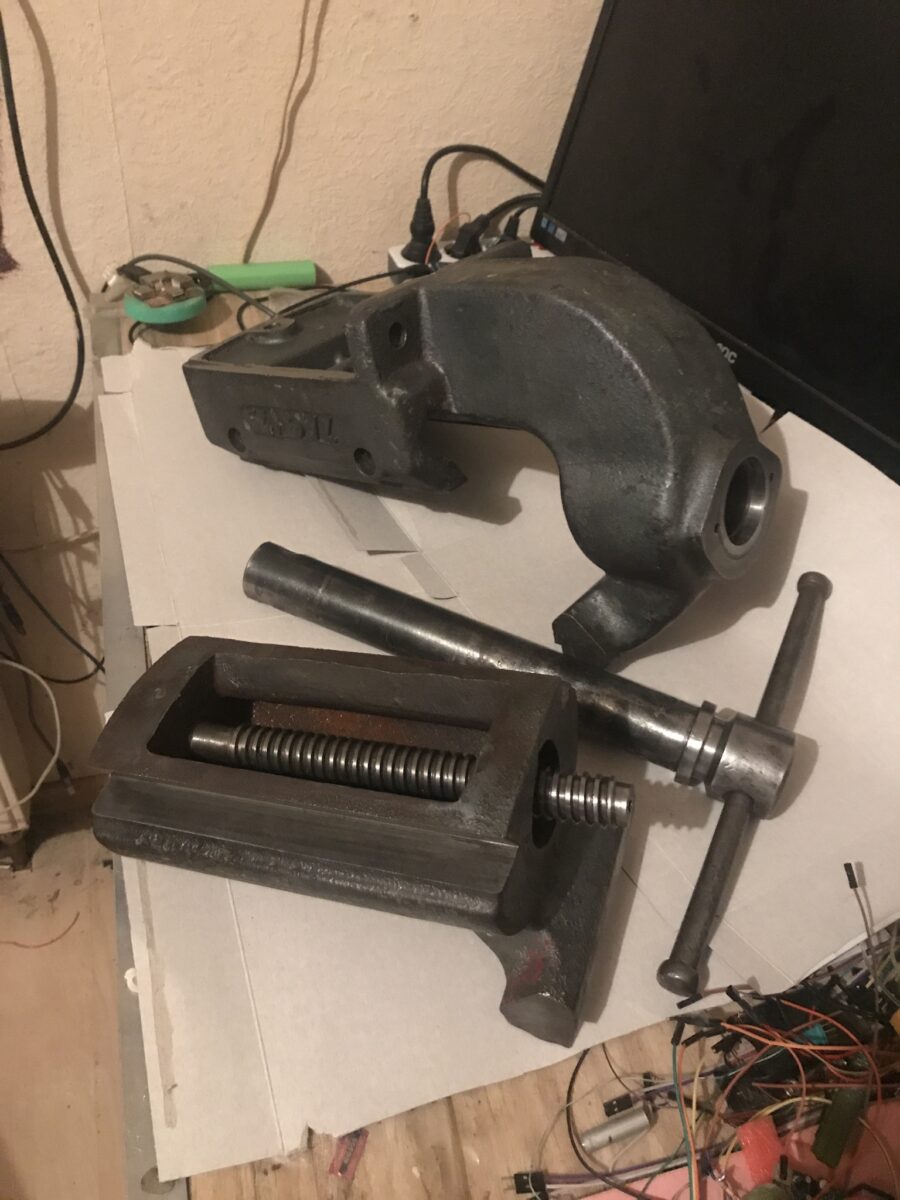
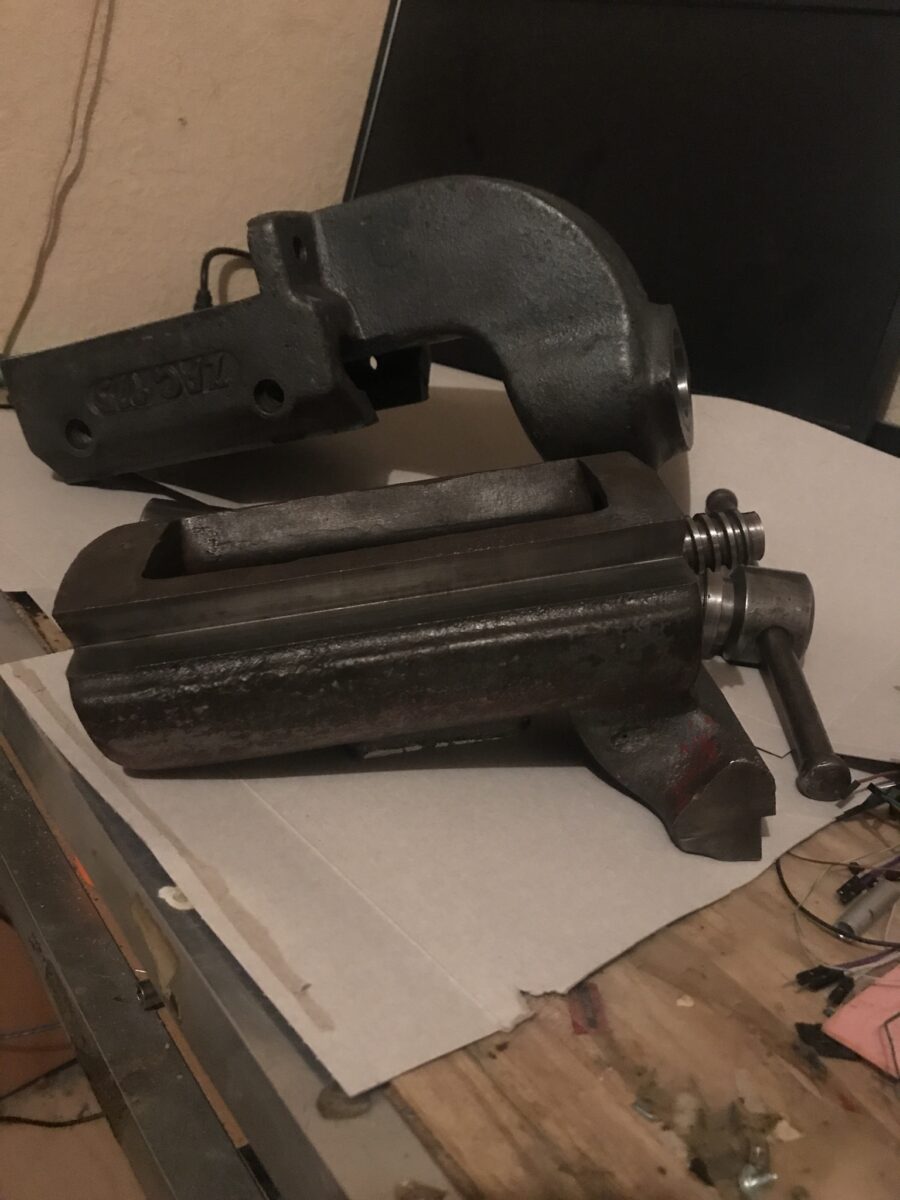
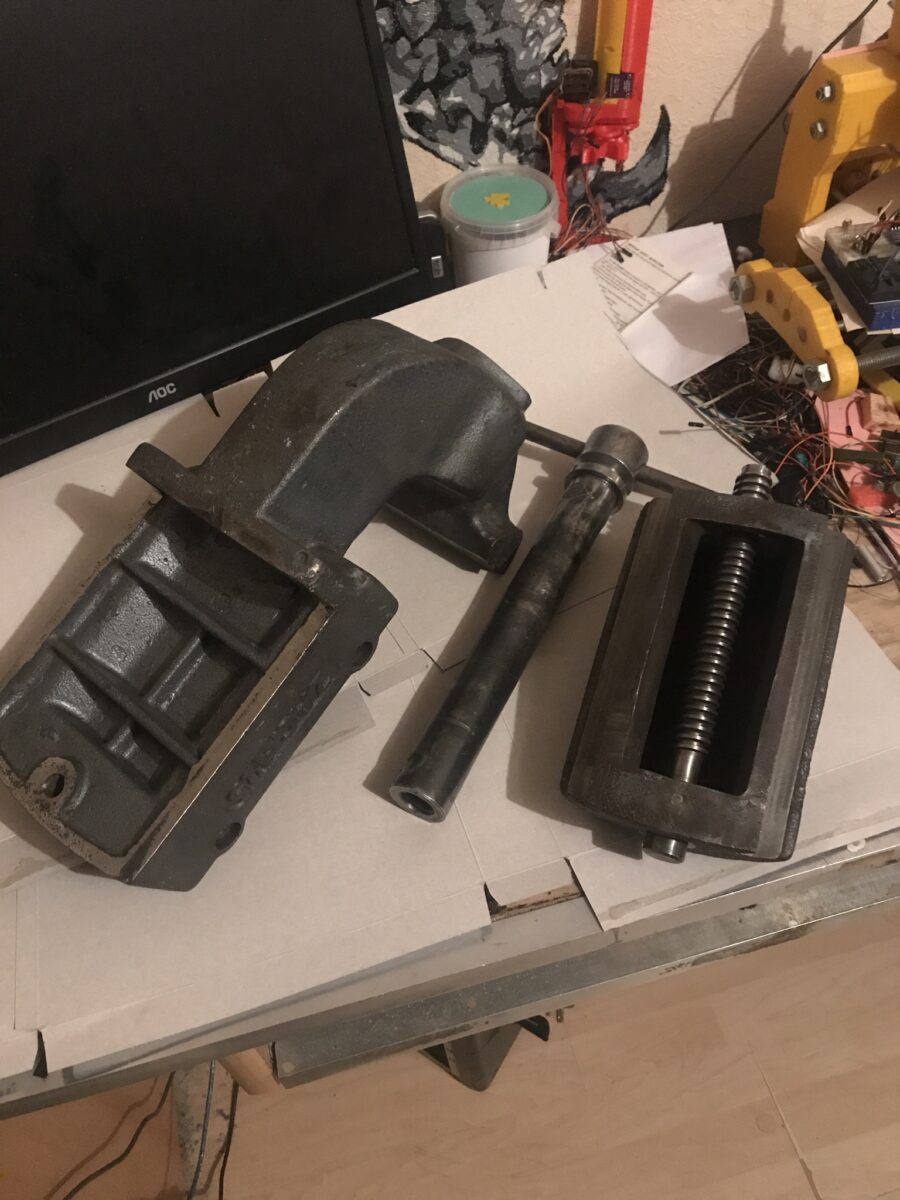
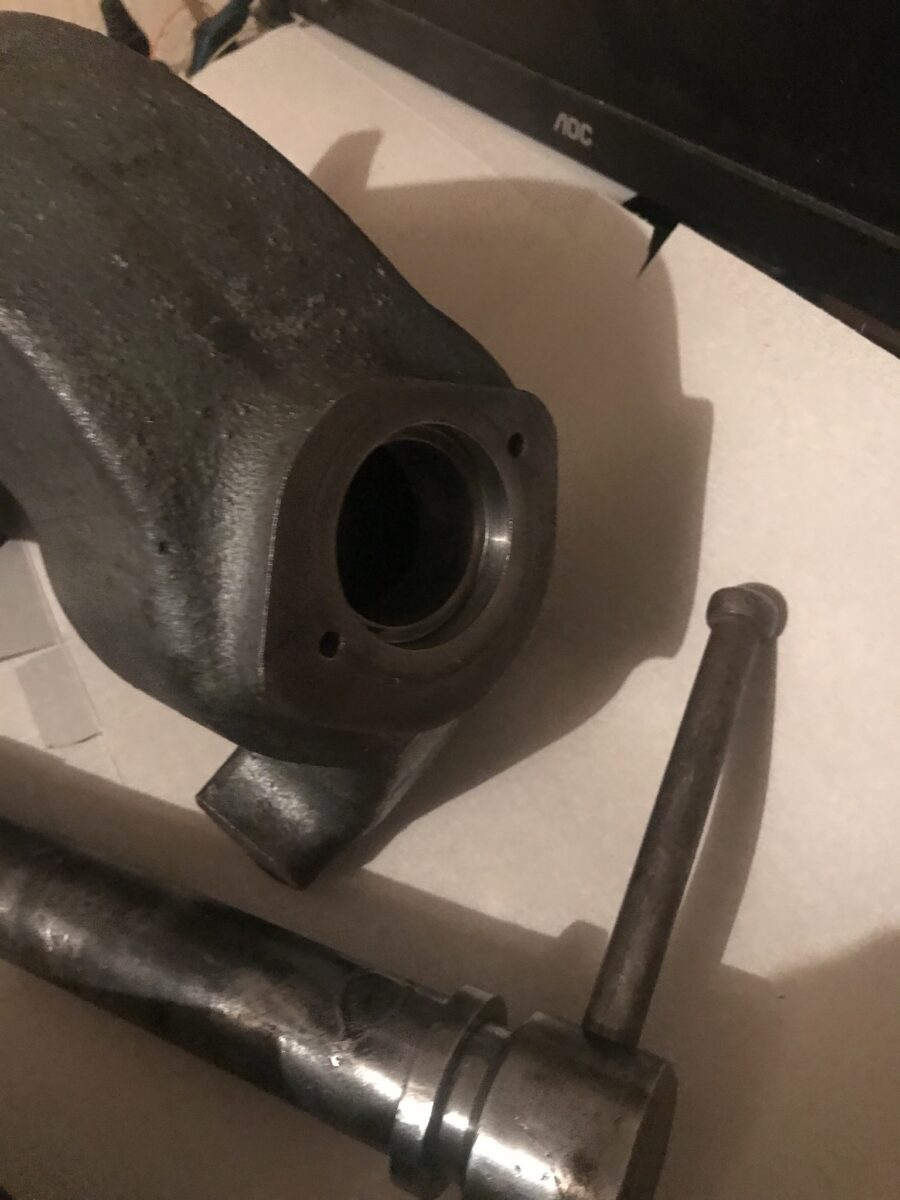
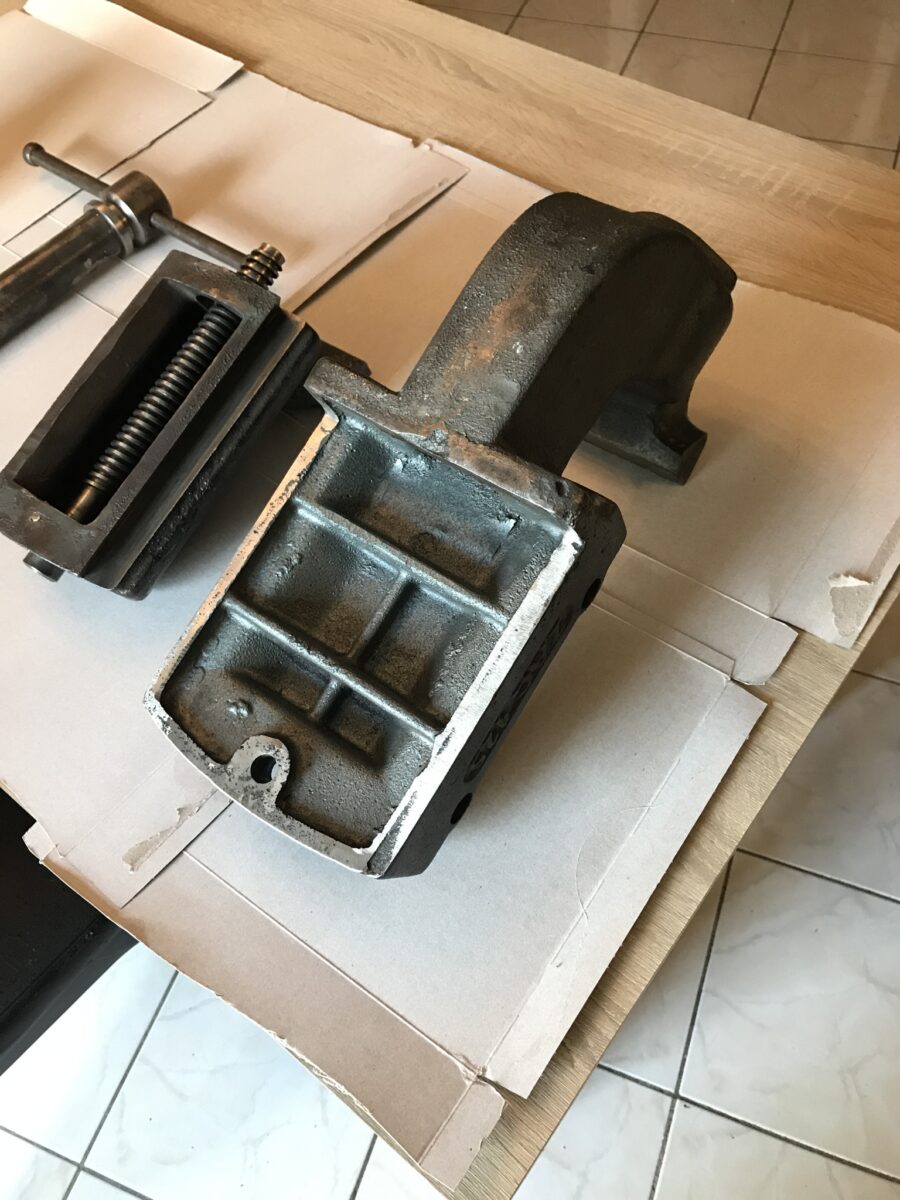

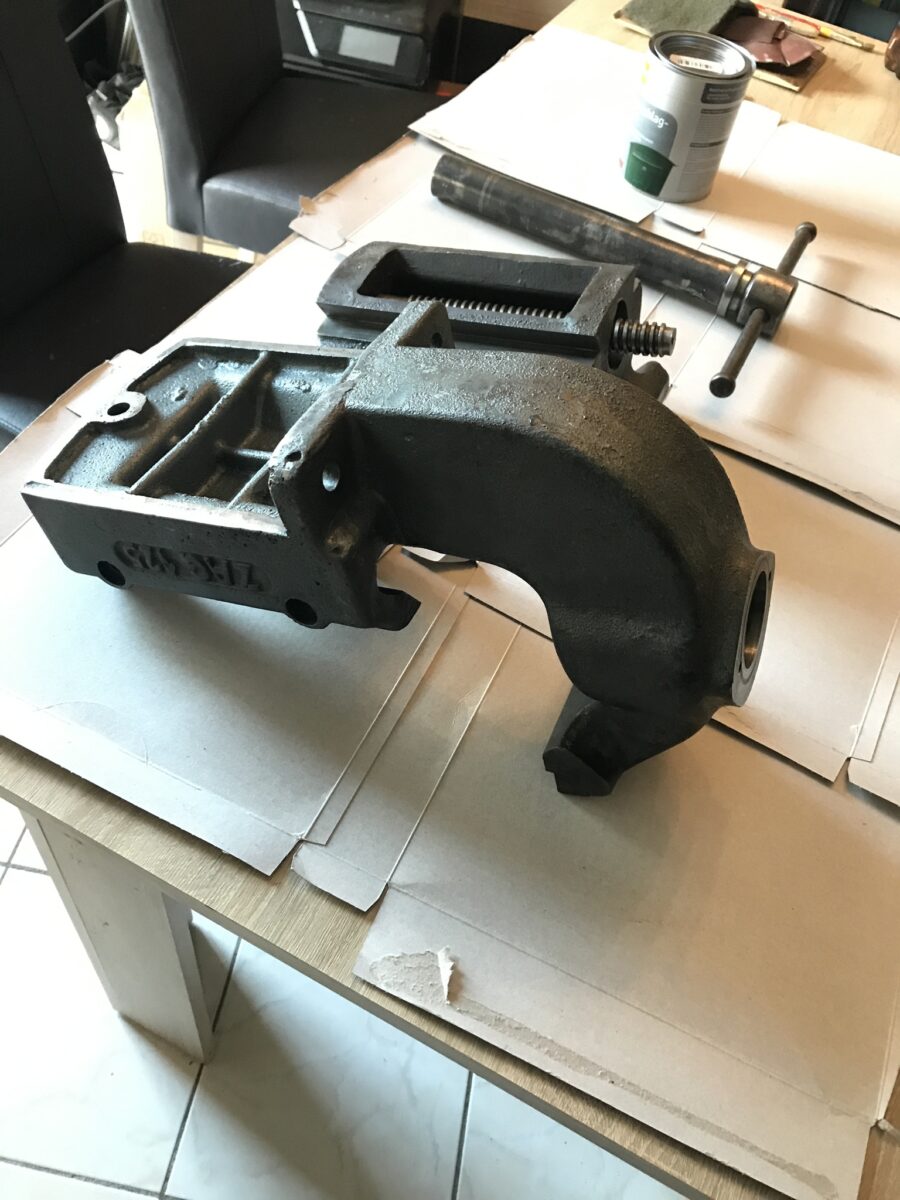
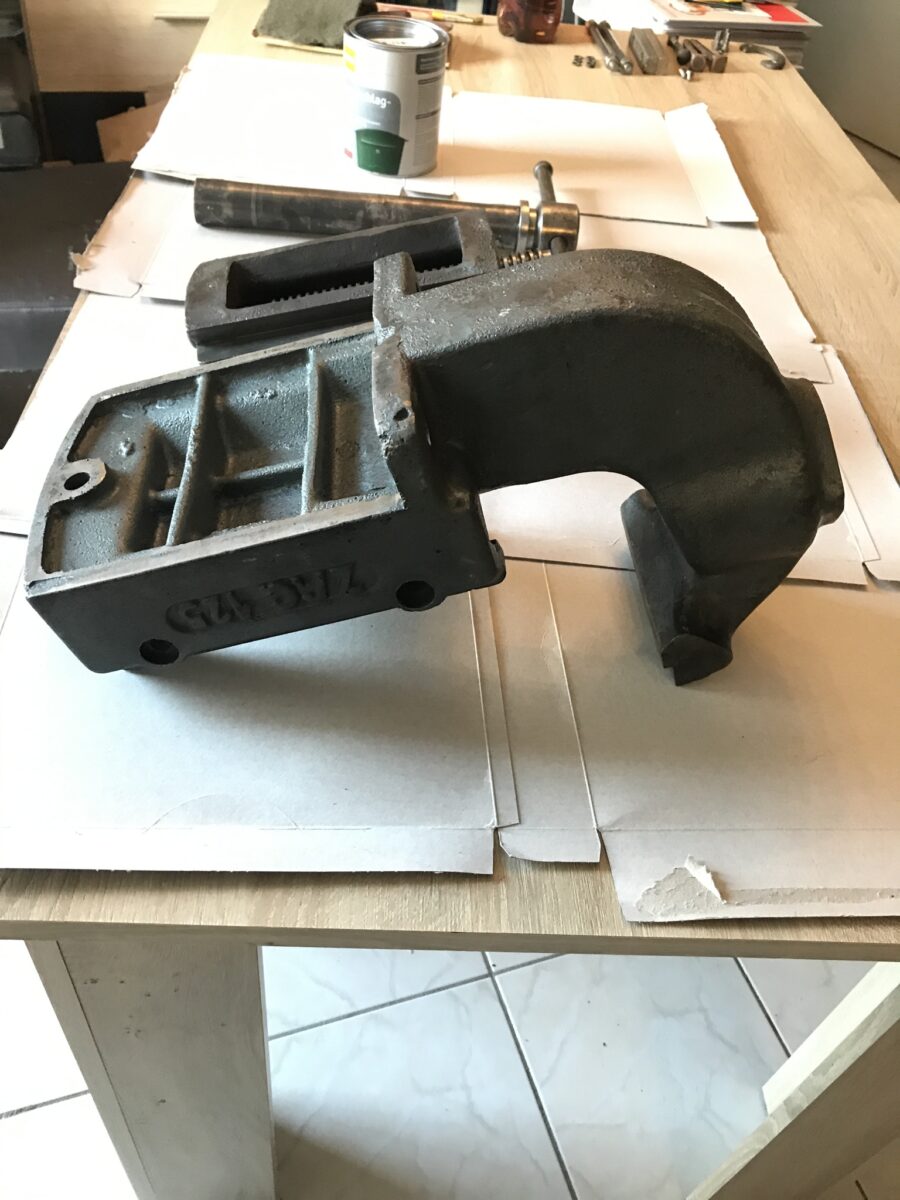
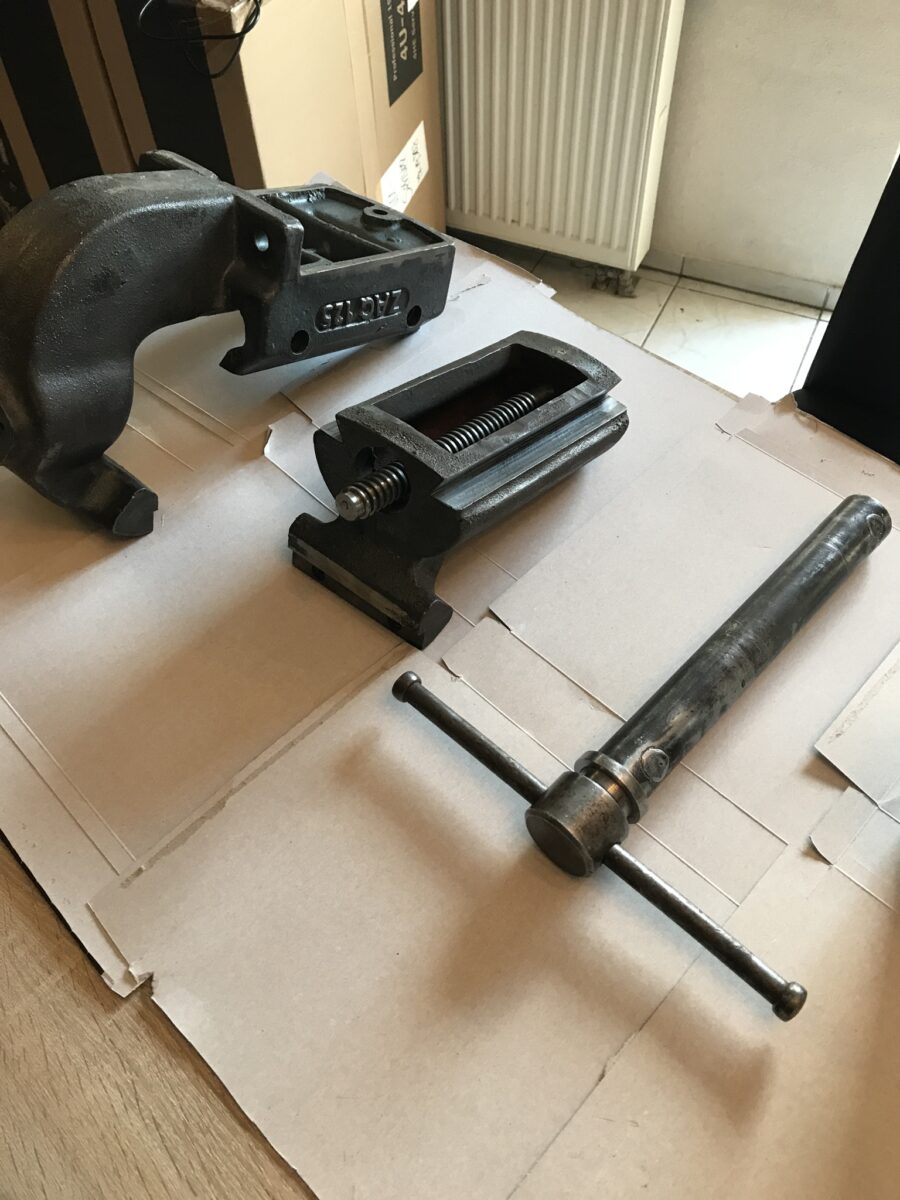
Before painting, the surfaces were smoothed using a roughing disc* on an angle grinder, as were the sides. Gray cast iron is simply a rather coarse manufacturing process, which also needs to be machined coarsely. A Dremel*, sandpaper* and abrasive fleece* were then used for the finer details.
New paint
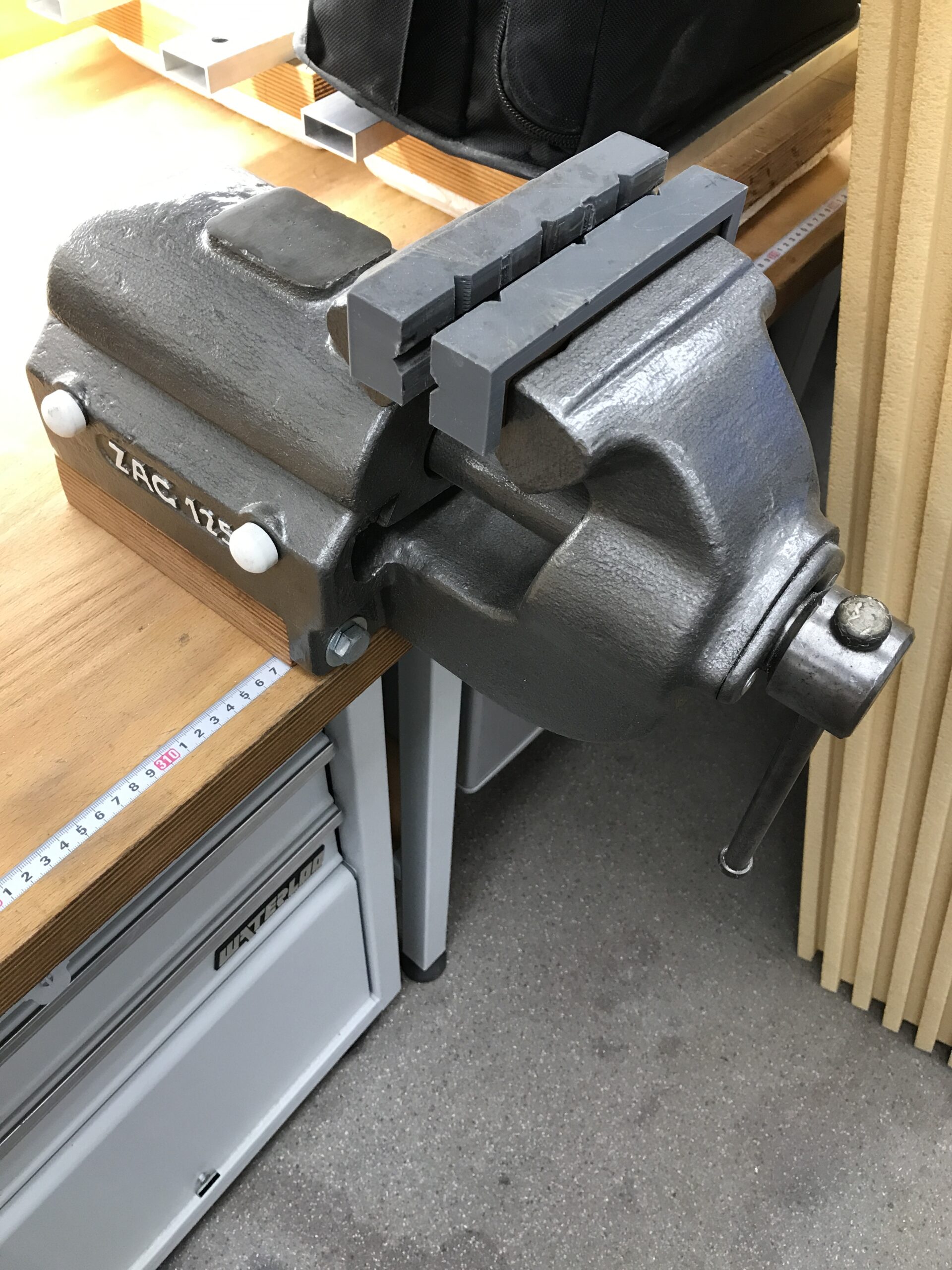
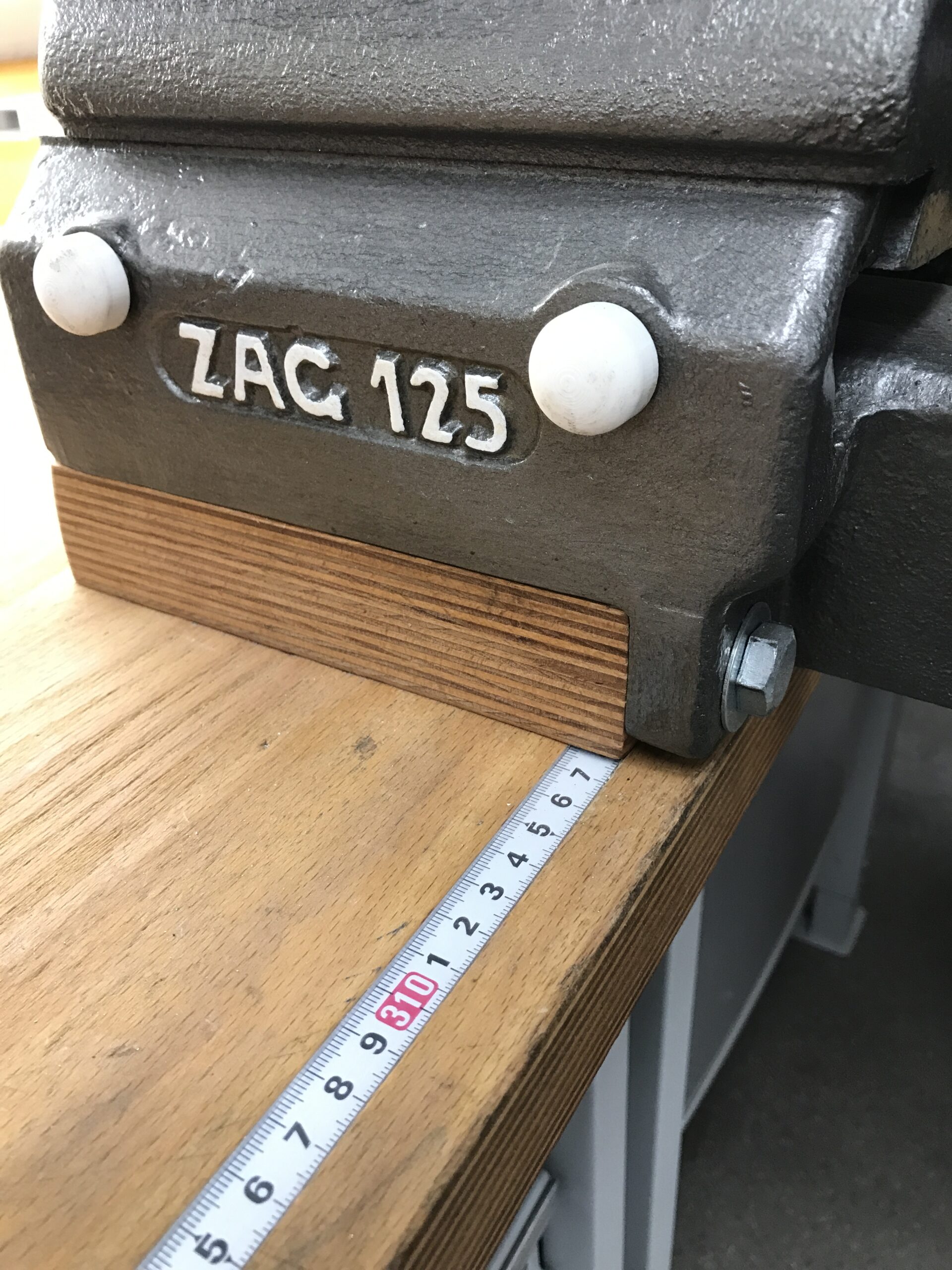
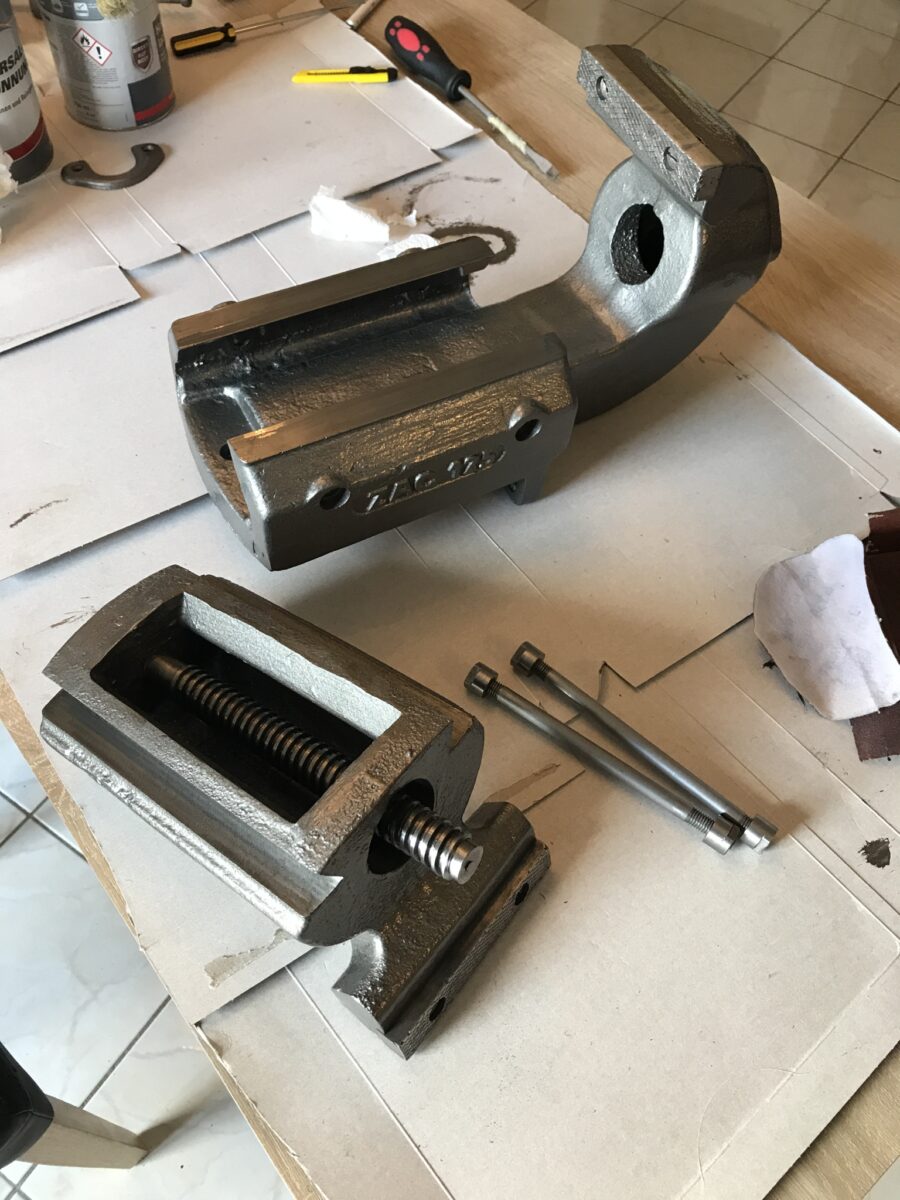
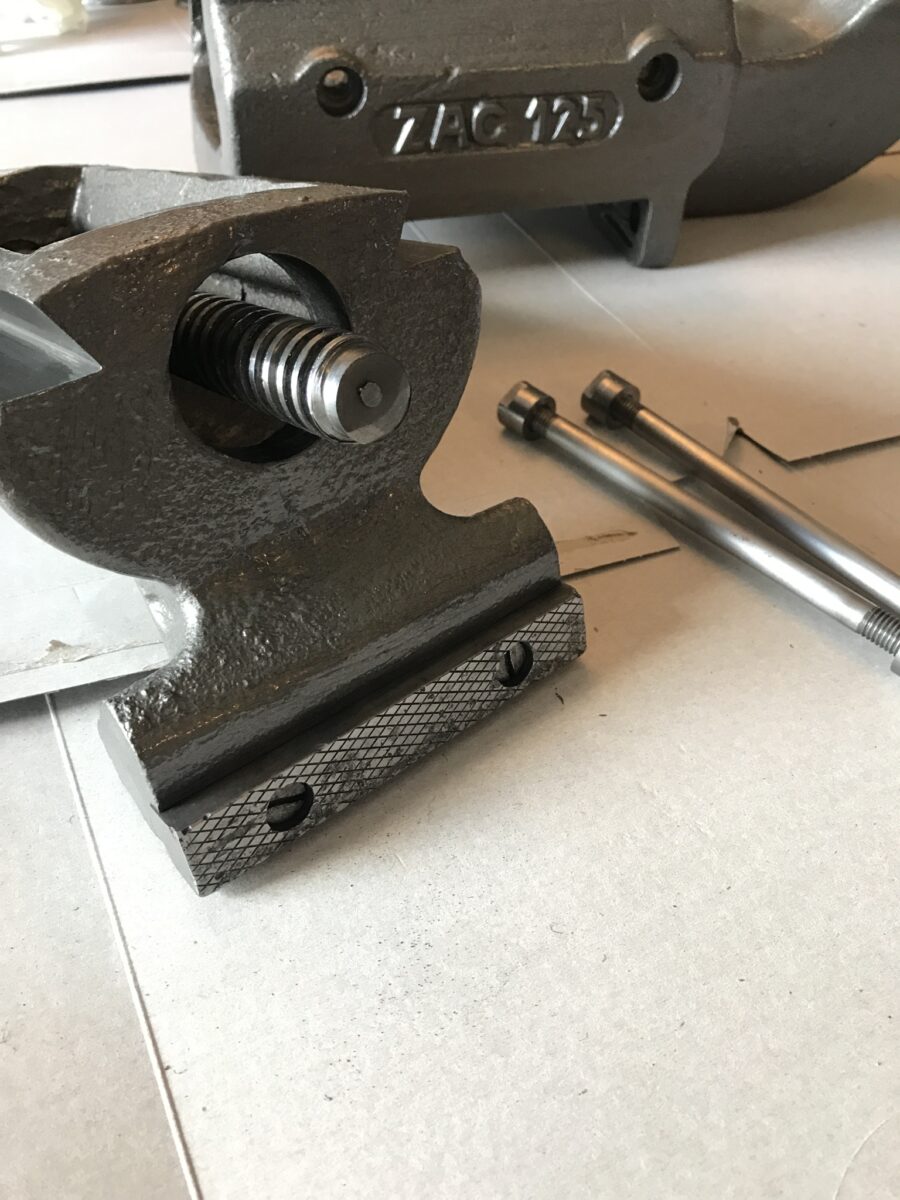
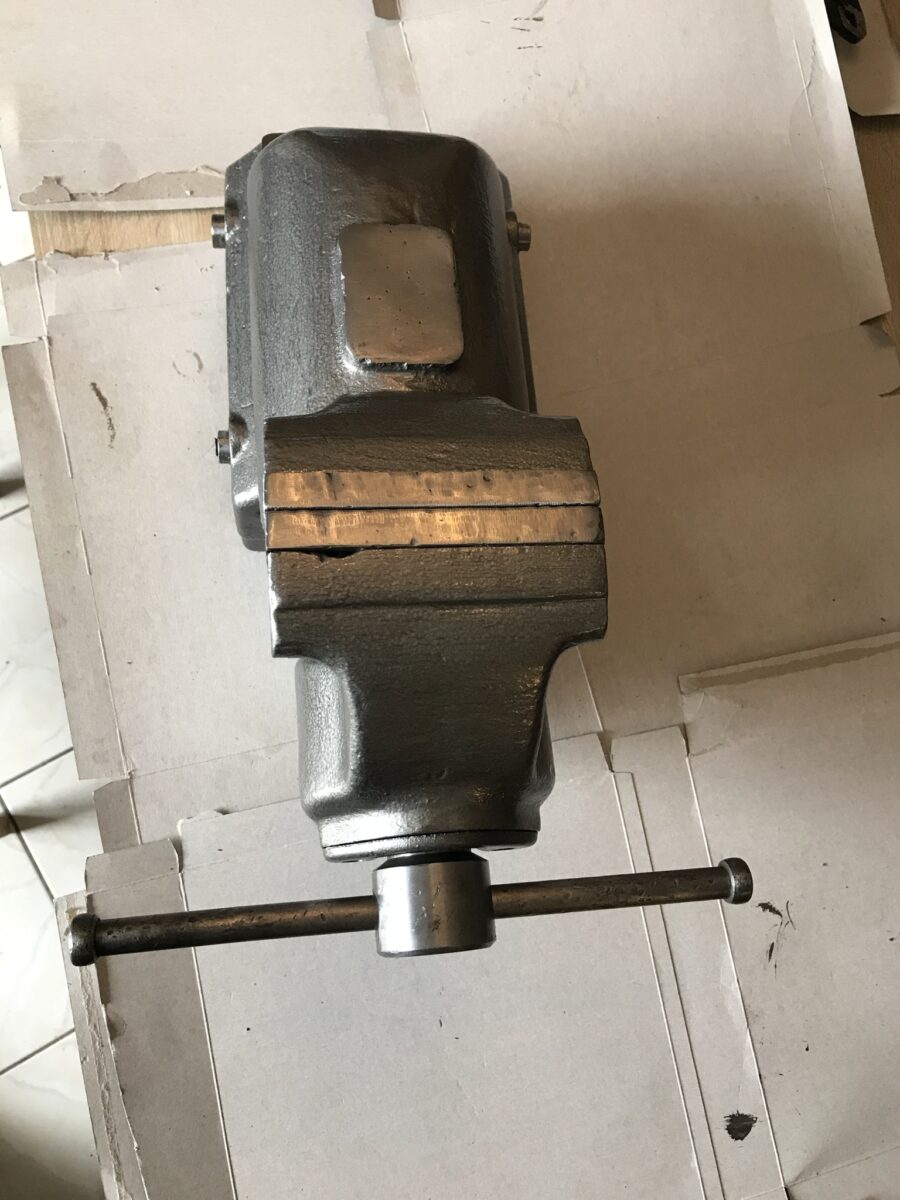
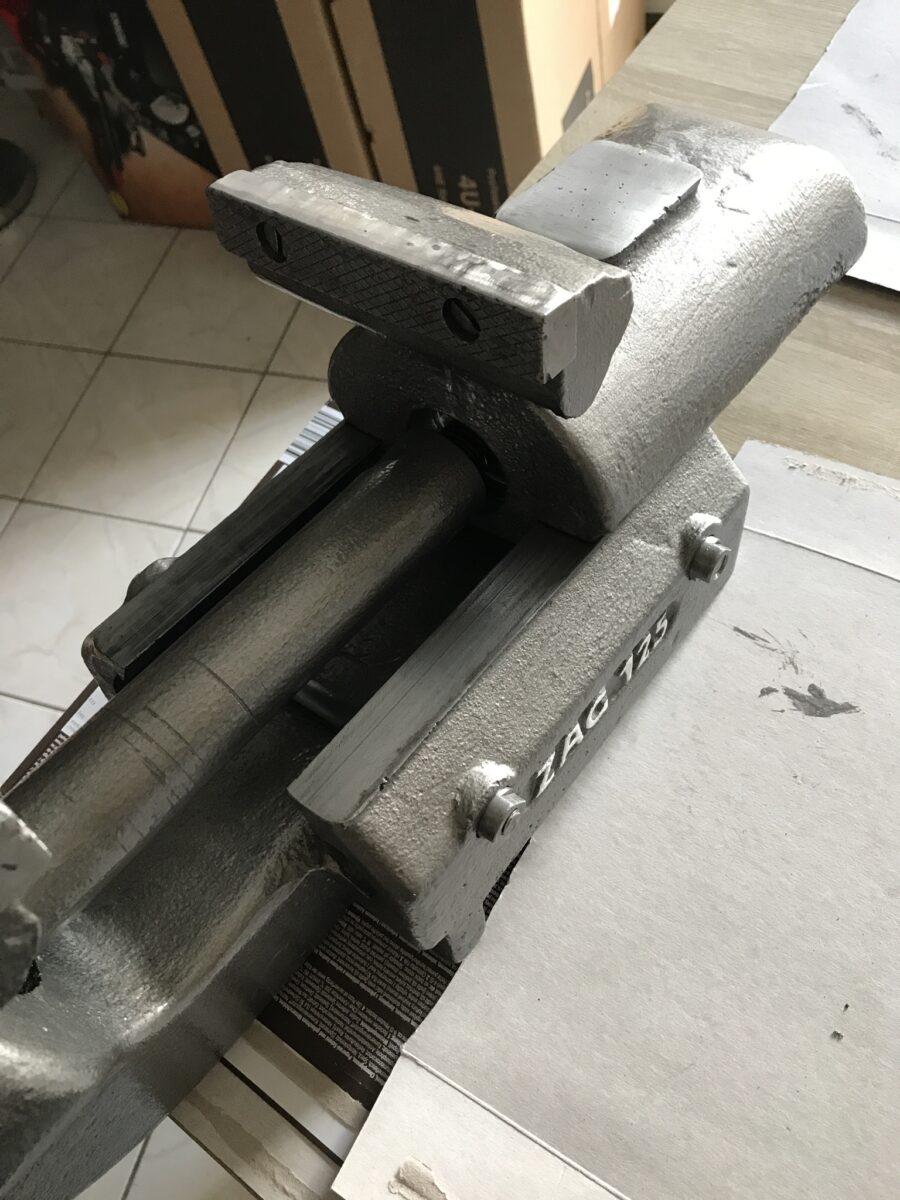
As a final step, I coated the vise twice with anthracite-colored, synthetic resin-based hammer finish paint*. The numbers on the side were highlighted with white acrylic paint*:


Findings and conclusion
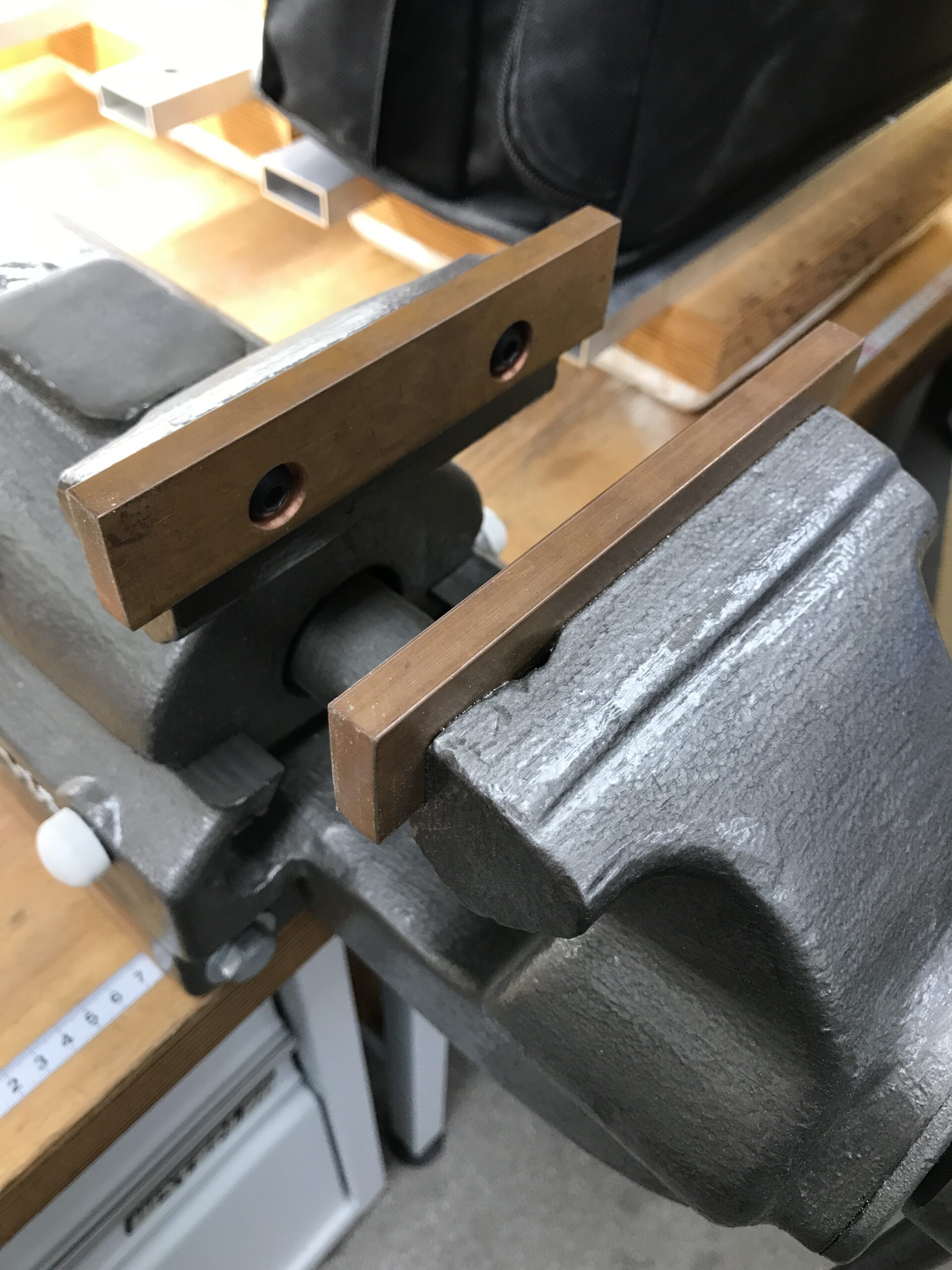
The fact that the jaws appear to be made of hardened steel and are replaceable is a big plus. The fact that the “jaw screws” have M7 threads is not: replacements are difficult to find and, when you do find them, unnecessarily expensive.
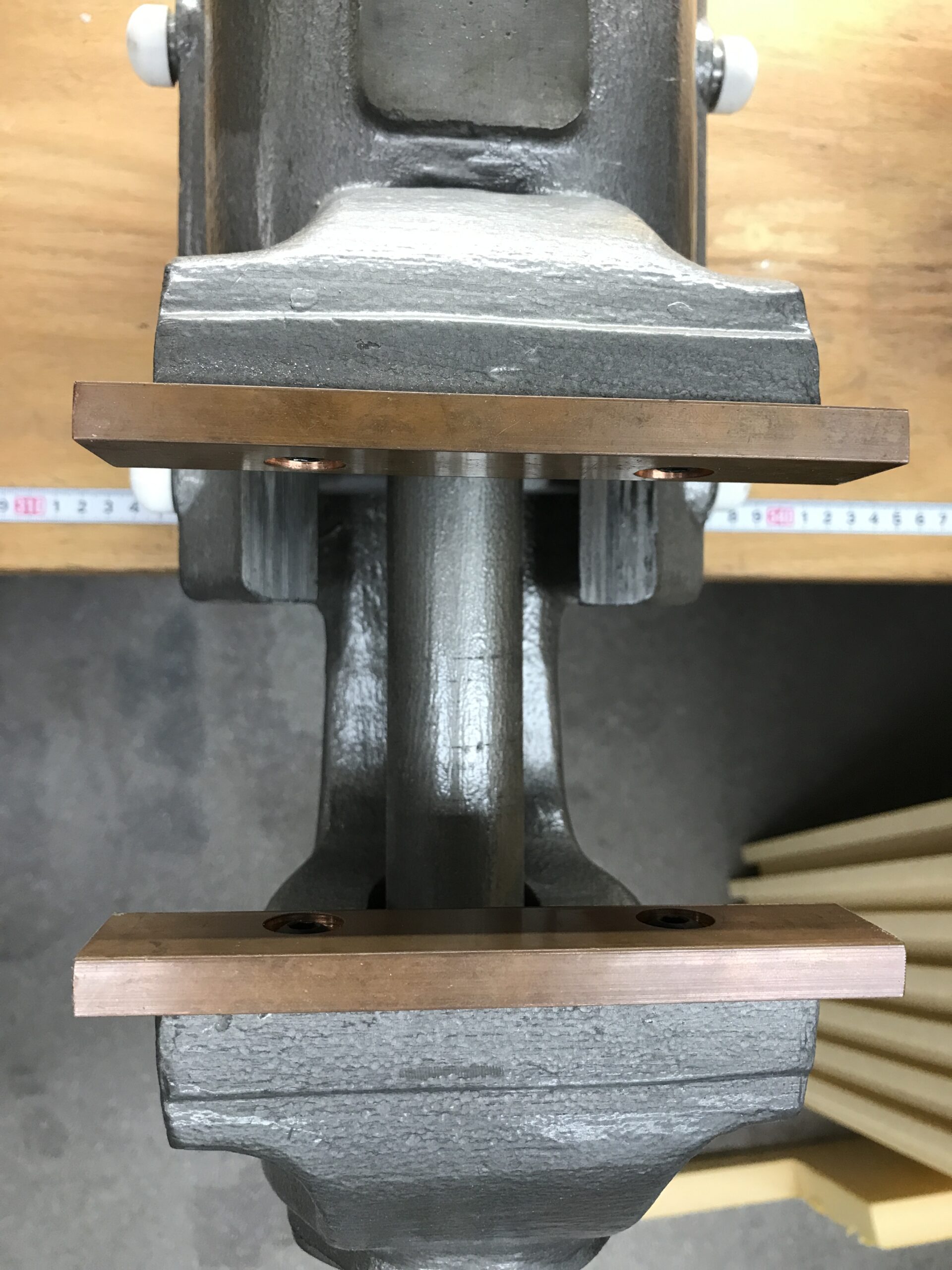
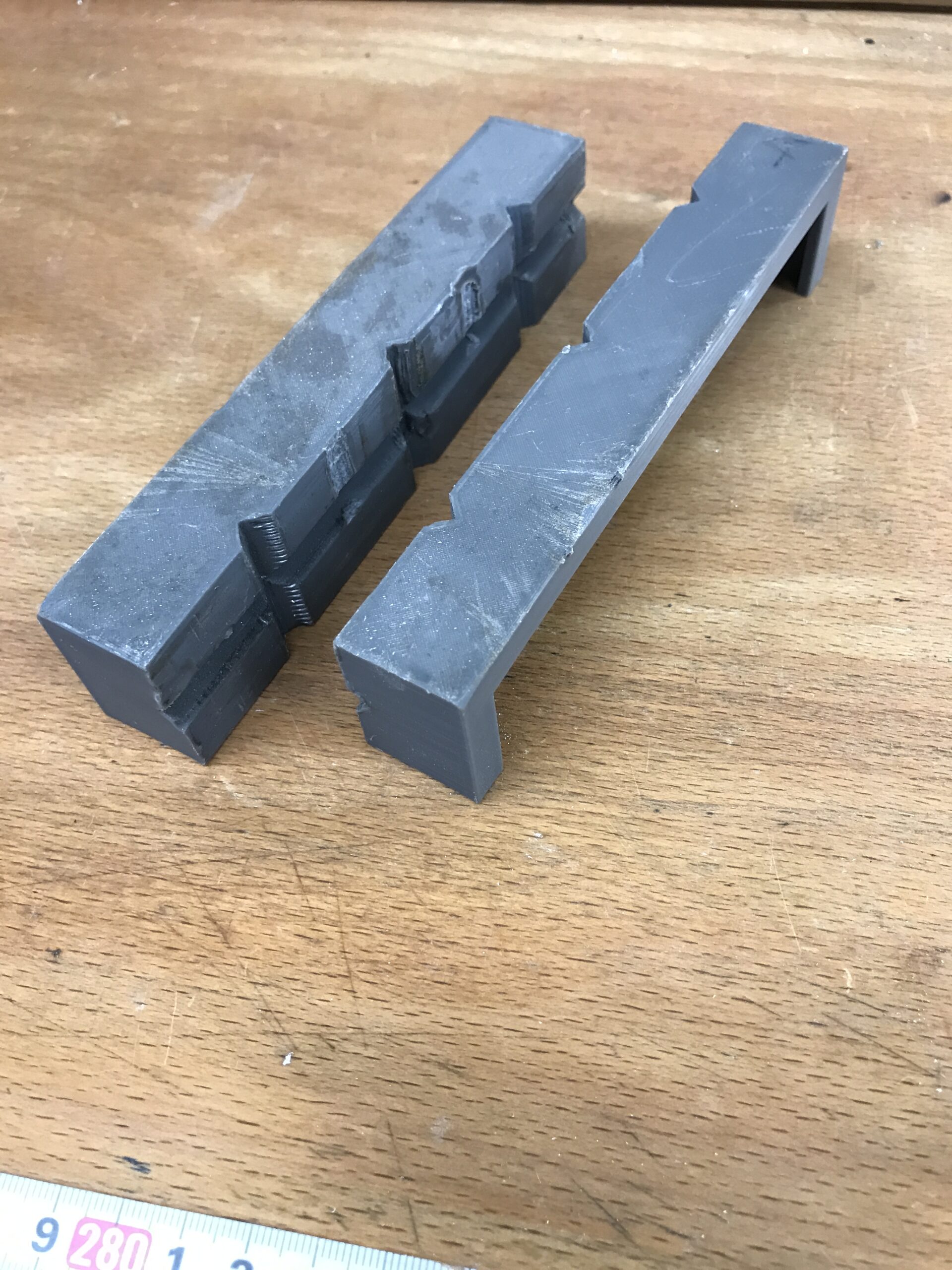
I have since found and purchased some in China on AliExpress* and am now using homemade alternative jaws made of copper rails with 3D-printed protective attachments instead of the original ones (these additionally widen the clamping range to 150 mm).
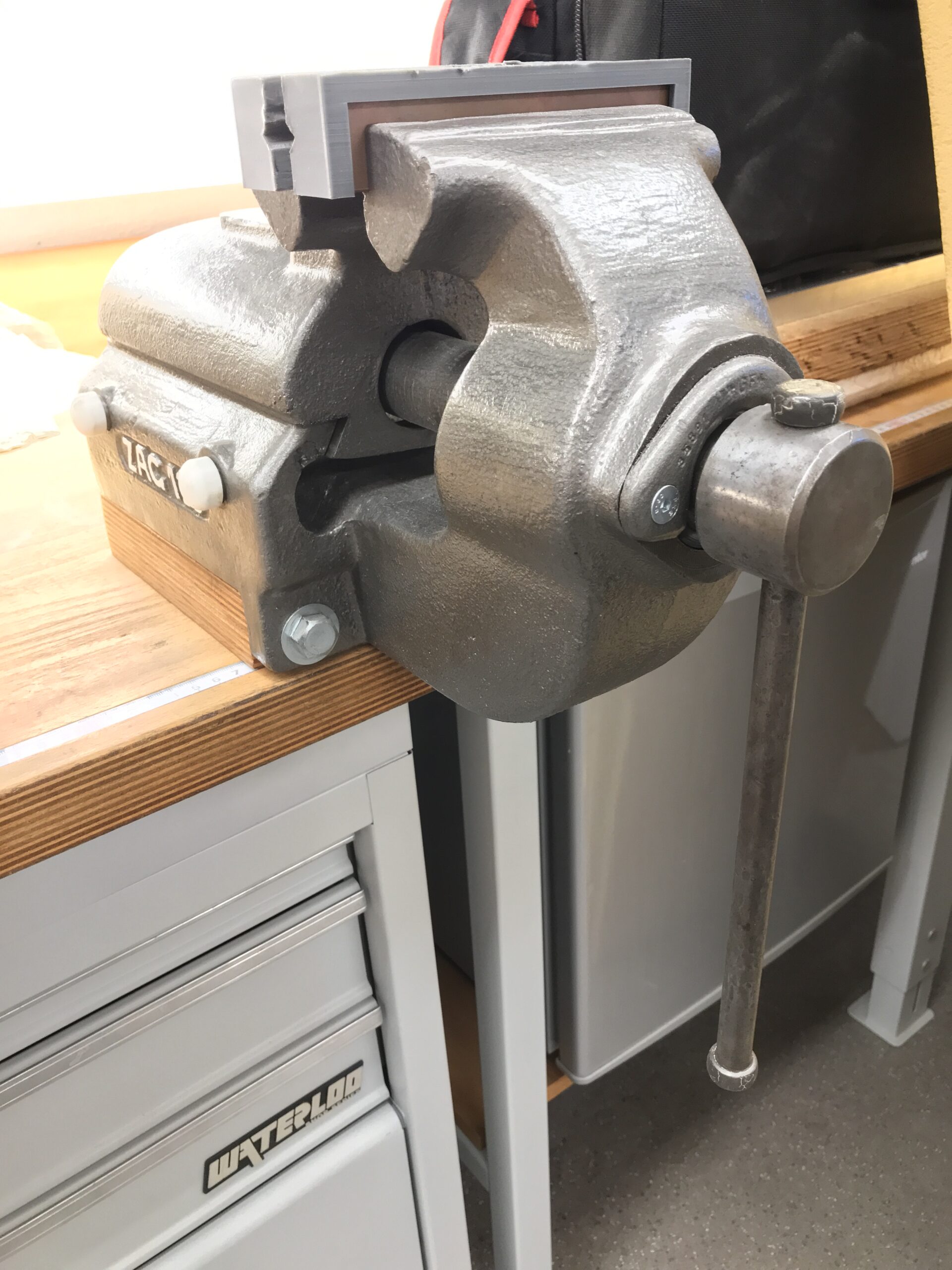
The vise is in constant use and, as expected, has proven to be very robust and useful. However, it does have one disadvantage: it cannot be rotated or easily converted for rotation. I would have liked this feature, primarily to reduce the overhang above the workbench in case of doubt. And, of course, to be able to work better on some workpieces when rotated. However, I only realized this after everything had been installed as it is now.
From a technical point of view, this ZAG 125 vice, costing less than €100, is probably the best value for money you can get for such a solid tool.
Currently installed