To determine what is feasible, you first need to know the limits. The partition style is, of course, Master Boot Record, which limits each data carrier to four bootable partitions or a total size of no more than 2 TB.
In addition, Windows 98 SE in its original state cannot address drives with a capacity of more than 137 GB; installation is not possible. To do this, you must enable 48-bit LBA support and then create (and burn) a new installation medium. Furthermore, 98 does not work correctly with more than 512 MB of RAM—this can also be circumvented, but only after installation. Until then, 512 MB or less should be installed in the system.
What is feasible now?
Each system has two hard drives installed, which would theoretically allow for 8 operating systems. Sounds like a lot, and it is a lot. It also doesn’t make sense. Nevertheless, there are many:
Hard drive #1:
- Windows 98 SE (32-Bit), FAT32
- Windows Vista Enterprise (32-Bit), NTFS
- Debian 12 Bookworm (32-Bit), EXT4
- 4 GB SWAP
Hard drive #2:
- Windows 2000 Professional (32-Bit), NTFS
- Windows XP Professional (32-Bit), NTFS
- Linux Mint 19 Tara (32-Bit), EXT4
- 4 GB SWAP
So six operating systems, all 32-bit – the total RAM installed is 4 GB and the Celeron D doesn’t even understand 64-bit instructions. Getting everything to work was a complex task, especially as the old operating systems tend to be very finicky. As with other multi-boot operations, the golden rule is always to install from old to new.
During installation, only the planned hard drive was connected, and the partitions were created at the very beginning using GParted in a live session booted from CD. Although I have a lot of experience in this area, it took me several attempts to get everything to where it is now. The fact that Windows 98 occasionally blue-screened during setup wasn’t particularly helpful.
Of course, it was more of an academic challenge than a real benefit. Windows Vista runs really poorly with only a slow core from a PATA hard drive. Debian Bookworm has bad graphics glitches.
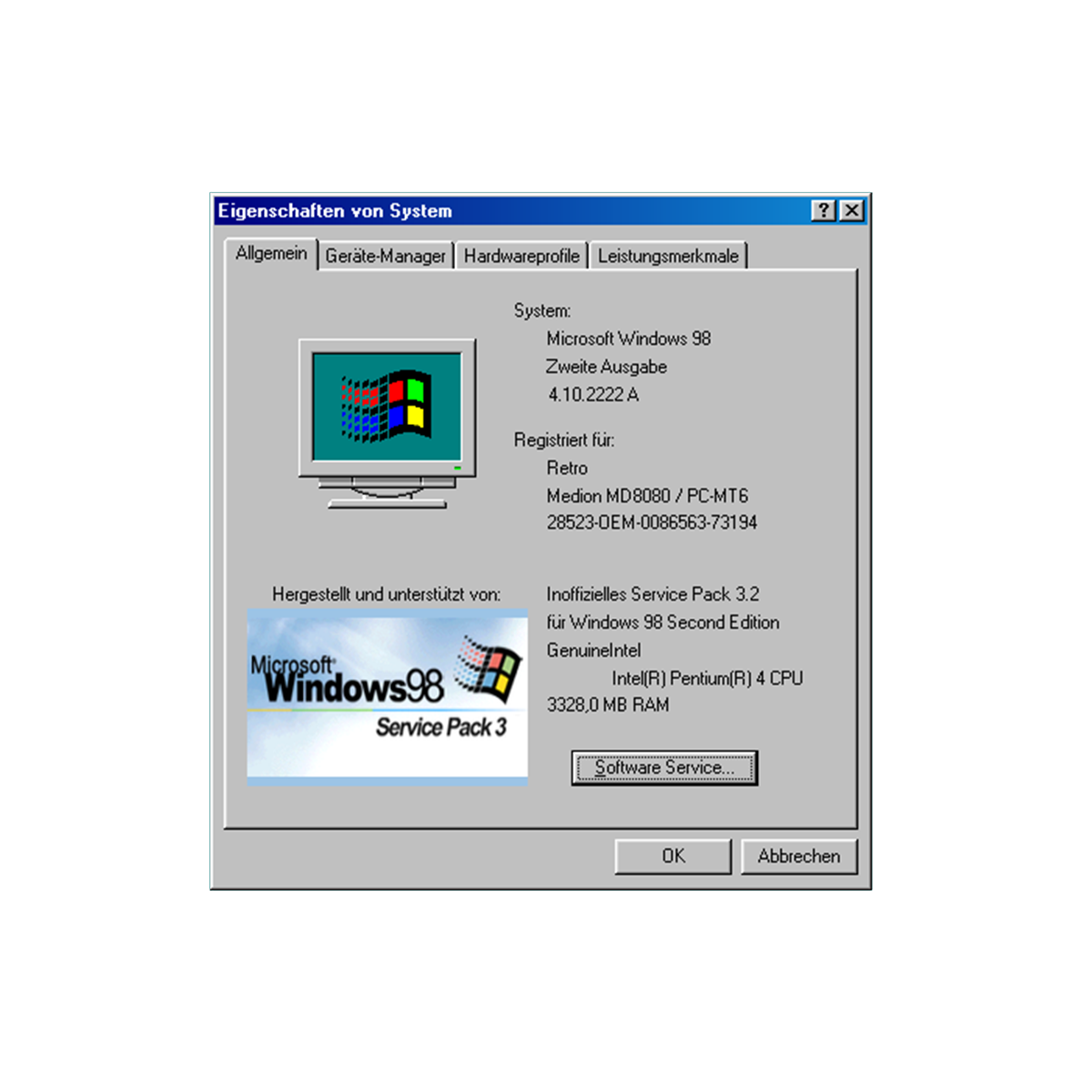
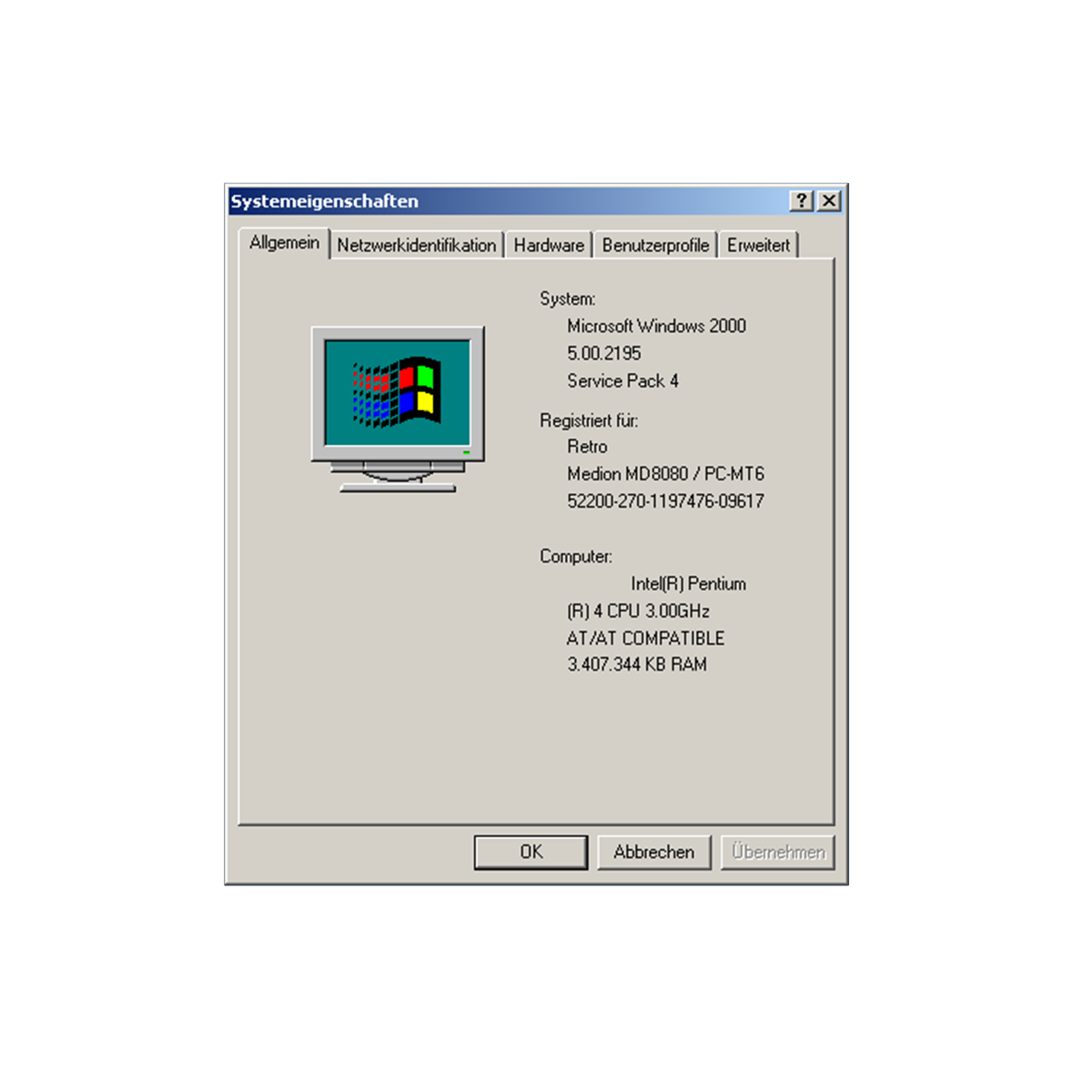
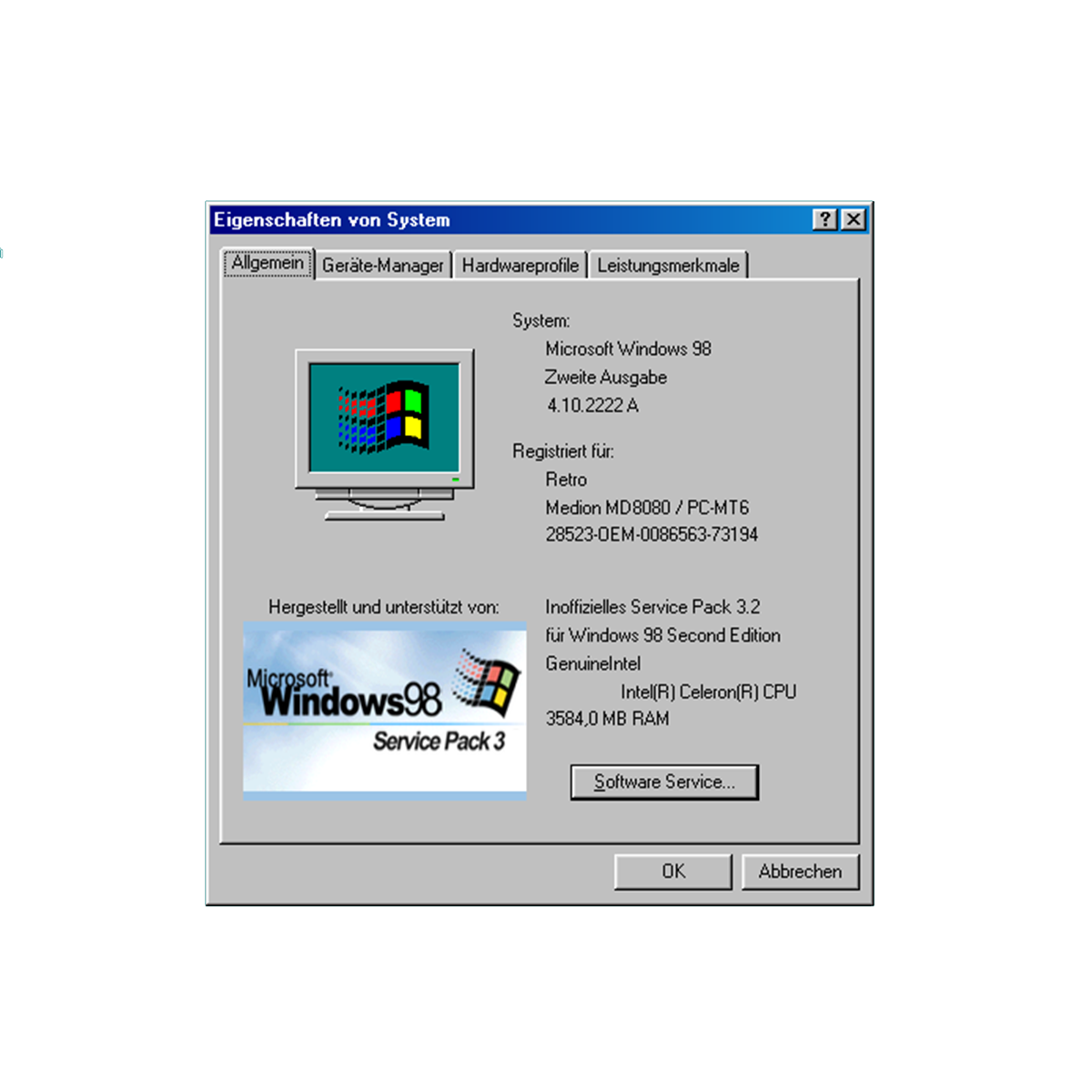
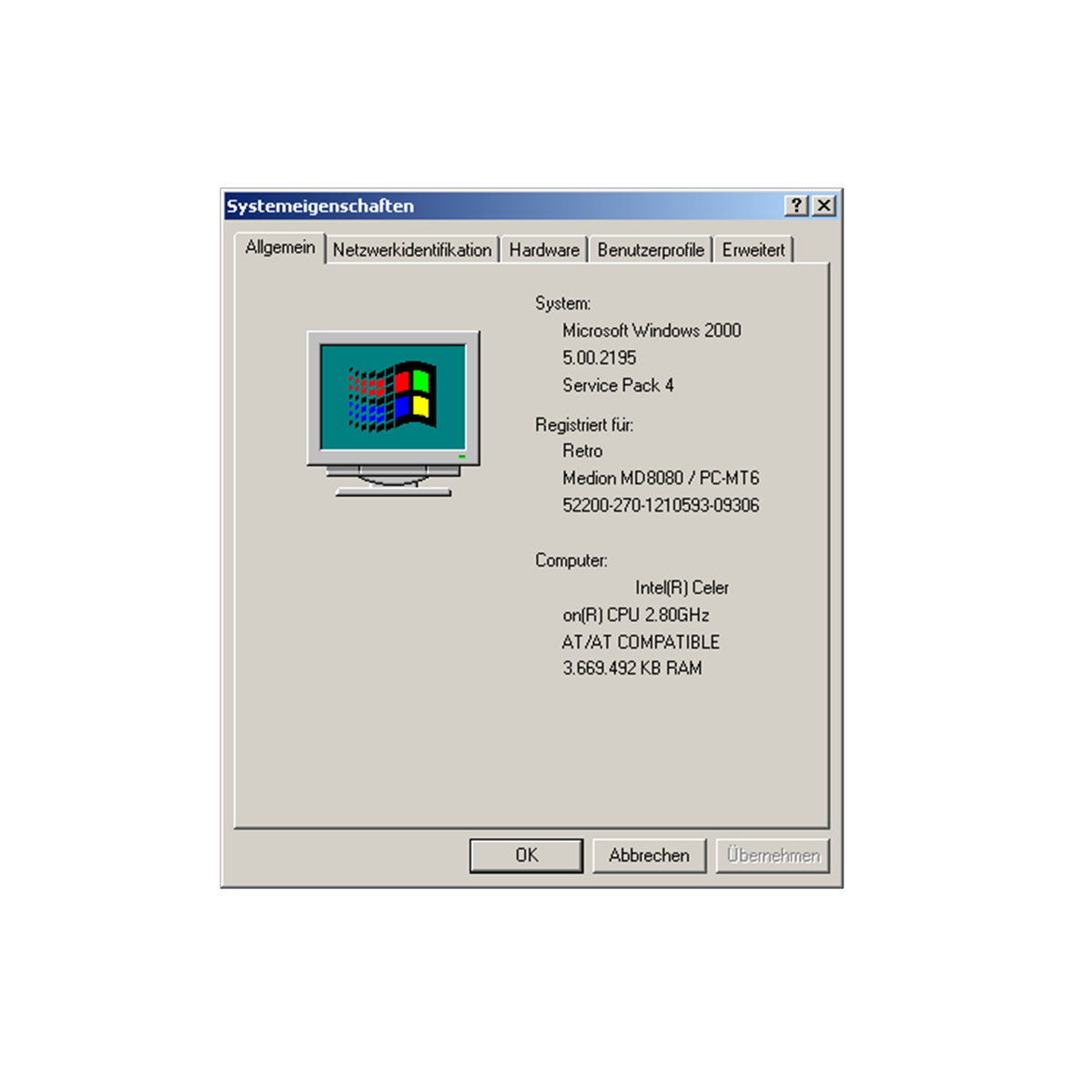
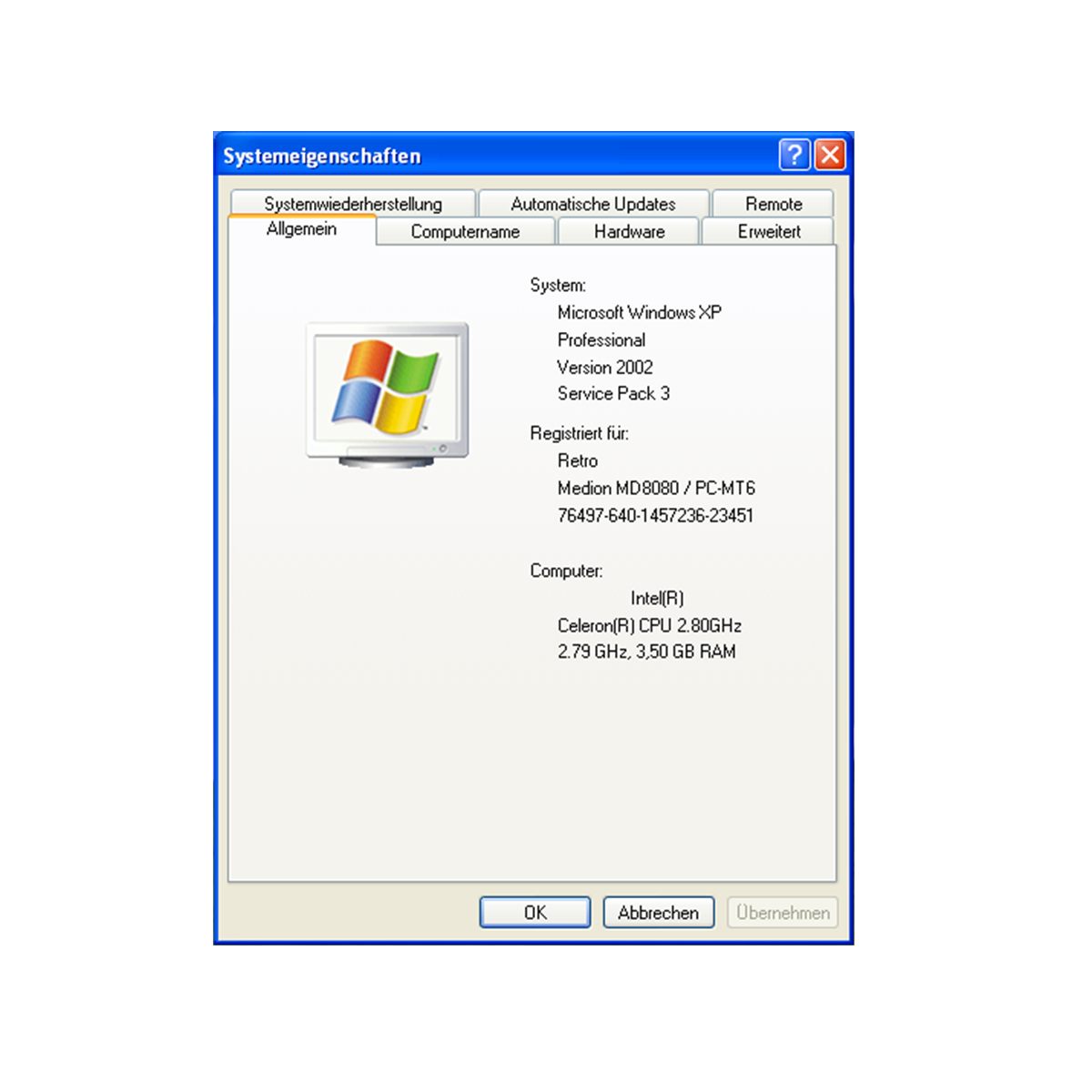
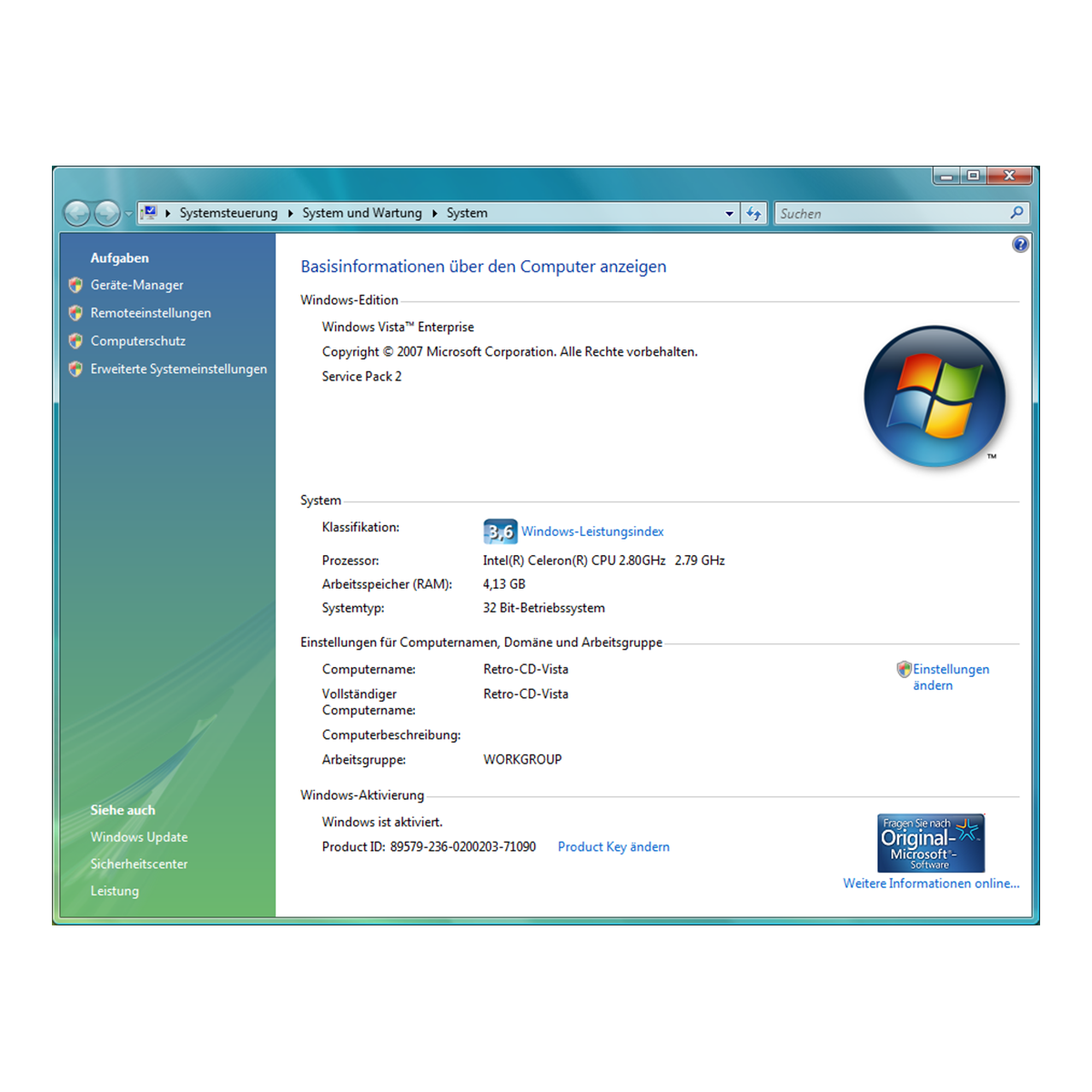
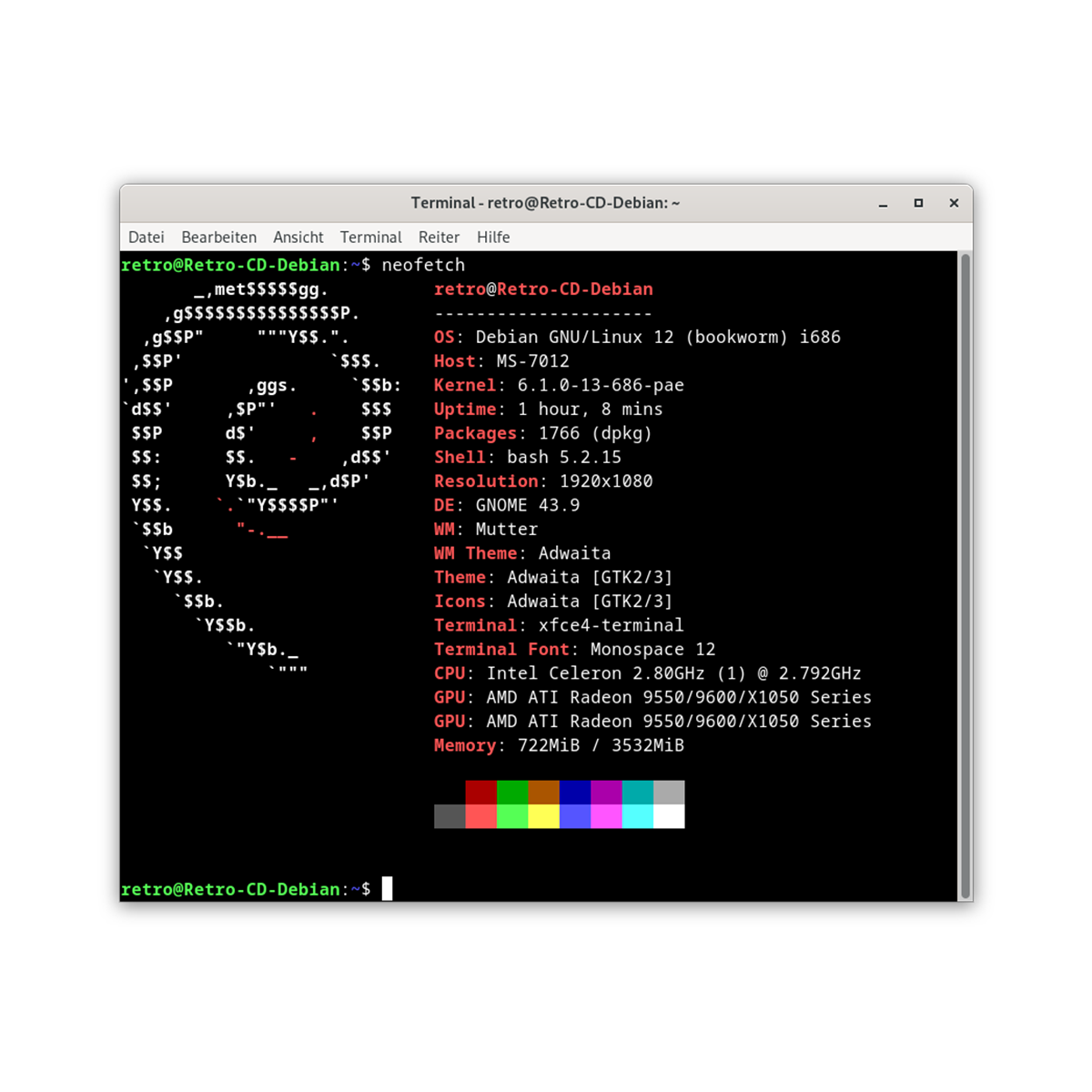
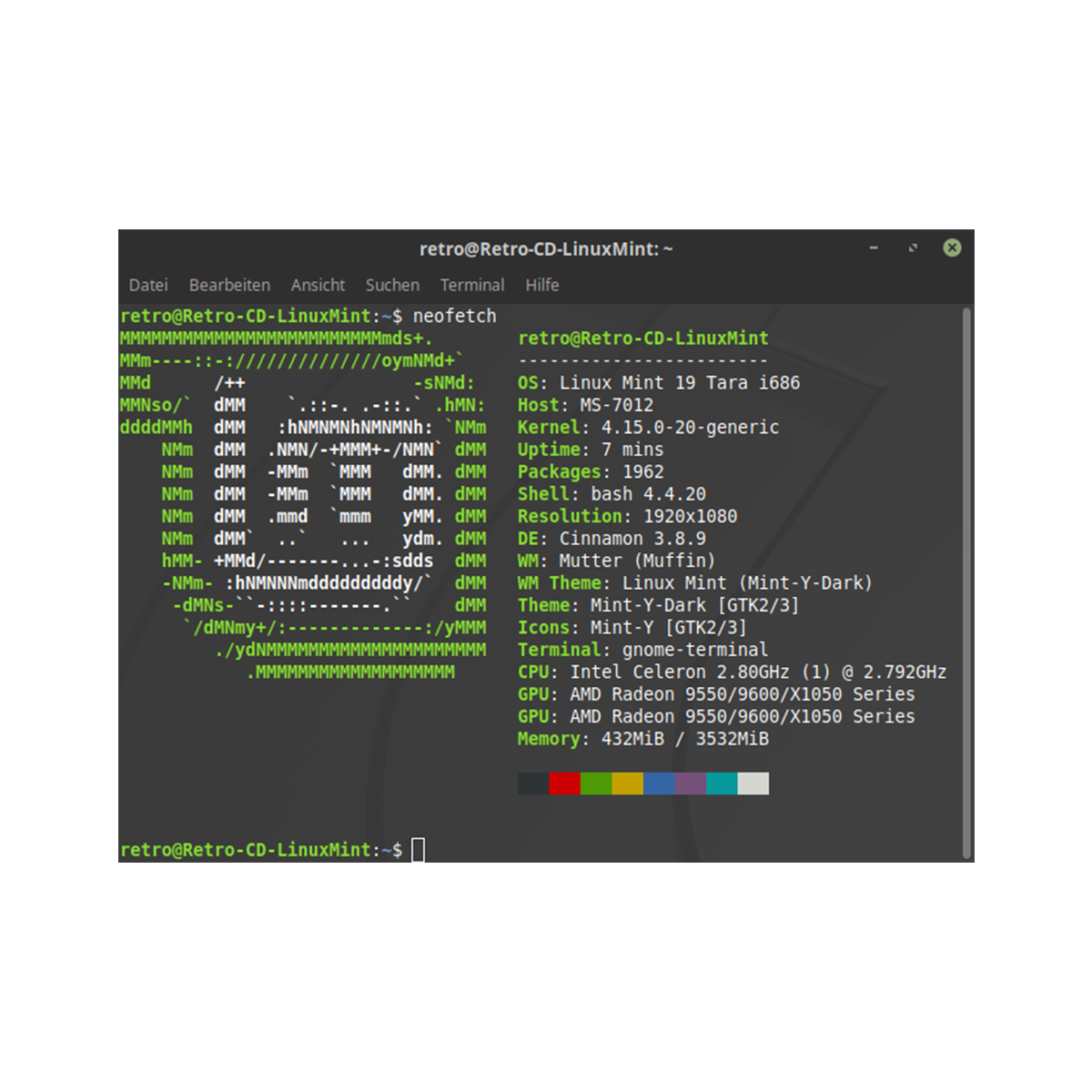
So here is the system information under all the different operating systems on the P4 system:
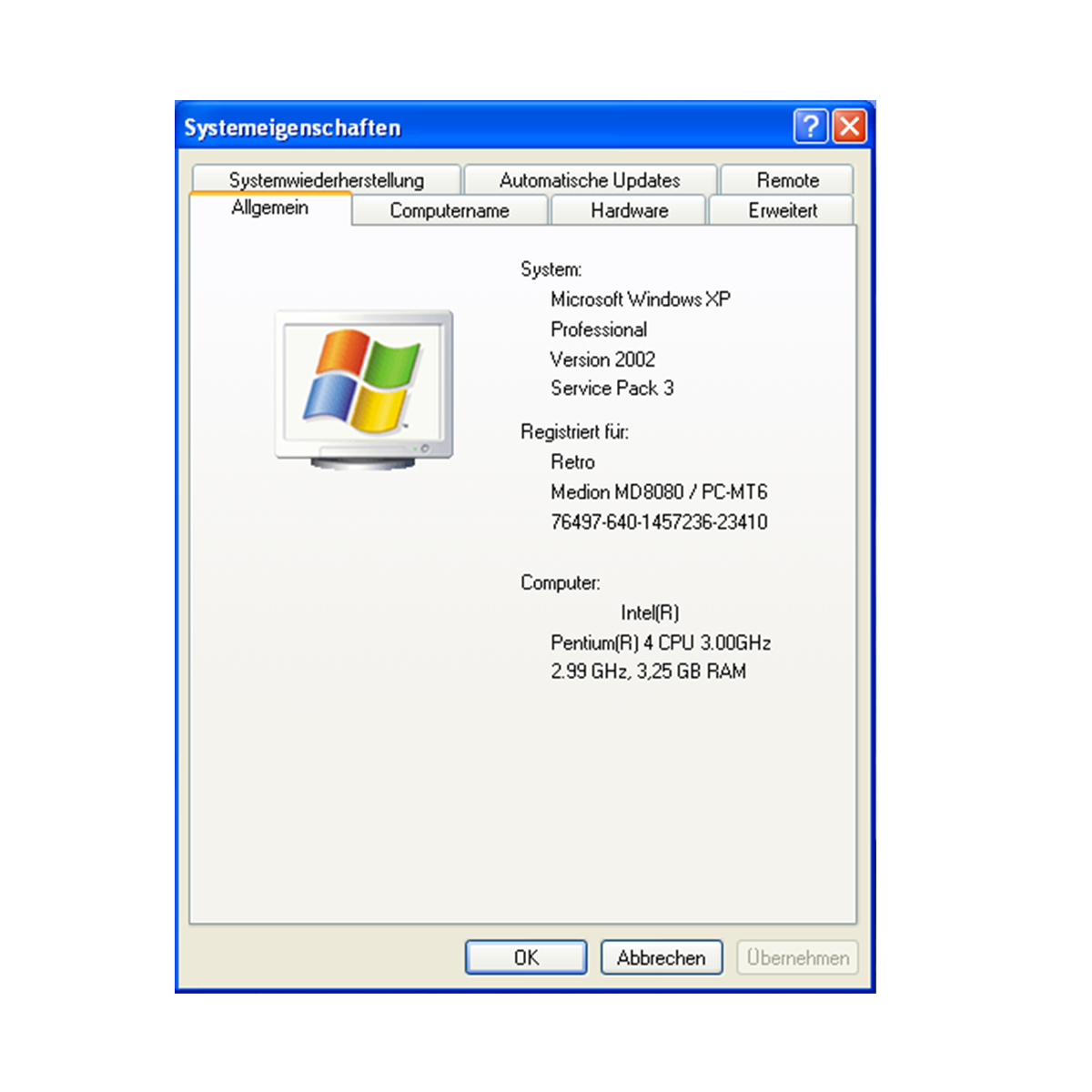
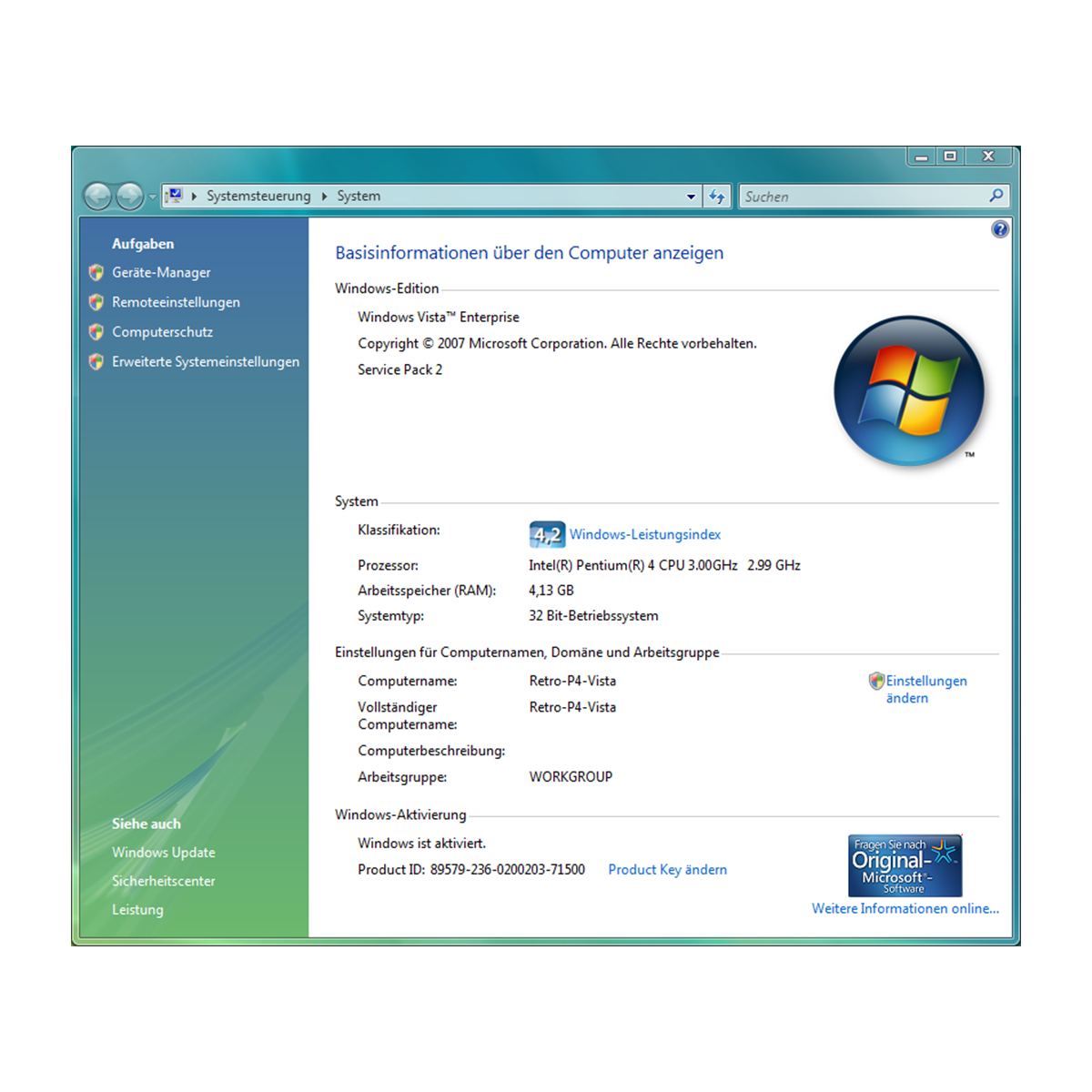
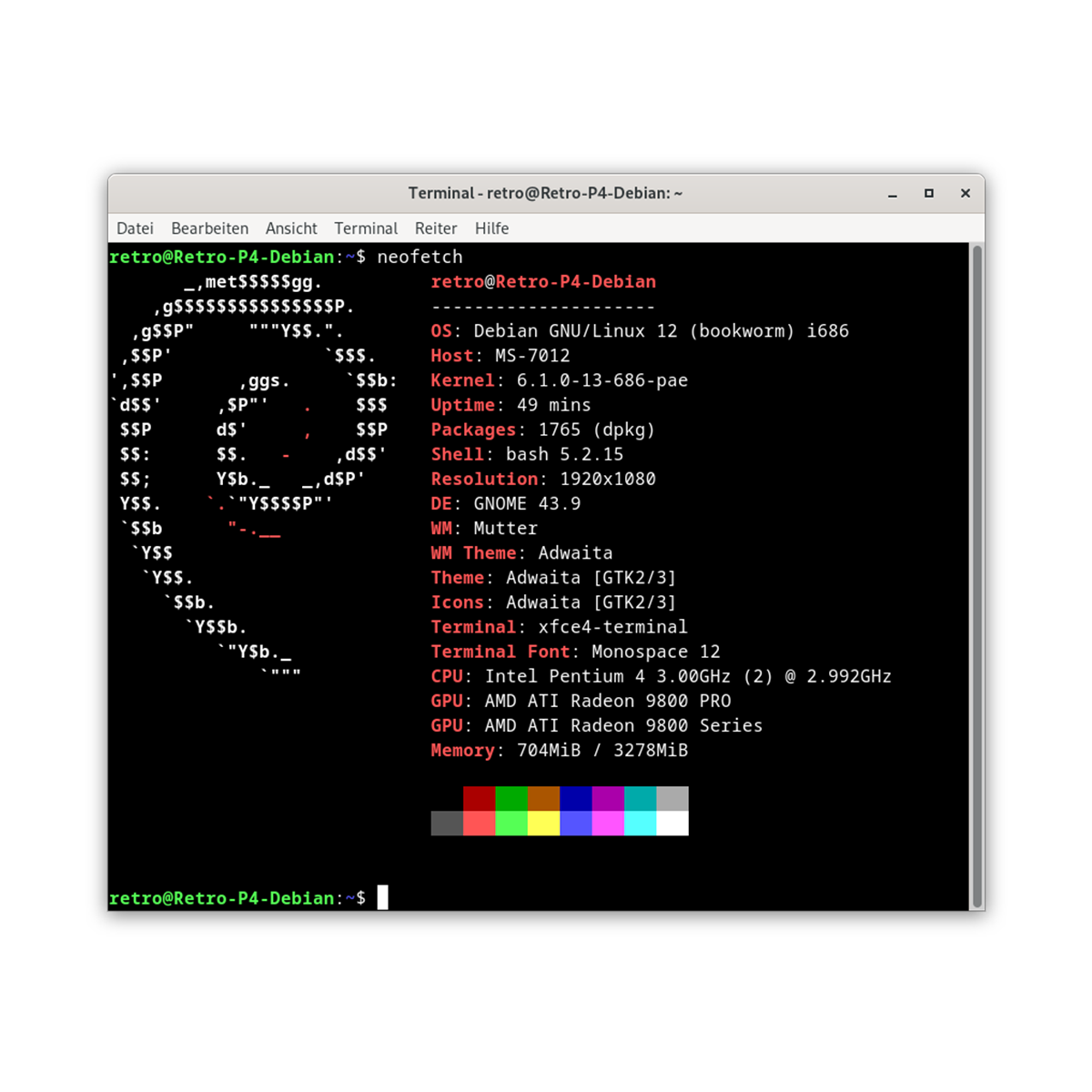
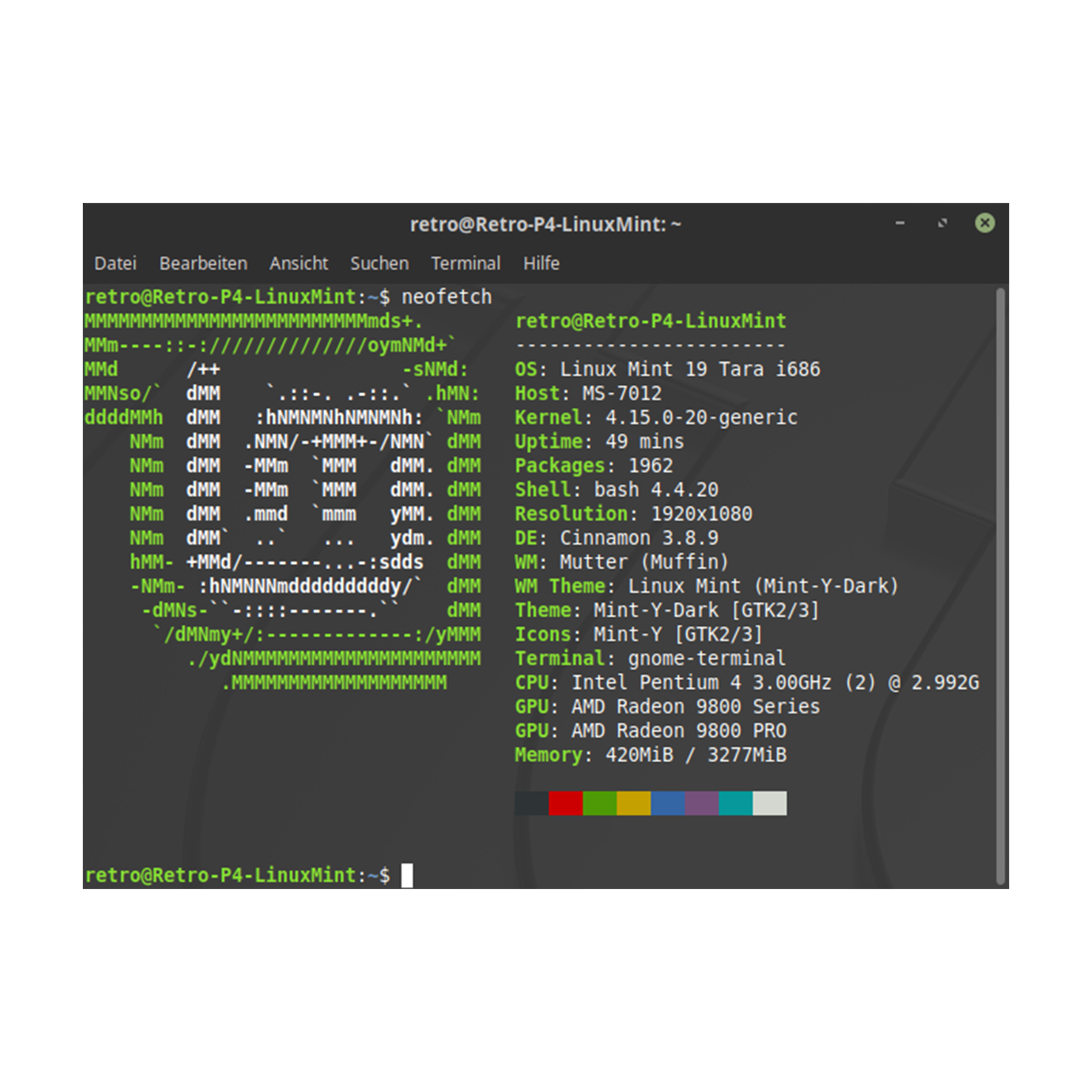
And the same again for the Celeron D system:
More RAM for Windows 98
There is a really good patch for this from R. Loew. For a long time, this patch was available for a fee, but since the good man has sadly passed away, his heirs are now making it available free of charge. Applause for that.
The OS is first installed with 512 MB or less RAM; I had 128 MB in the system (one bar). After successful boot, the patch is run once and the system is shut down. Now more RAM can be installed and the system runs as if nothing had ever happened. It couldn’t be better. The 4 GB of RAM are of great benefit to all other operating systems.
Bootloader?
To avoid overloading the boot loader, I used a little trick:
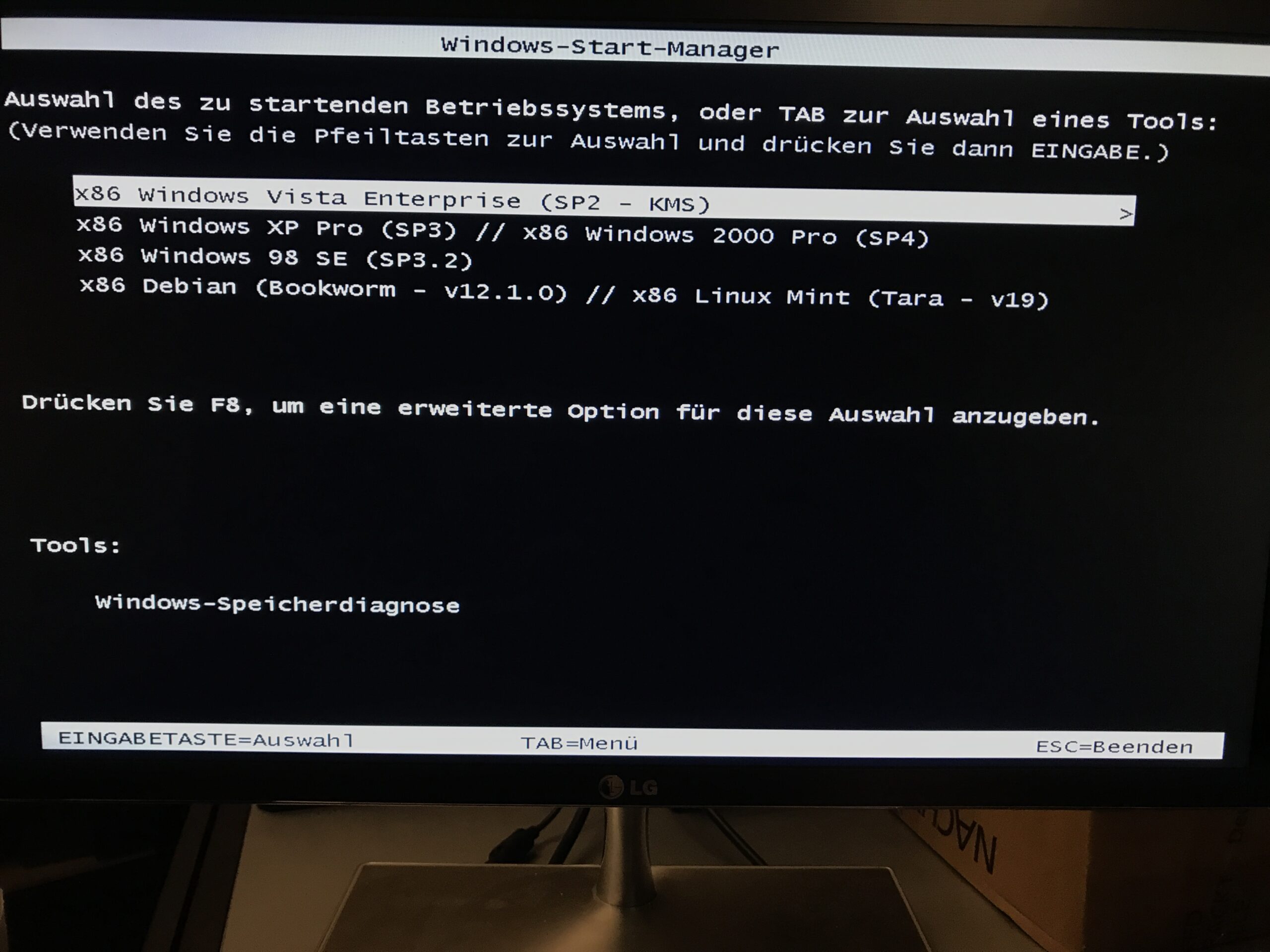
I used the original loader from Windows Vista. This was modified with EasyBCD – the trick is to “chainload.” Since Windows 2000 and XP both use boot.ini in conjunction with bootmgr, I combined these two. Linux Mint and Debian both use GRUB 2, so these were also combined. The result looks like this: