The underlying product is Cinema 4D from the German company Maxon – a performance-hungry rendering software.
Its development history is really interesting; the first version was released back in 1993 for the Commodore Amiga.
This software was used in several movies, for example:
- The Girl with the Dragon Tattoo (2011)
- Beowulf (2007)
- The Golden Compass (2007)
- Surf’s Up (2007)
- Spider-Man 3 (2007)
- Chronicles of Narnia (Part 1: 2005 / Part 2: 2008 / Part 3: 2010)
- Serenity (2005)
- Inception (2010)
- Van Helsing (2004)
- The Polarexpress (2004)
- He Was a Quiet Man (2007)
- Iron Man 3 (2013)
- Pacific Rim (2013)
- Furious 7 (2015)
- Avengers: Endgame (2019)
…Bleeding edge rendering technology, you might say. Cinebench was then created to test the performance of hardware for use with Cinema 4D: The first version was released at the end of 1999 and was called “Cinebench 2000”. Since then, there have been regular new releases of this benchmark and annual releases of the actual Cinema 4D software, available for Windows and macOS (newer versions for x86, x86-64, and ARM64).
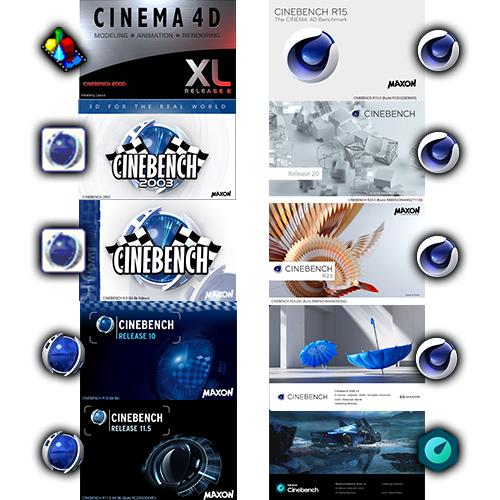
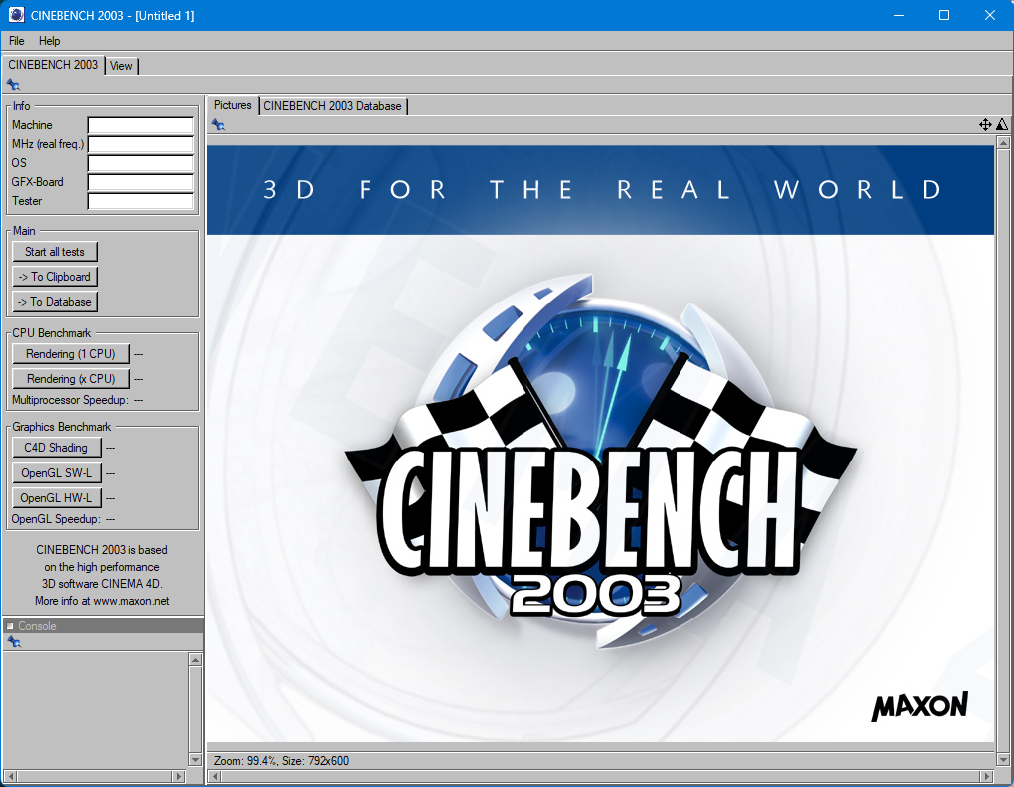
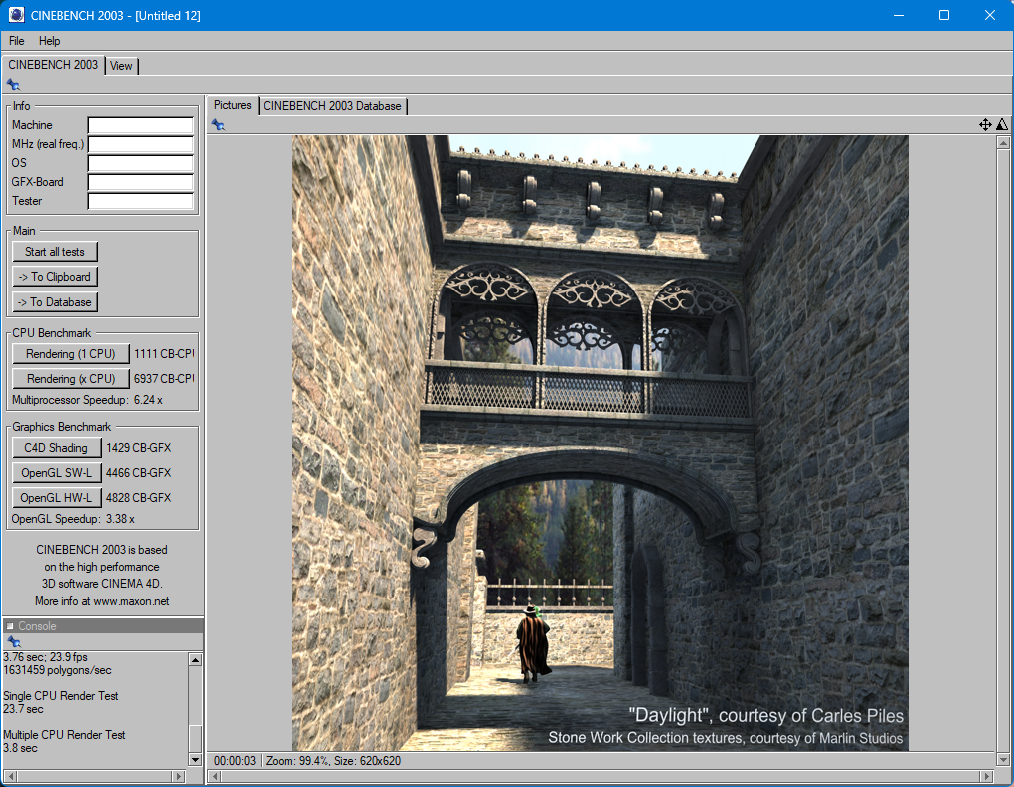
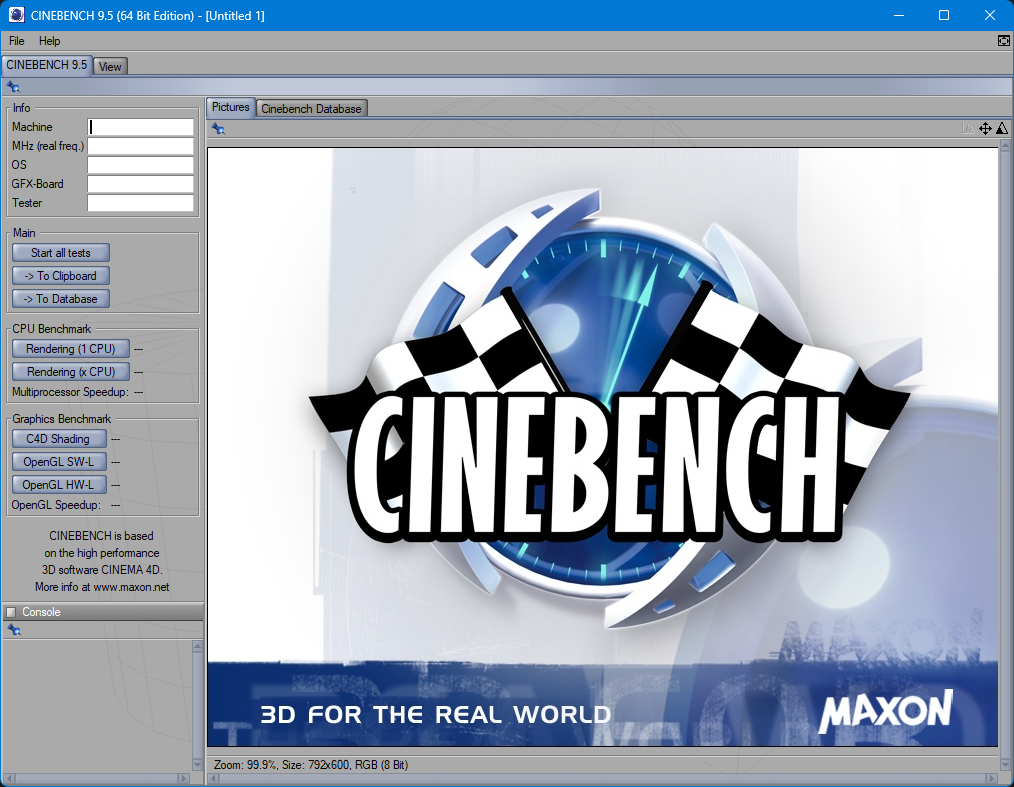
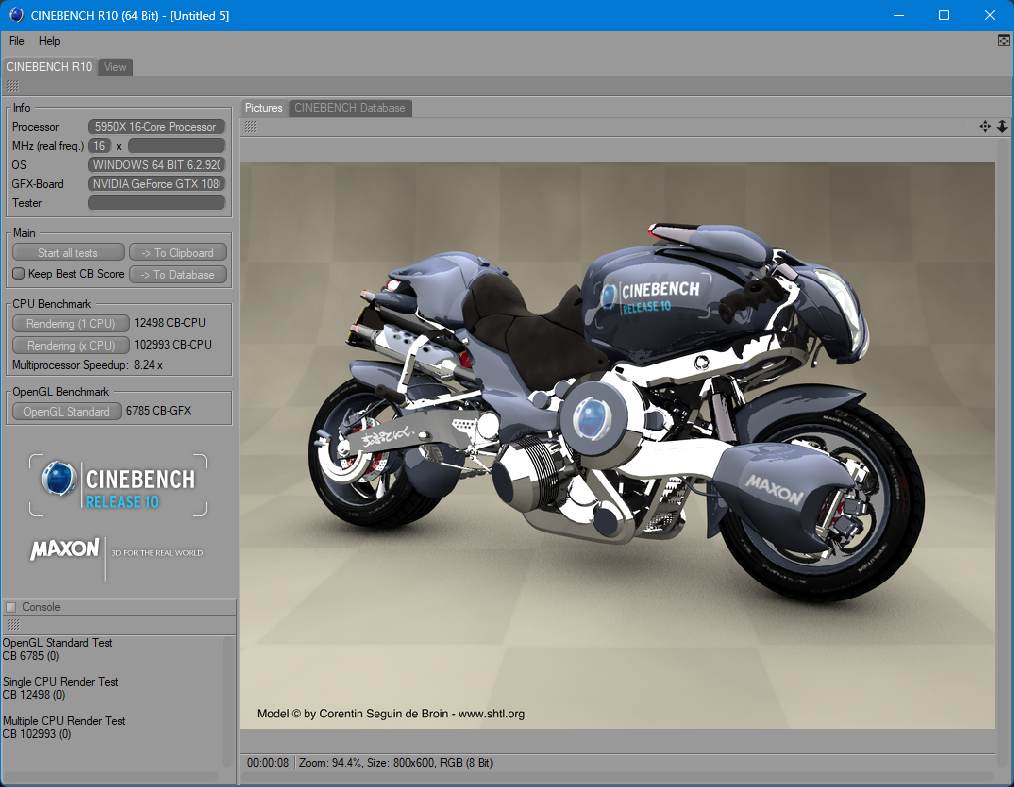
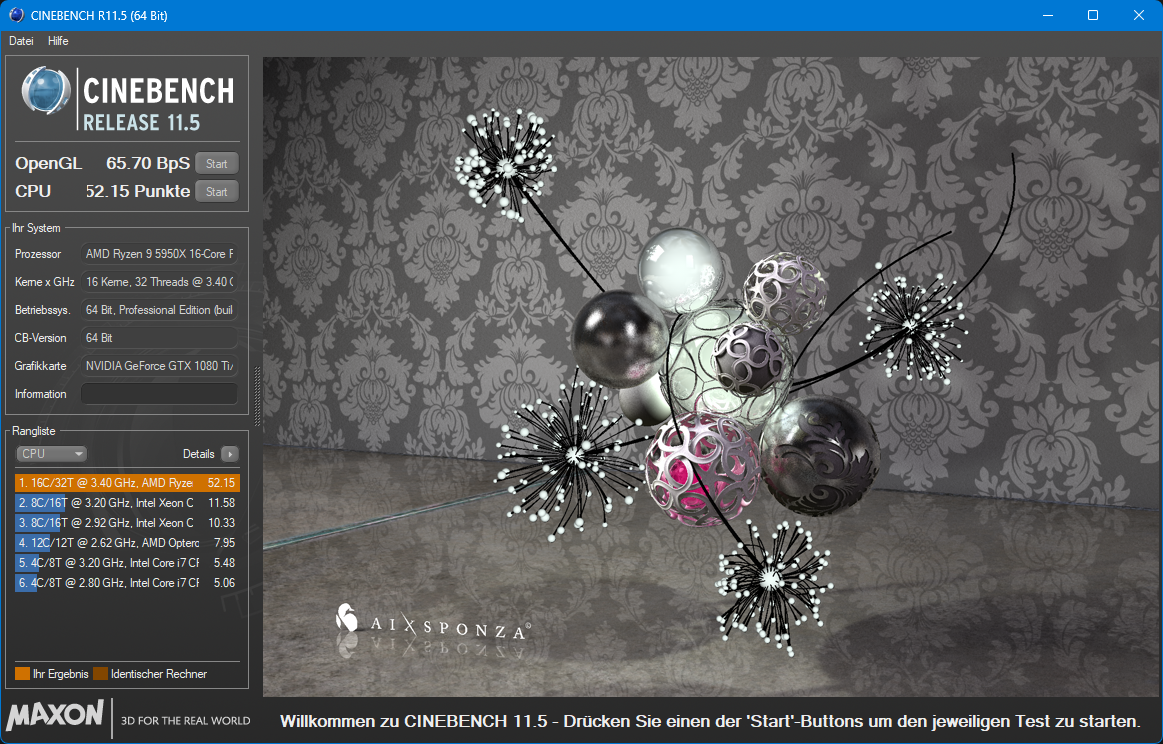
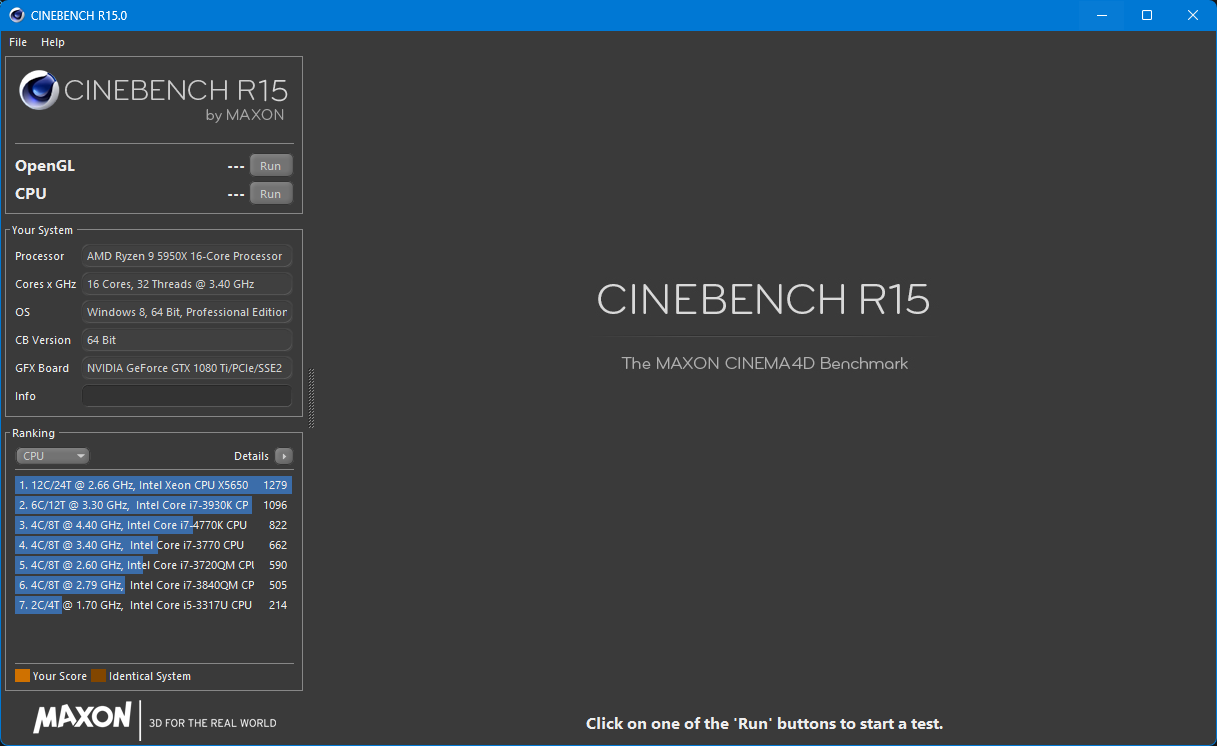
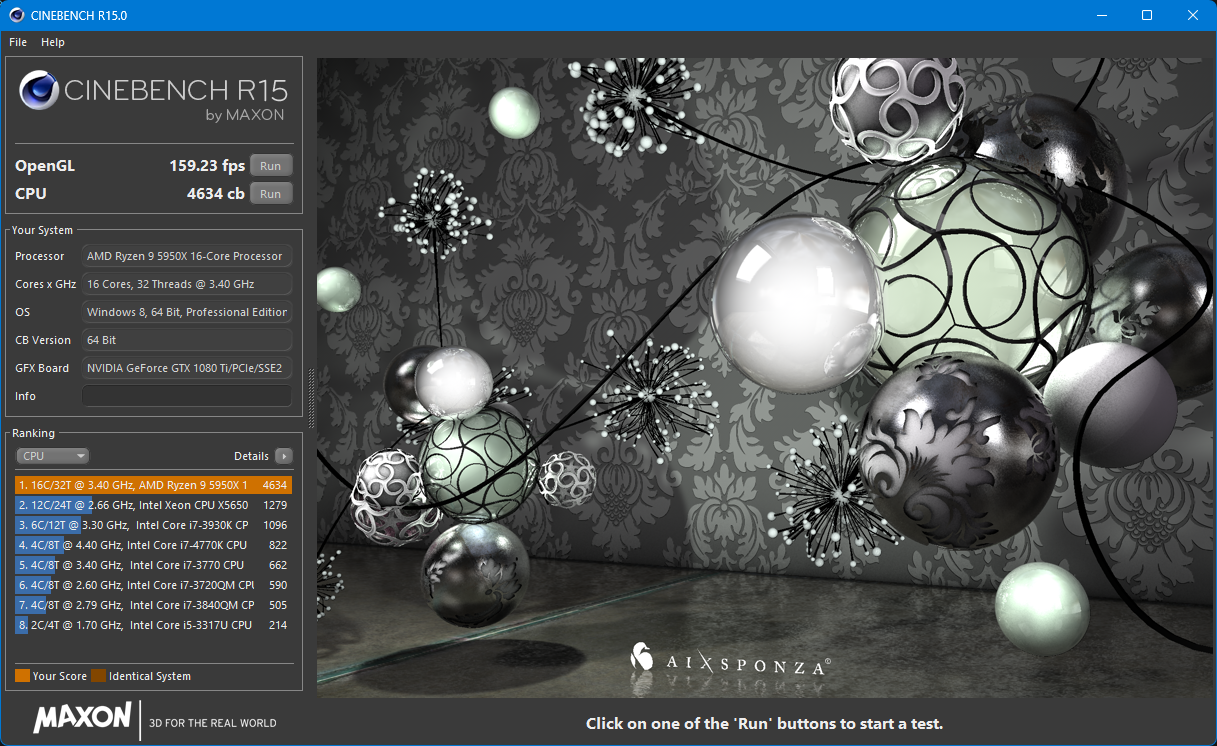
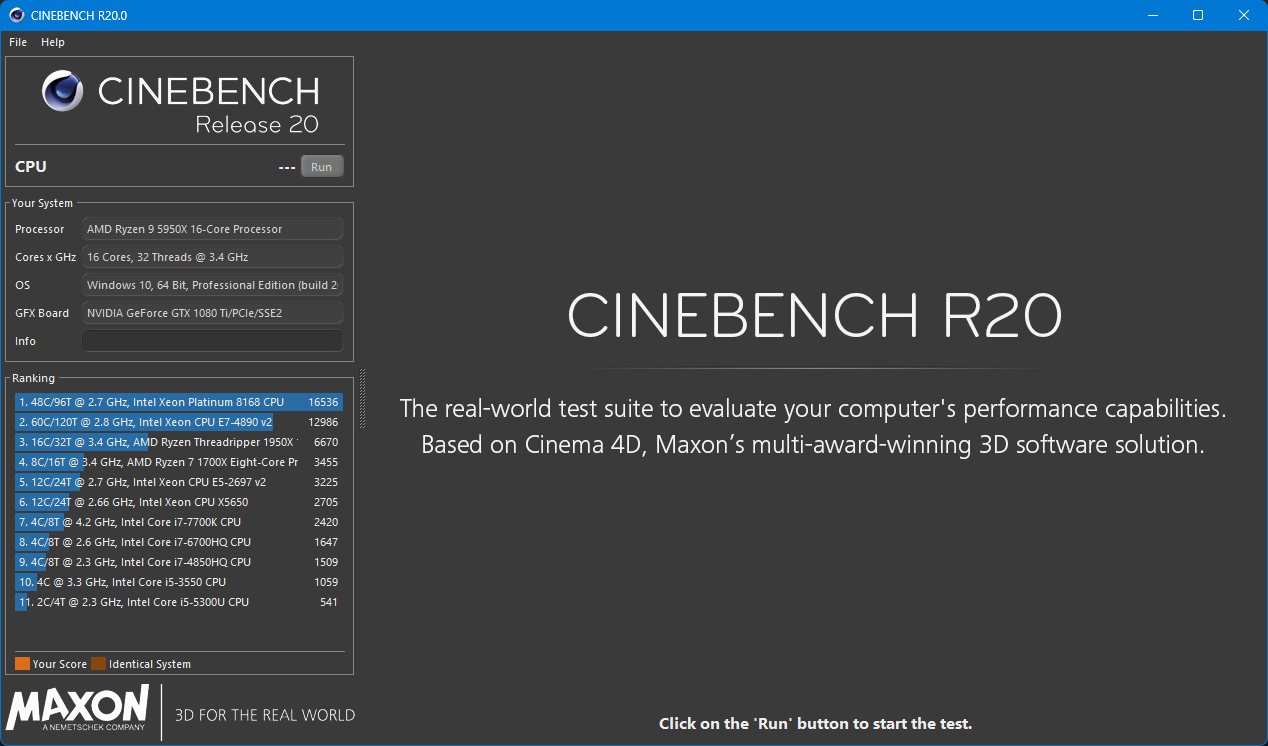
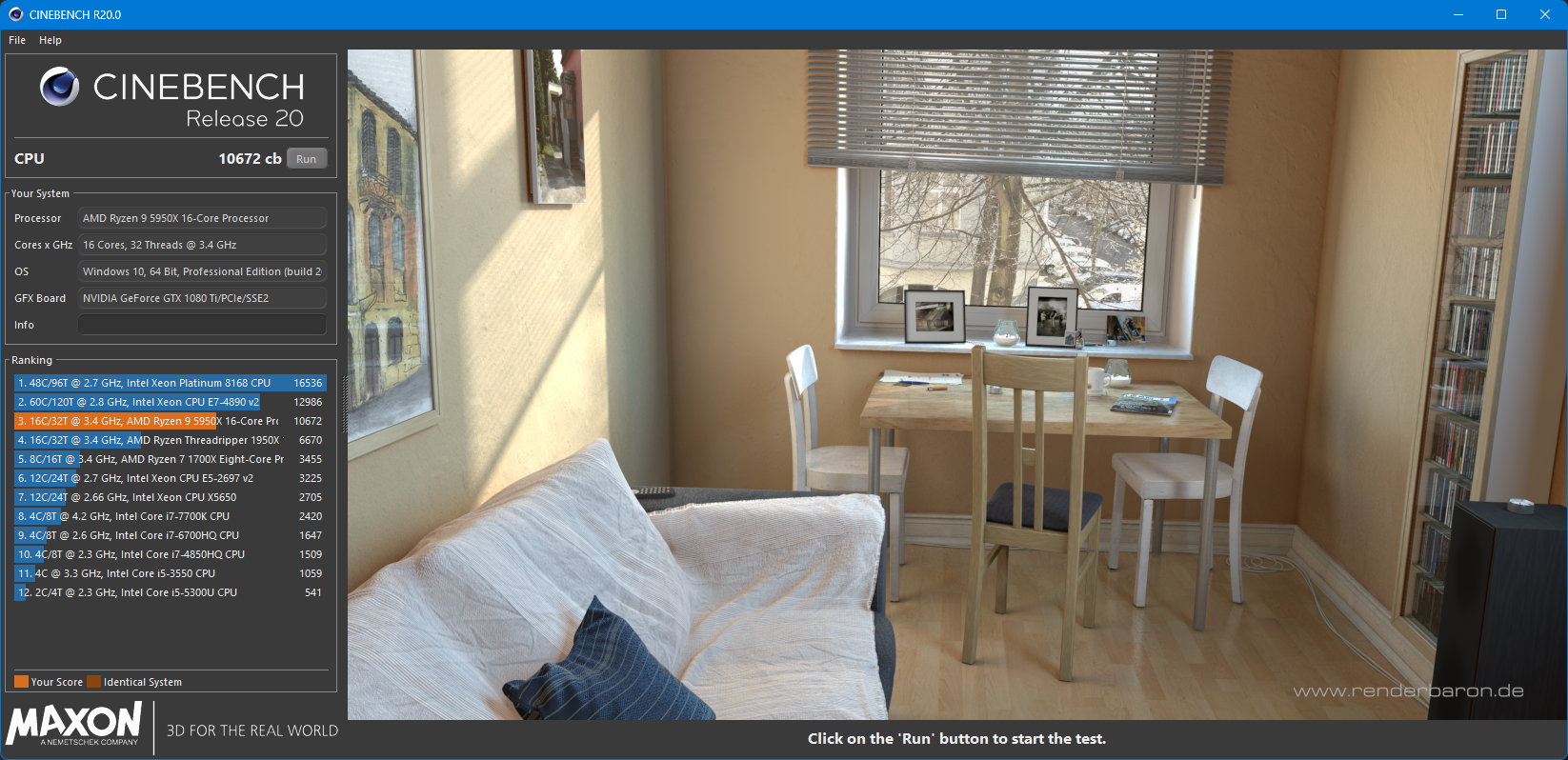
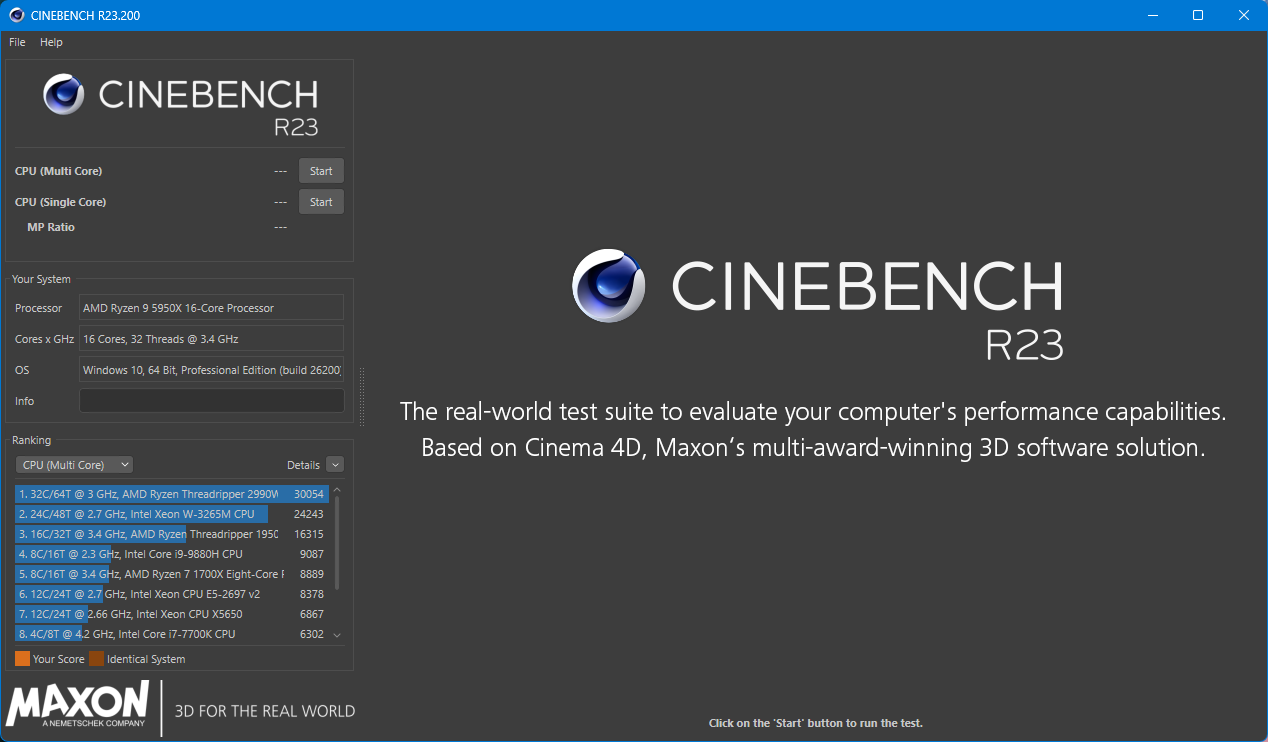
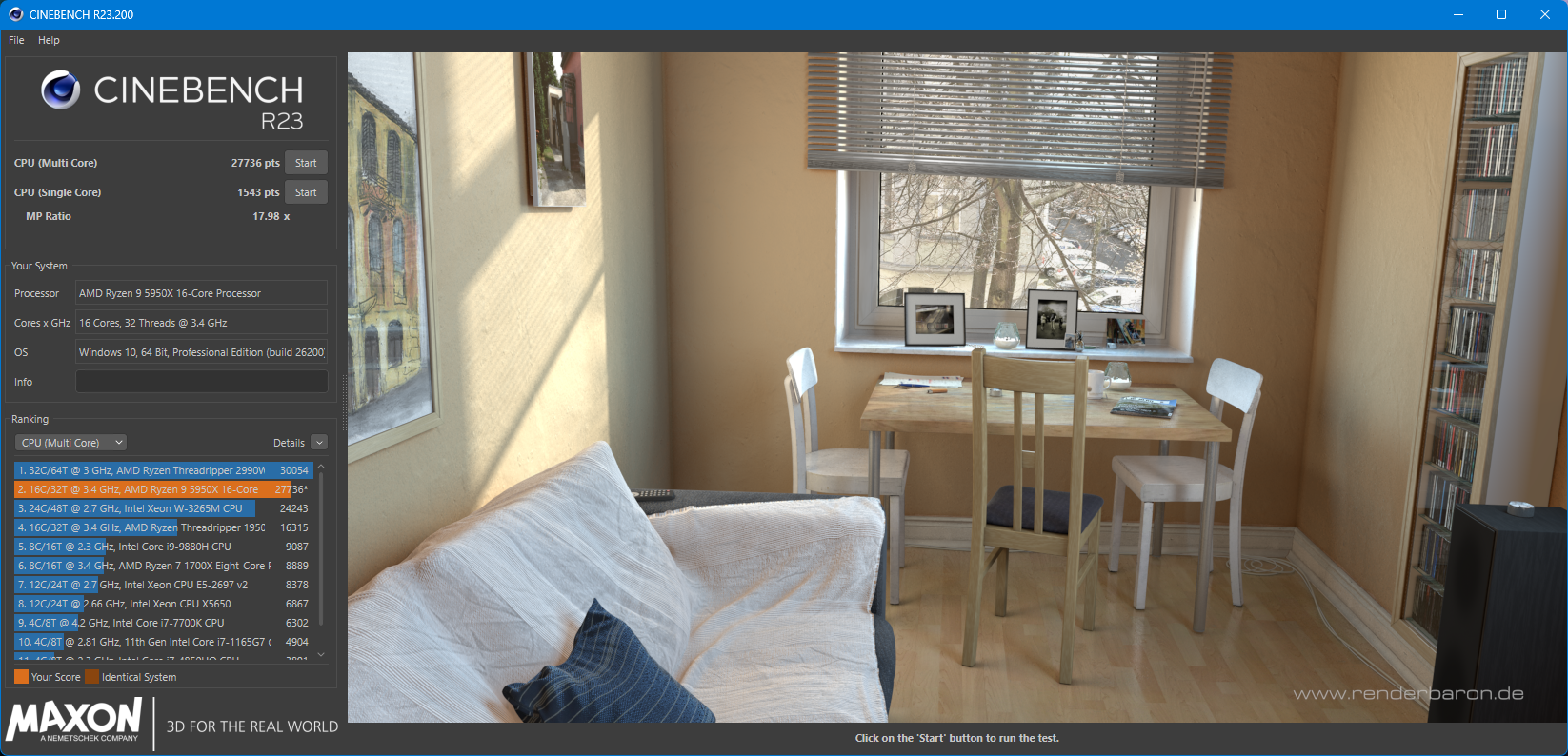
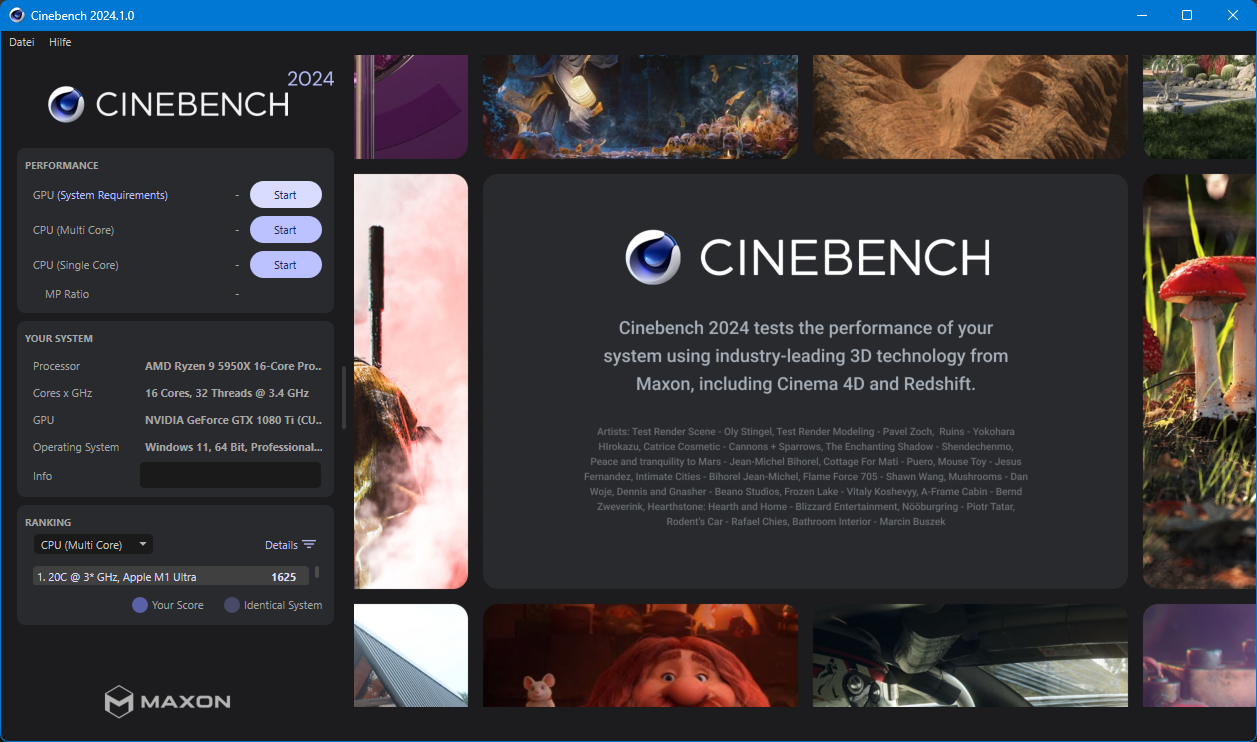
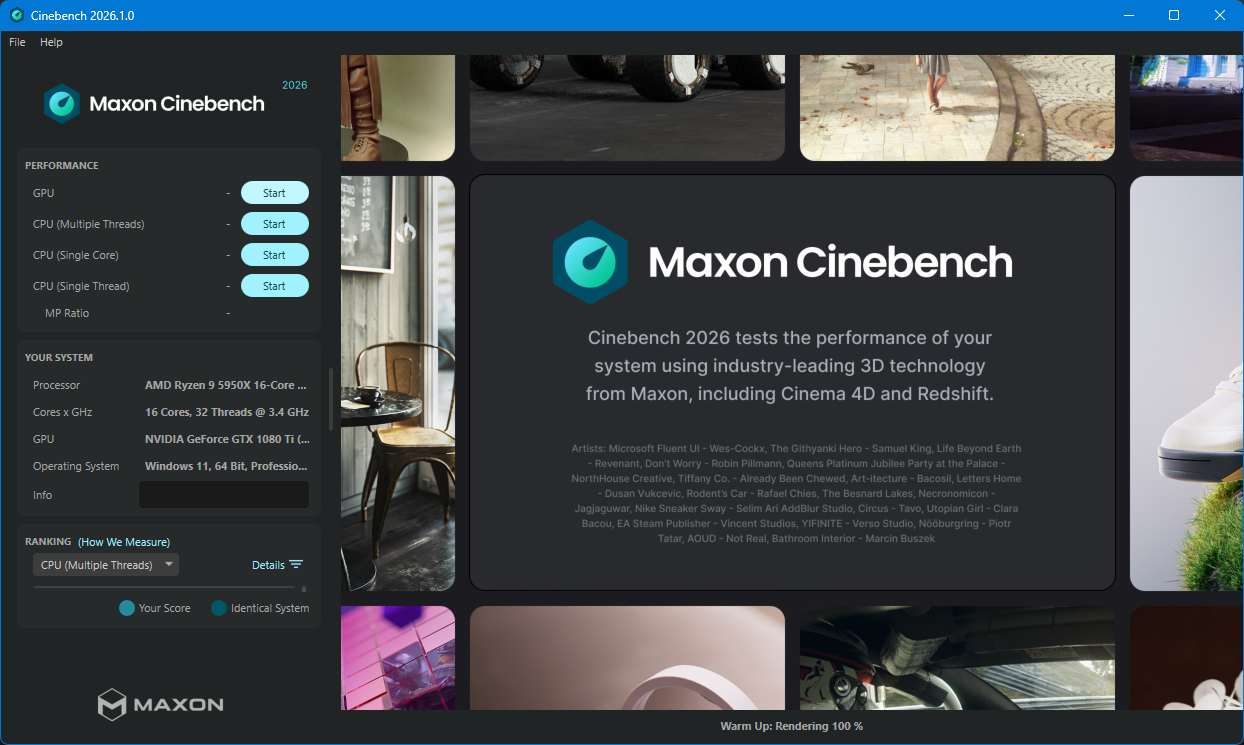
Cinebench is mainly used to test processors; either all threads or a single thread can be fully loaded and measured. Many versions also offer GPU testing. Here is an overview of the different versions in the form of screenshots:
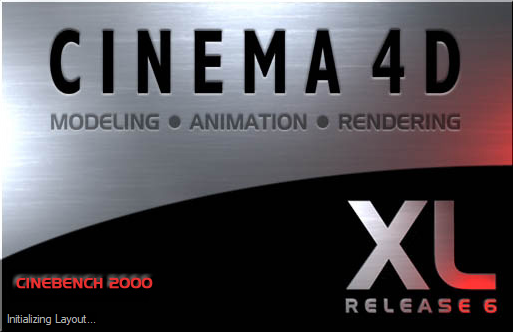
CineBench 2000
CINEBENCH 2003
CINEBENCH 9.5


CINEBENCH R10


CINEBENCH R11.5

CINEBENCH R15

CINEBENCH R20

CINEBENCH R23

Cinebench 2024


Cinebench 2026


Compatibility and more detailed information
Here, I have compiled a table of all versions known to me, including relevant information:
| Release | Architecture | GPU-Benchmark | Supported operating systems | Archive size for Windows | |
|---|---|---|---|---|---|
| CineBench 2000 | December 1st, 1999 | x86 (32-Bit) | Yes (OpenGL) | Windows 95 / 98 / NT 4 / 2000 or newer Mac OS X 8.0 or newer | 6,17 MB |
| CINEBENCH 2003 | January 1st, 2003 | x86 (32-Bit) | Yes (OpenGL) | Windows 98 SE / 2000 / XP or newer Mac OS X 9.0 or newer | 18,1 MB |
| CINEBENCH 9.5 | January 1st, 2004 | x86 (32-Bit) x86-64 (64-Bit) | Yes (OpenGL) | Windows 2000 / XP or newer Mac OS X 10.3.9 or newer | 44,3 MB |
| CINEBENCH R10 | August 1st, 2007 | x86 (32-Bit) x86-64 (64-Bit) | Yes (OpenGL) | Windows 2000 / XP or newer Mac OS X 10.3.9 or newer | 51,4 MB |
| CINEBENCH R11.5 | February 1st, 2010 | x86 (32-Bit) x86-64 (64-Bit) | Yes (OpenGL) | Windows 2000 / XP or newer Mac OS X 10.3.9 or newer | 142 MB |
| CINEBENCH R15 | September 30th, 2013 | x86-64 (64-Bit) | Yes (OpenGL) | Windows Vista, 7, 8 or newer Mac OS X 10.6.8 or newer | 81,9 MB |
| CINEBENCH R20 | March 1st, 2019 | x86-64 (64-Bit) | No | Windows 7 with SP1 or newer OS X 10.11.6 or newer | 221 MB |
| CINEBENCH R23 | November 11th, 2020 | x86-64 (64-Bit) | No | Windows 10 or newer macOS 10.13.6 or newer | 249 MB |
| Cinebench 2024 | November 1st, 2024 | x86-64 (64-Bit) ARM | Yes | Windows 10 or newer macOS 11.7.7 or newer | 1,30 GB |
| Cinebench 2026 | Dezember 9th, 2025 | x86-64 (64-Bit) ARM | Yes | Windows 10 or newer macOS 14.7 or newer | 2,54 GB |
I myself always use version R23 wherever possible, including additional results for better comparability (more on this in the next post). In terms of load and the hardware period I’m dealing with, this is a good compromise between load and compatibility: After all, I work a lot with older systems (Windows 10 and older) – so it’s helpful when two slower cores and relatively little RAM are still able to run in order to compare the existing hardware or test the effects of settings.
Regardless of this, R23 is also my standard version for overclocking processors and the version used in this blog to test and measure almost all CPUs that appear in “Hardware Setups”.
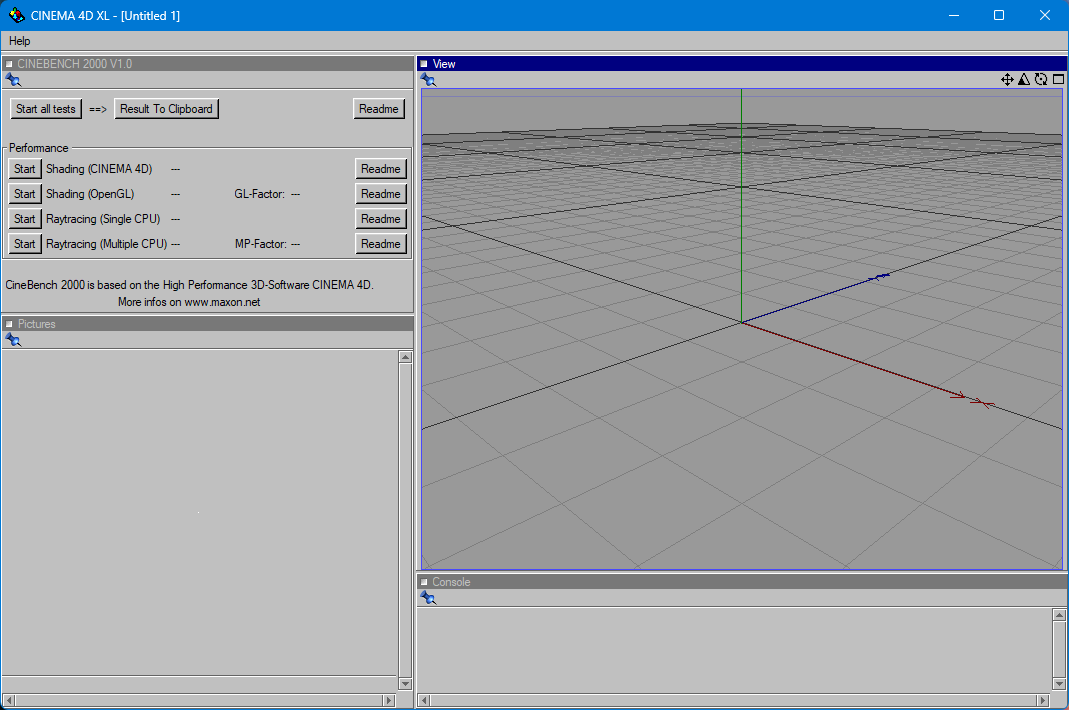
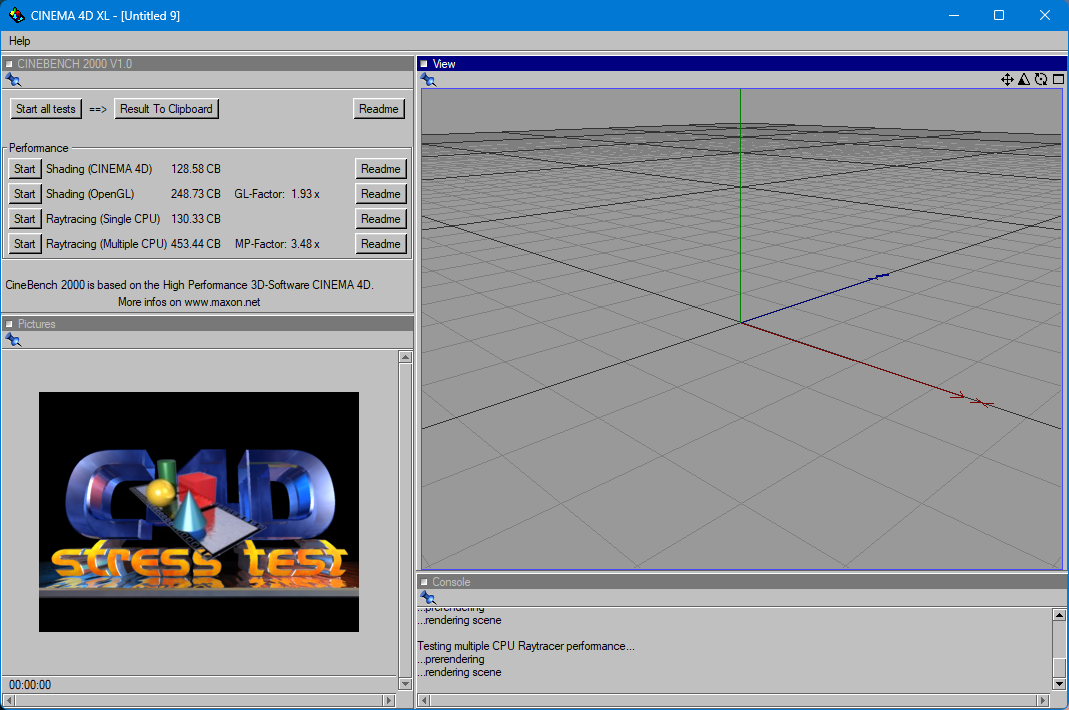
Even the first version, “CineBench 2000,” is still executable under Windows 11 (64-bit) today!
Download
All versions can be conveniently downloaded from TechPowerUp, among other places.