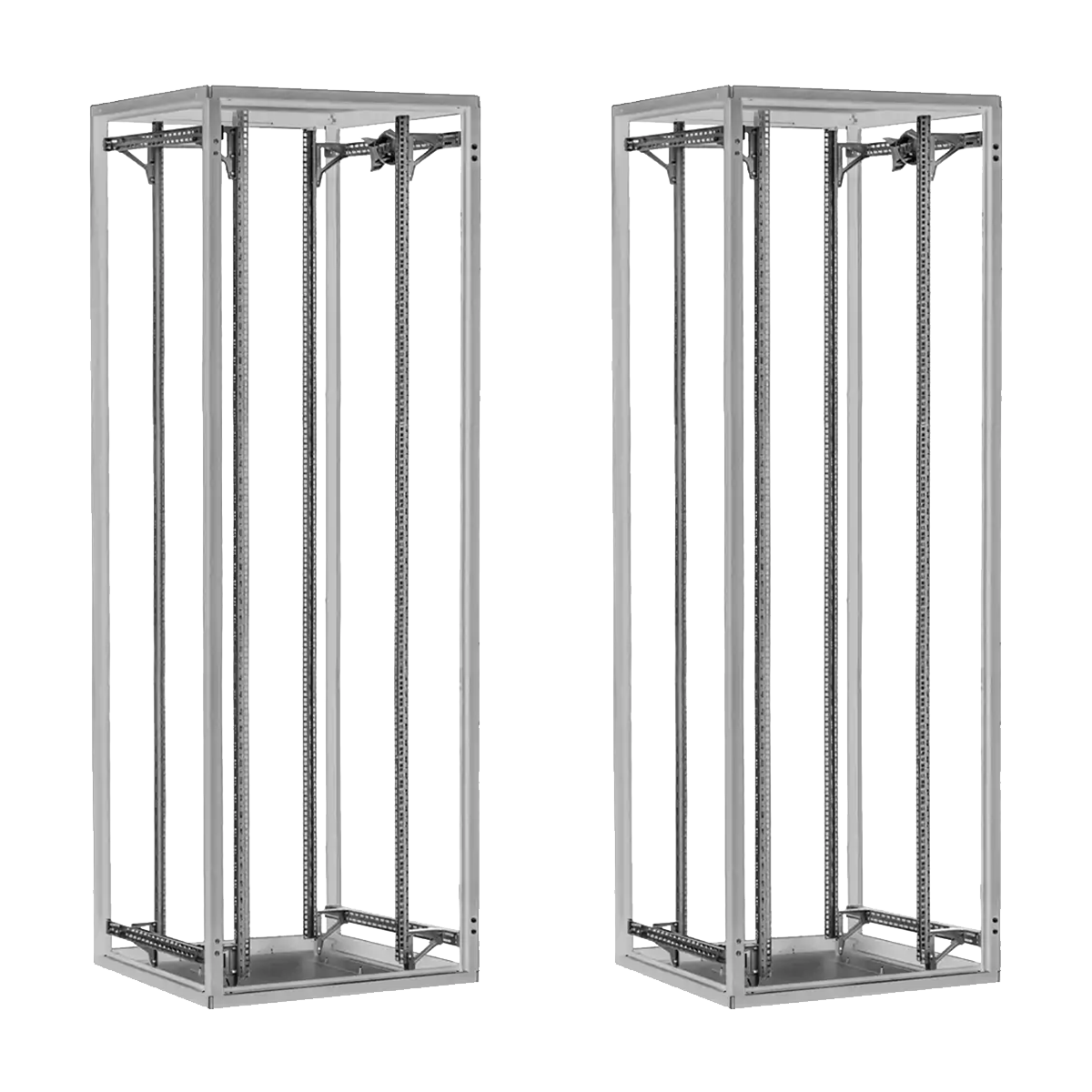
We have planned and already purchased two generously sized network cabinets (12SZBIT42U88RAGM from ZPAS), each with 42 U of installation space and a width and depth of 80 cm. One is on the ground floor to distribute the “incoming Internet” sensibly (the plan is to use fiber optic from Deutsche Giganetz, which has already been laid and is active, but cables from Vodafone or classic (V)DSL would also be possible, as well as mobile and satellite Internet, which are available almost everywhere) and to create a cool place for the storage servers and NAS.
This article will focus on this very cramped built-in cabinet. The second cabinet will be located in the DG and will be responsible for computing and most of the switching, in a specially partitioned and separately air-conditioned area with more than enough space in every direction.
 ⧉ IT-Budget
The problem
In Germany there are a multitude of regulations governing virtually everything in the electrical sector, with dependencies on everything else. In some cases, this leads to complicated situations, such as the one described here:
There must be at least 1.20 meters of unobstructed space in front of the main meter cabinet. The same applies to the house connection box (HAK), which, like the meter cabinet and the network cabinet, is located in a room measuring less than 7 square meters. That sounds cramped and it is: the somewhat unfavorable L-shape of the room further exacerbates the problem.
It is not possible to maintain both distances at the same time; unfortunately, in old buildings, you can’t always choose. Since the meter cabinet needs to be accessed frequently and the HAK virually never needs to be accessed, the priorities are clear – but what if you need to create the distance to the HAK (temporarily)?
What to do?
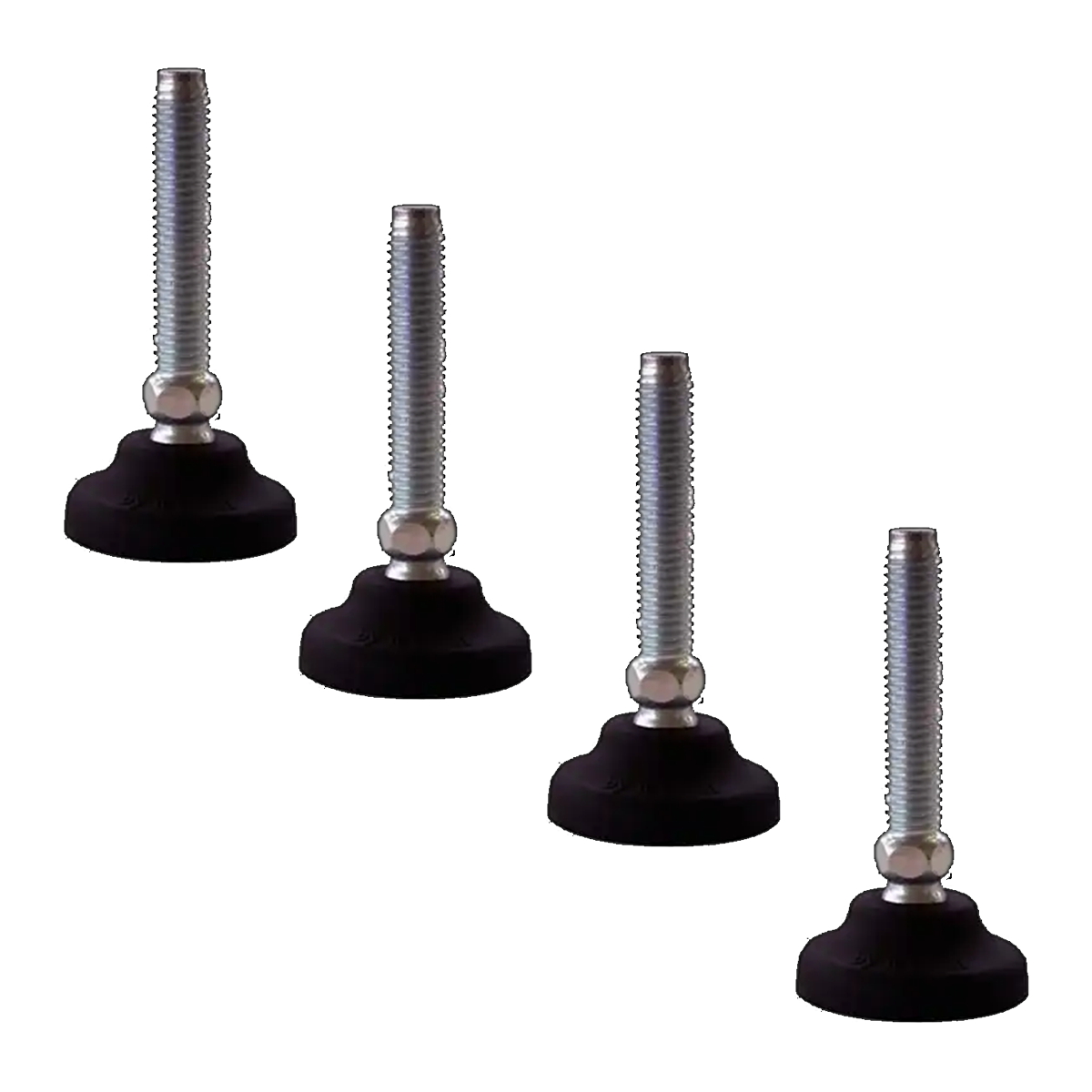
Fortunately, there is an M12 thread at each corner of the base plate of the cabinets, which is even open on the inside and therefore does not significantly restrict the screw-in depth. The network cabinets come with feet for levelling:
 ⧉ IT-Budget
If I were to install these simple feet* as originally planned, the cabinet, with its considerable weight once fully equipped, would never be able to be moved again. On the one hand, this is good because the Cat. 7A installation cables* are not designed for movement anyway, but on the other hand, it is bad because it would be impossible to move the whole thing temporarily.
There are a variety of casters available as an alternative, with or without brakes, made from a wide range of materials. The simplest solution would be to install casters with M12 threads* instead of the feet. The disadvantage is that these “stand in the floor,” as PVC will be laid in this room and will certainly give way somewhat over time. At the same time, standing permanently in the same position is probably also not particularly good for the casters’ bearings.
It exists, the optimal solution:
After doing some research, I came across several types of heavy-duty casters that combine both:
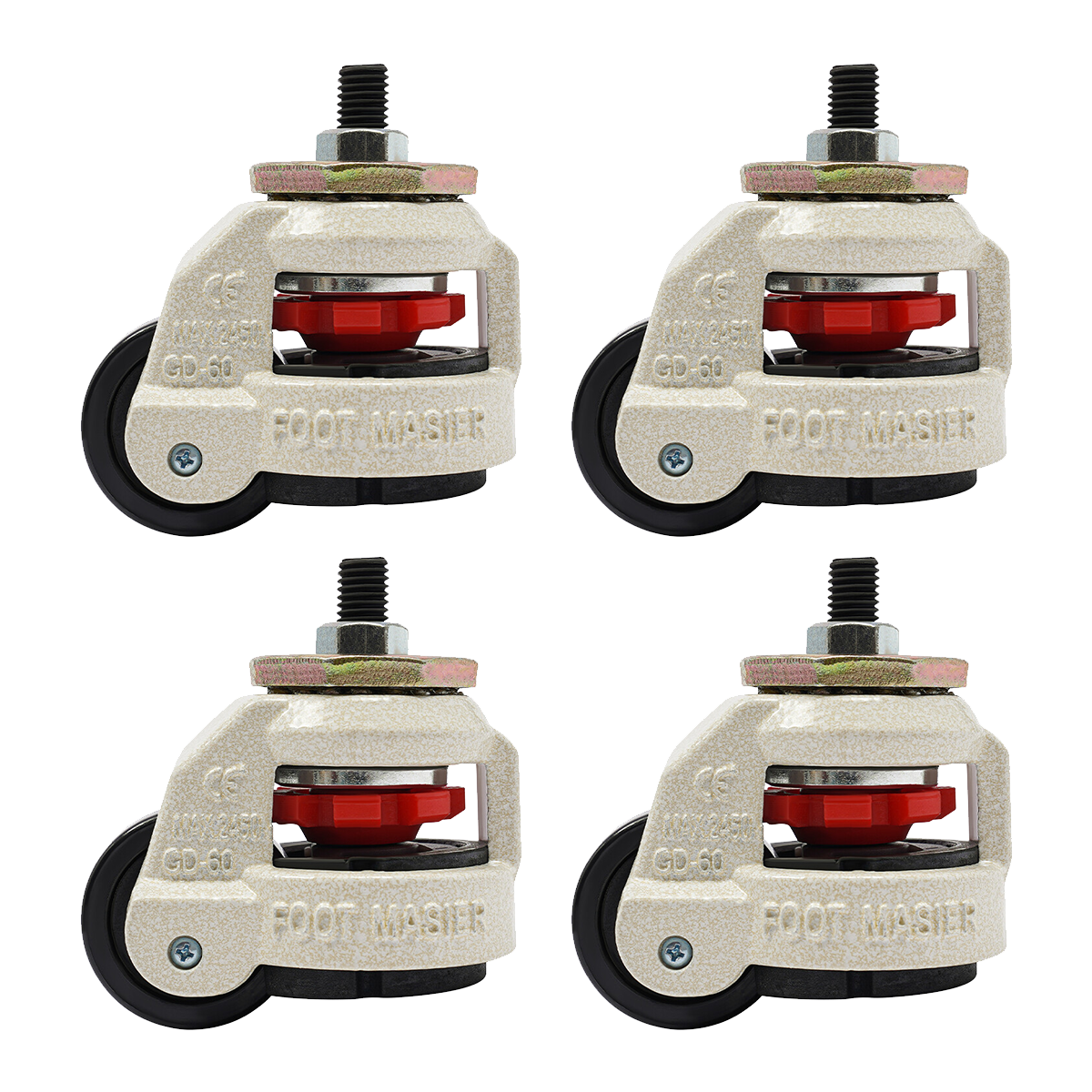
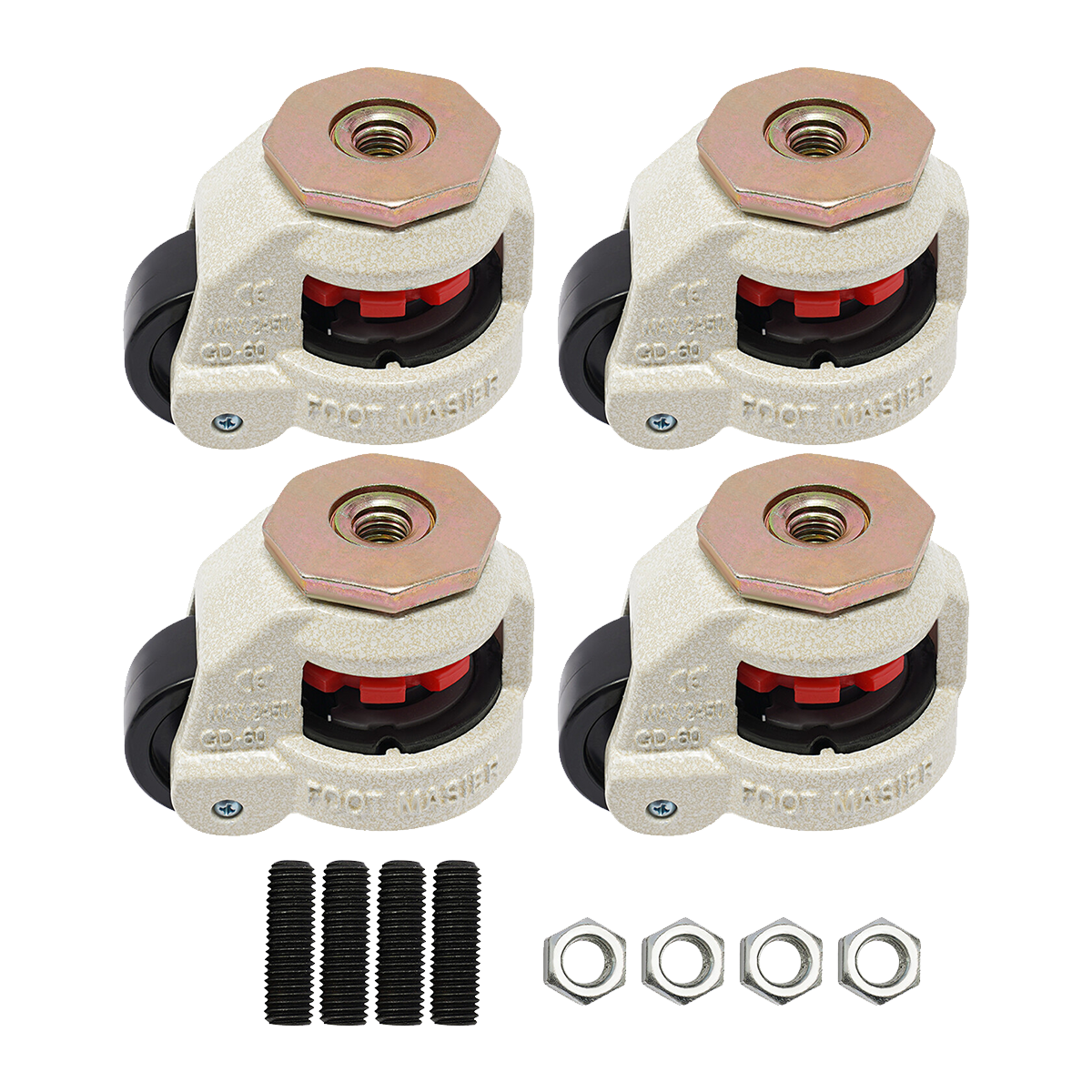
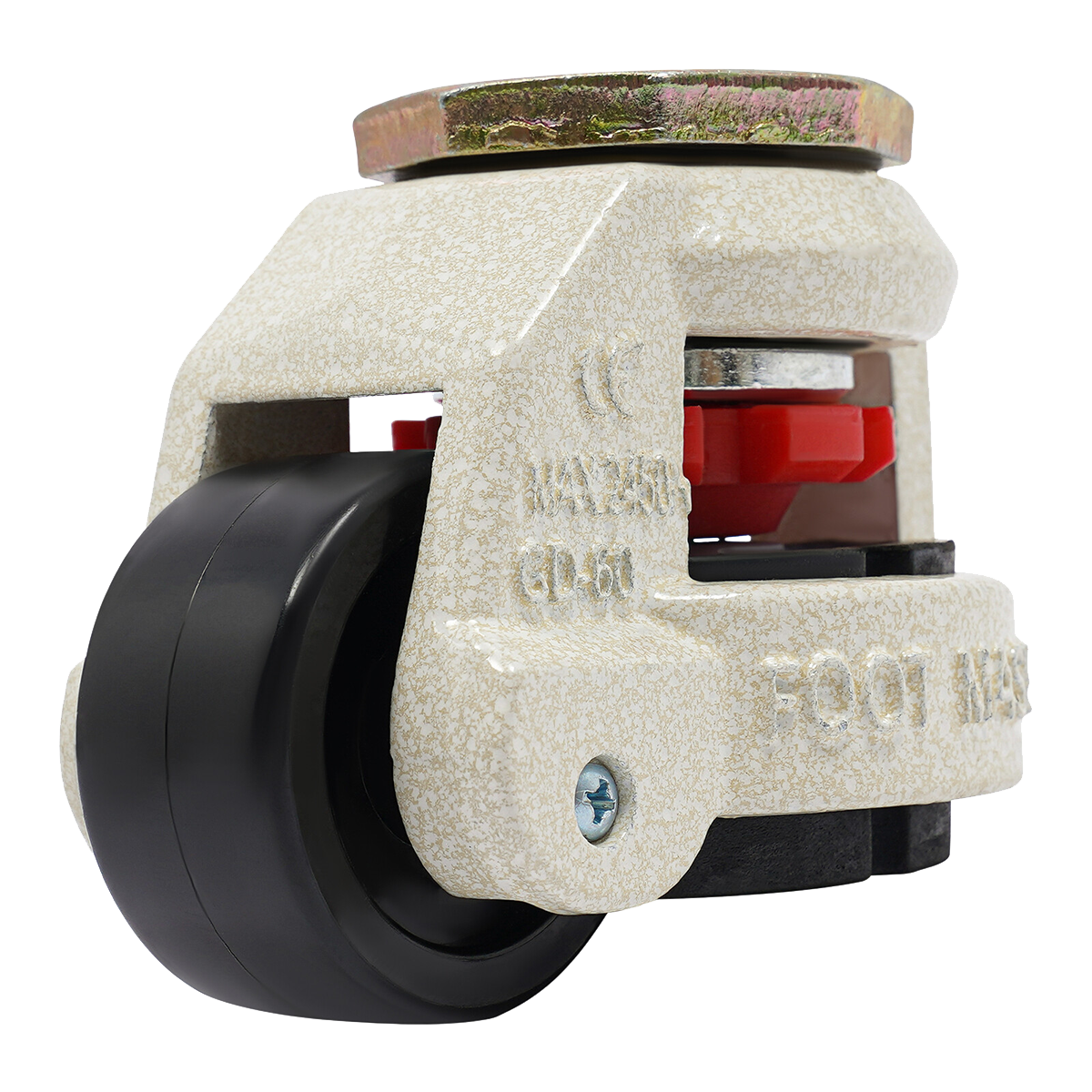
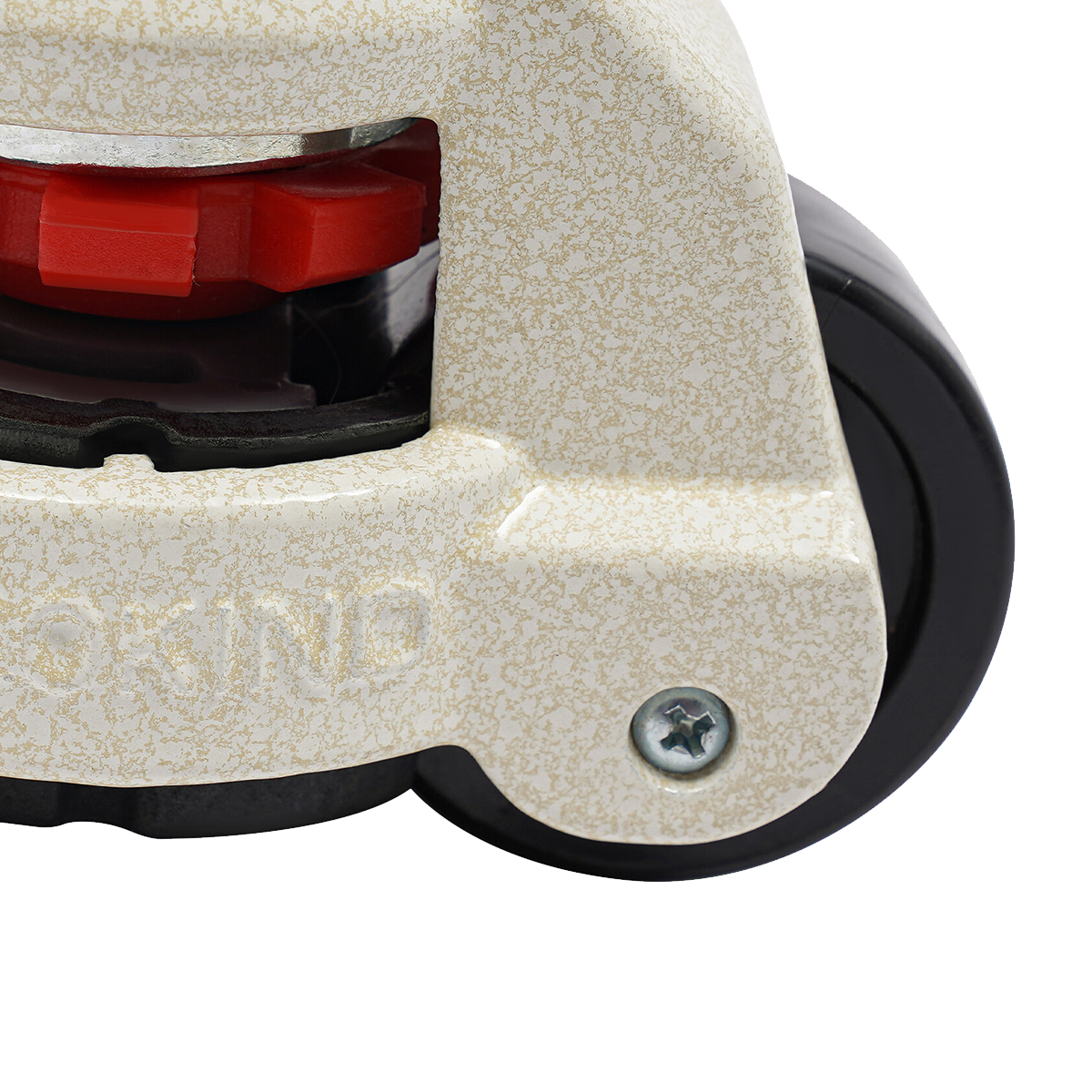
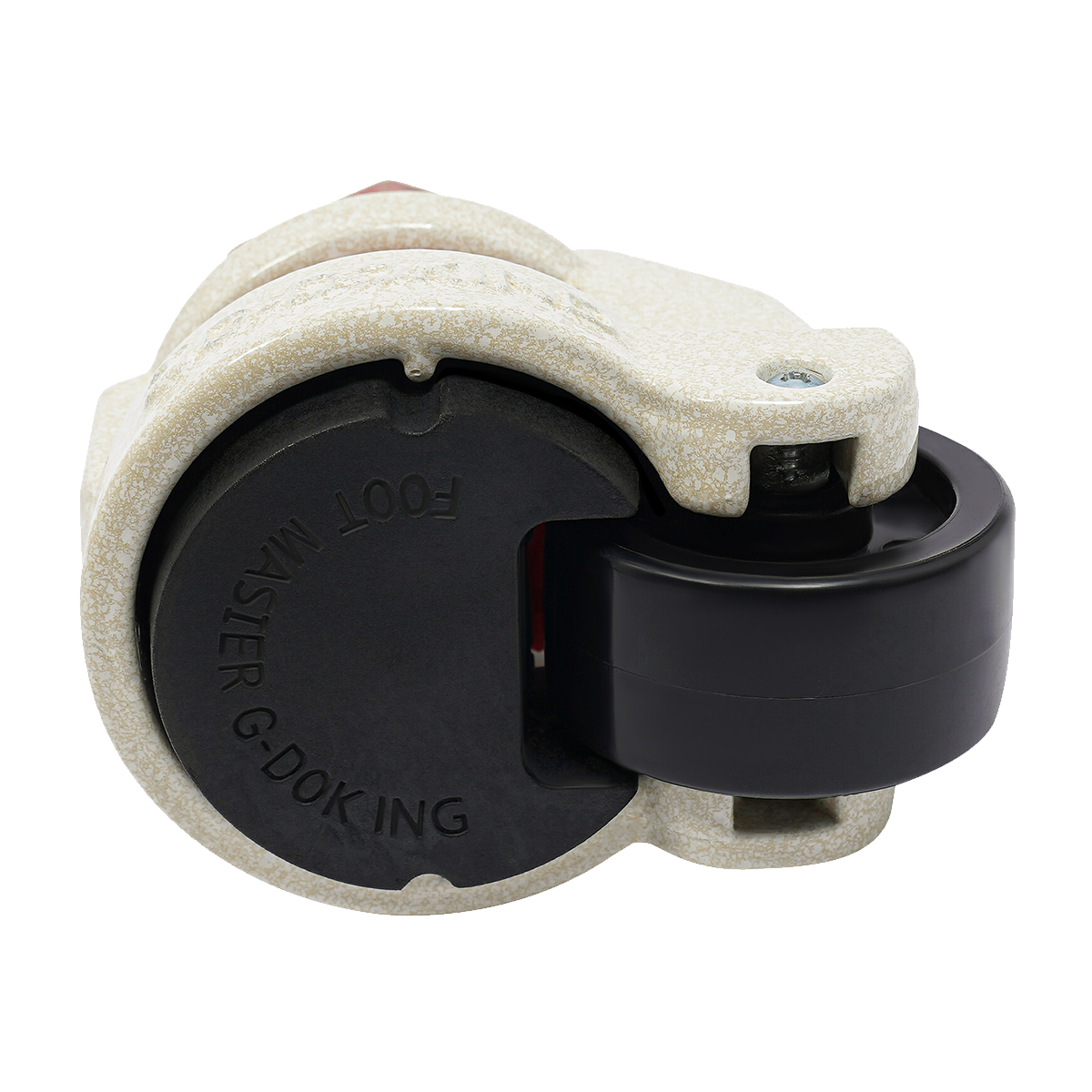
a caster and a foot, which is even rubberized. The original manufacturer of this type of combination base appears to be G-DOK with the brand name “FOOT MASTER®” (Product overview as PDF, archive.org), with corresponding patents and prices. Since most things are quickly copied these days, it’s not hard to find a much more affordable and equally suitable clone (note the copied but modified “FOOT MASIER” instead of “FOOT MASTER®”):
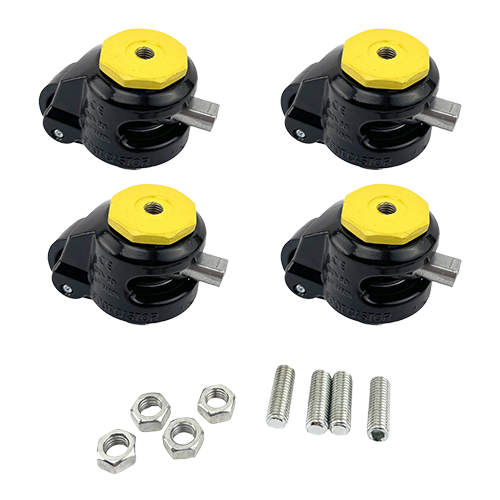
Von diesem gibt es dann sogar wie im Original noch eine leicht weiterentwickelte Form als Nachbau, u.a. mit Weldinger-Branding* – für diese Variante habe ich mich letzendlich entschieden: Statt sich wie bei ersten Variante mit dem Drehrad zur Höhenverstellung abmühen zu müssen (das mit mehr Gewicht und mehr Standzeit garantiert wesentlich schwerer zu verstellen sein wird) kann man den integrierten Fuß einfach “hoch- oder runterrätschen”, bei hoher Gewichtsbelastung dann auch z.B. mit einem Schraubendreher als Verlängerung zur Kraftverstärkung:
As with the original, there is even a slightly more advanced replica version available with Weldinger branding*, among other offers – I ultimately decided on this variant: Instead of having to struggle with the rotary wheel for height adjustment (which will definitely be much harder to adjust with more weight and after some time), as with the first version, you can simply “ratchet up or down” the integrated foot, and for heavy loads, you can also use a screwdriver as an extension to increase the force:
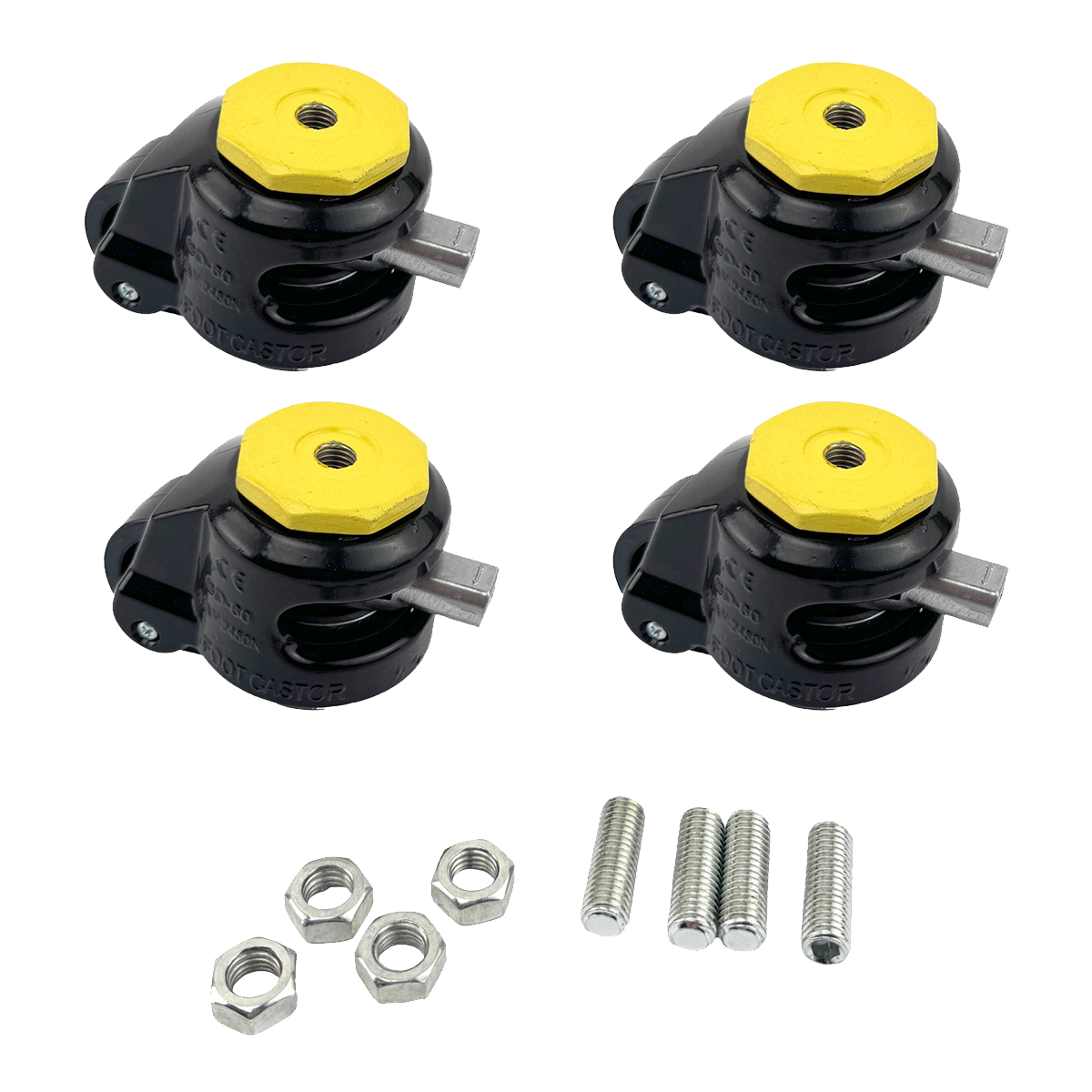
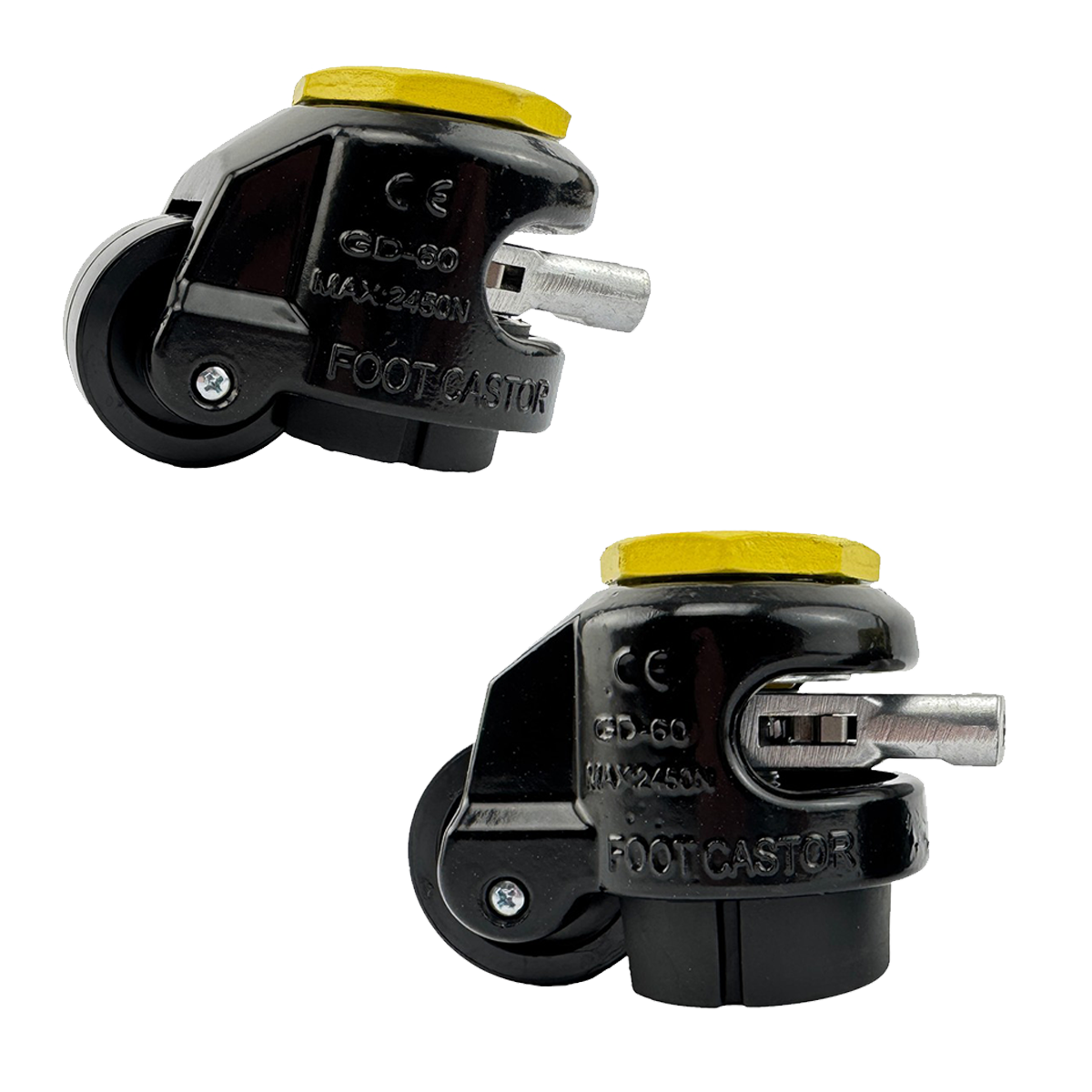
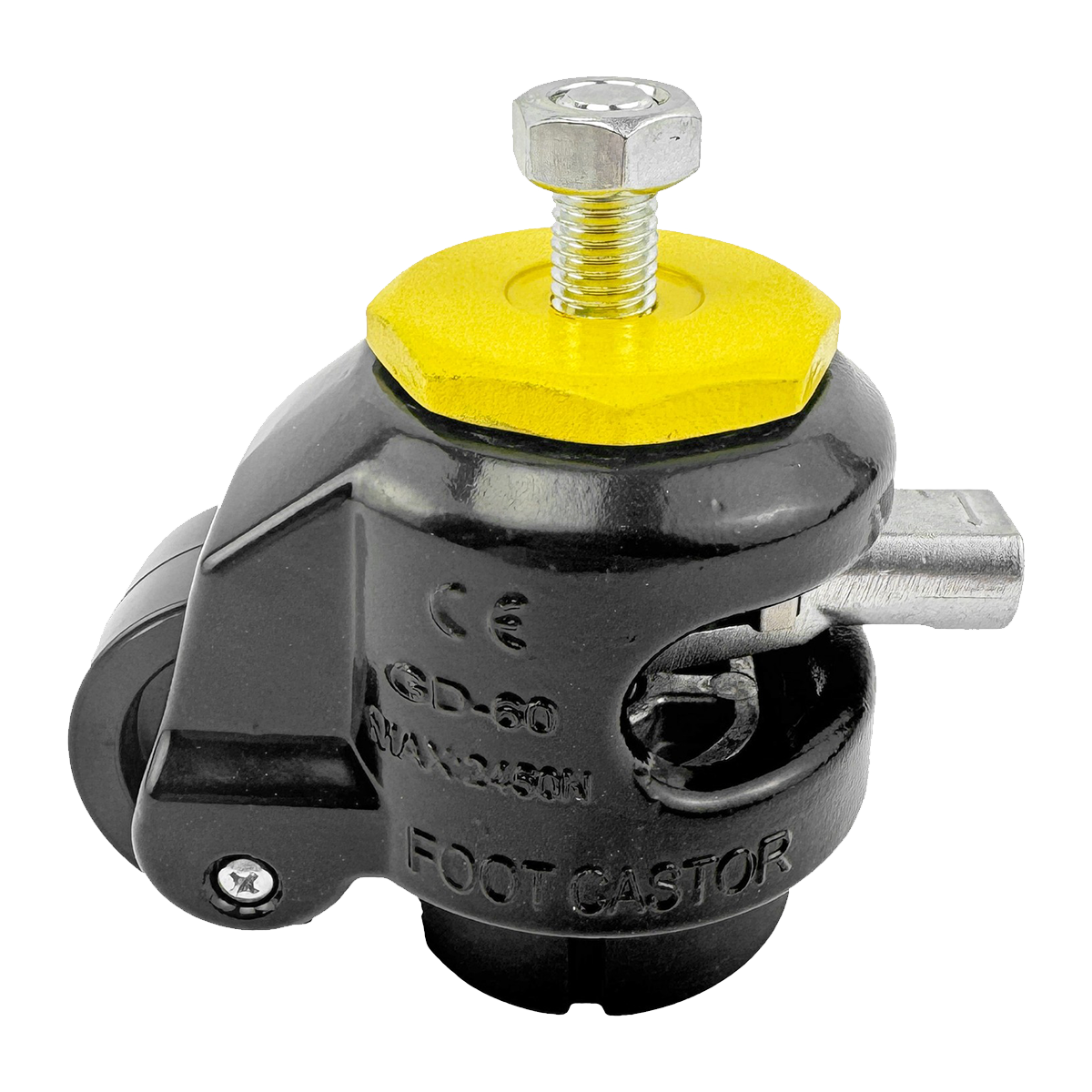
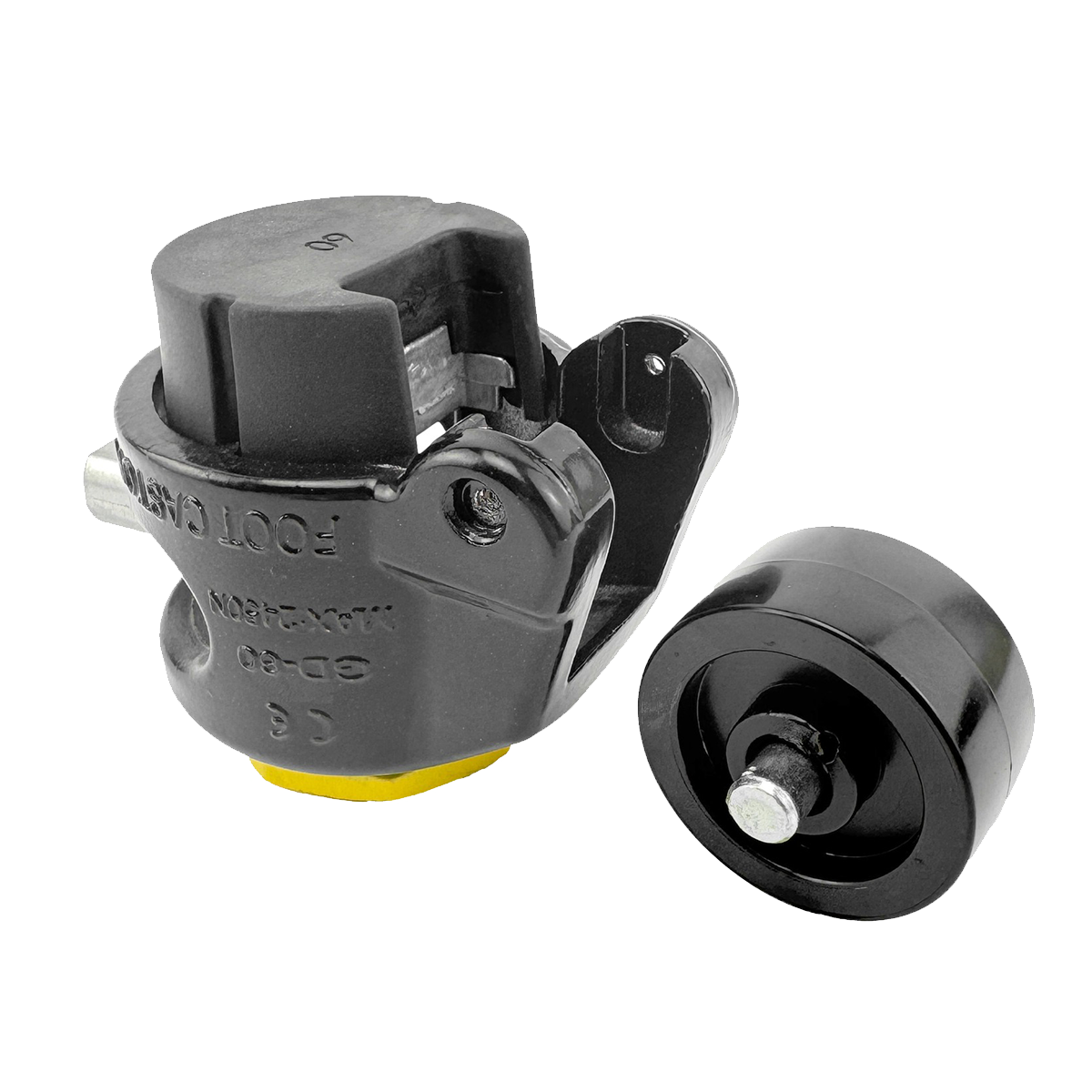
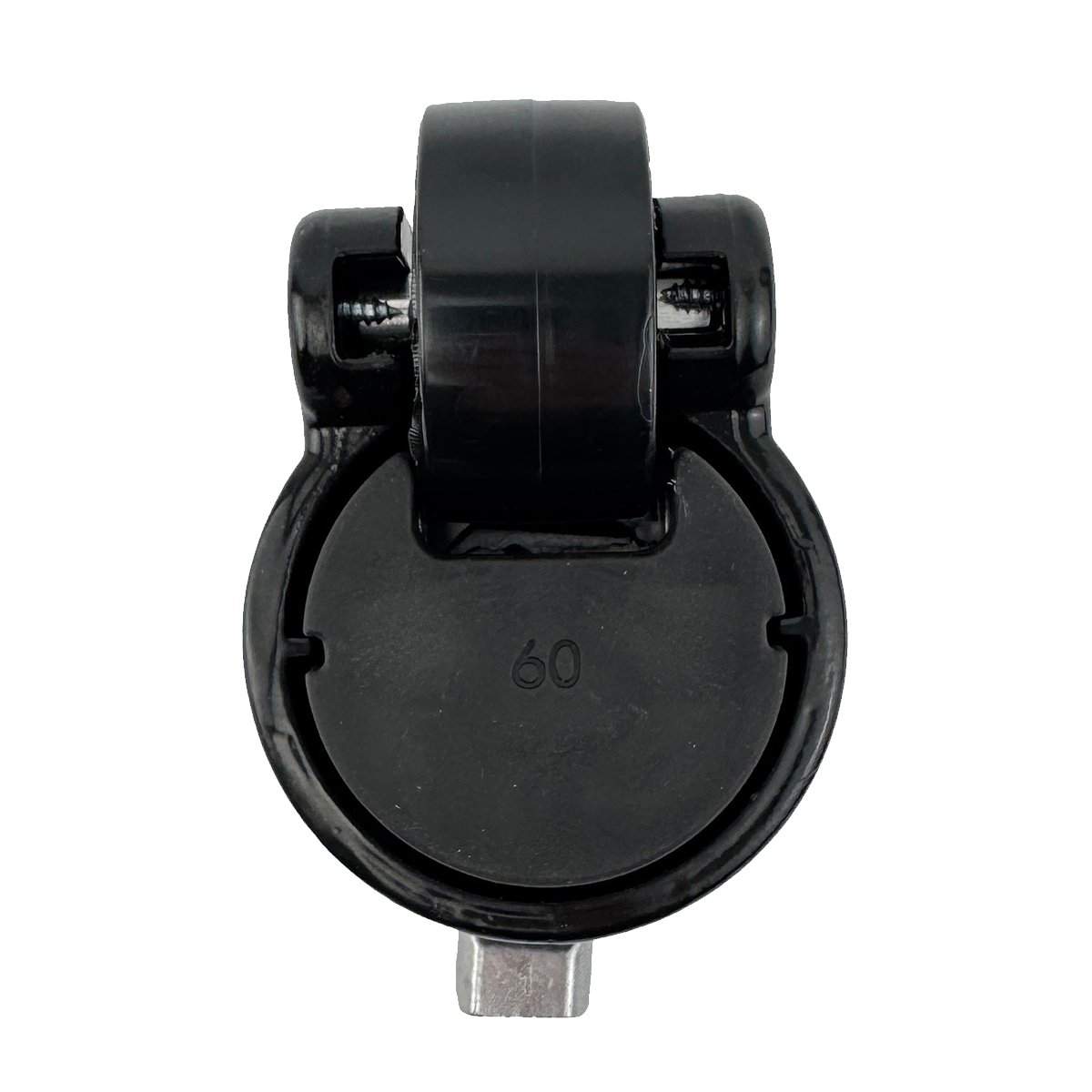
As with the previous swivel wheel version, the weight rests permanently on the rubberized foot, which in turn can be raised or lowered internally by means of a thread, ensuring that it stands securely. If movement is necessary, all four feet can simply be “ratcheted down” until the roller stands securely and the foot is far enough off the ground.
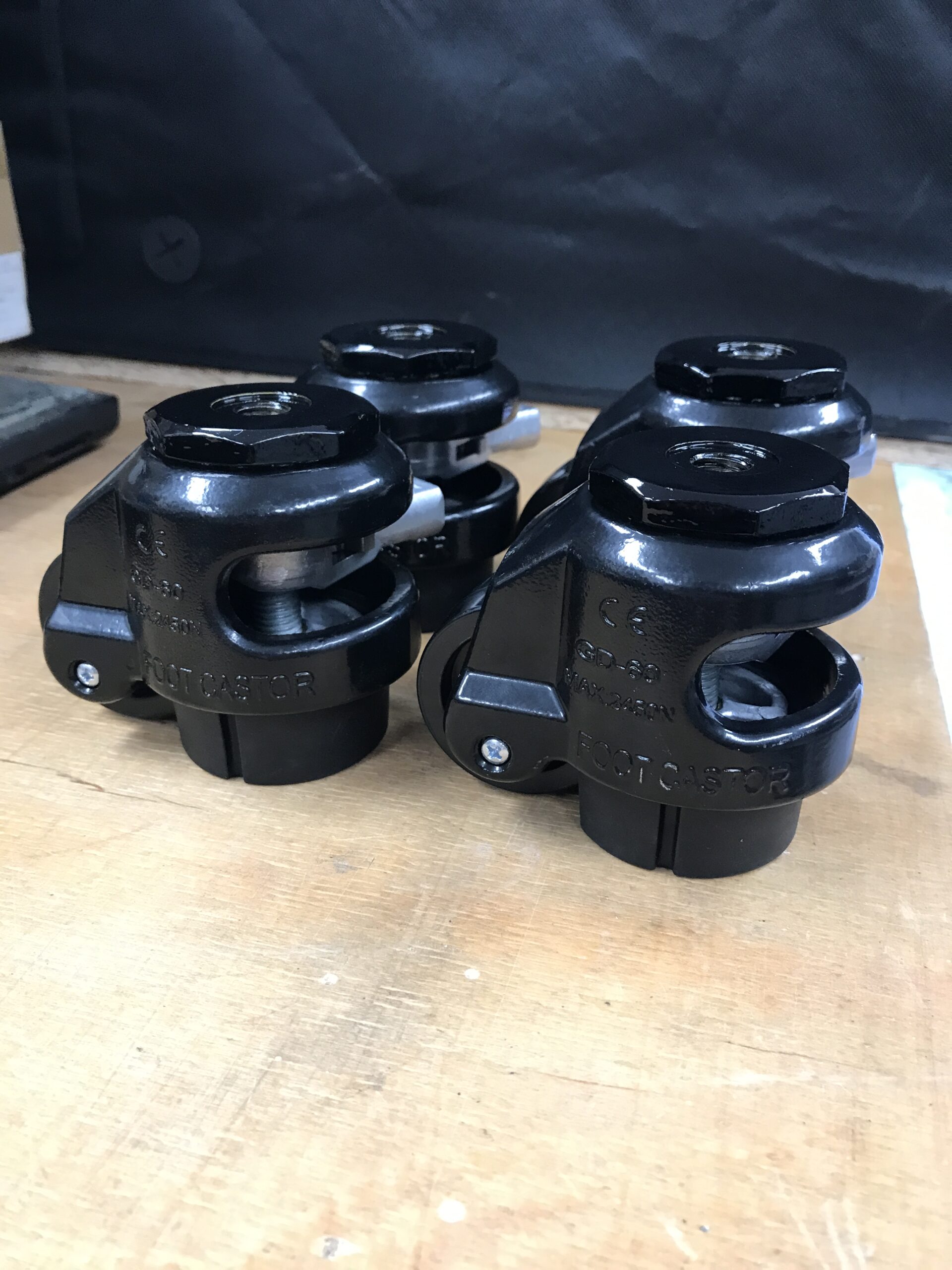
This was also copied, but not quite as brazenly as the previous version and is marked with “FOOT CASTOR”.
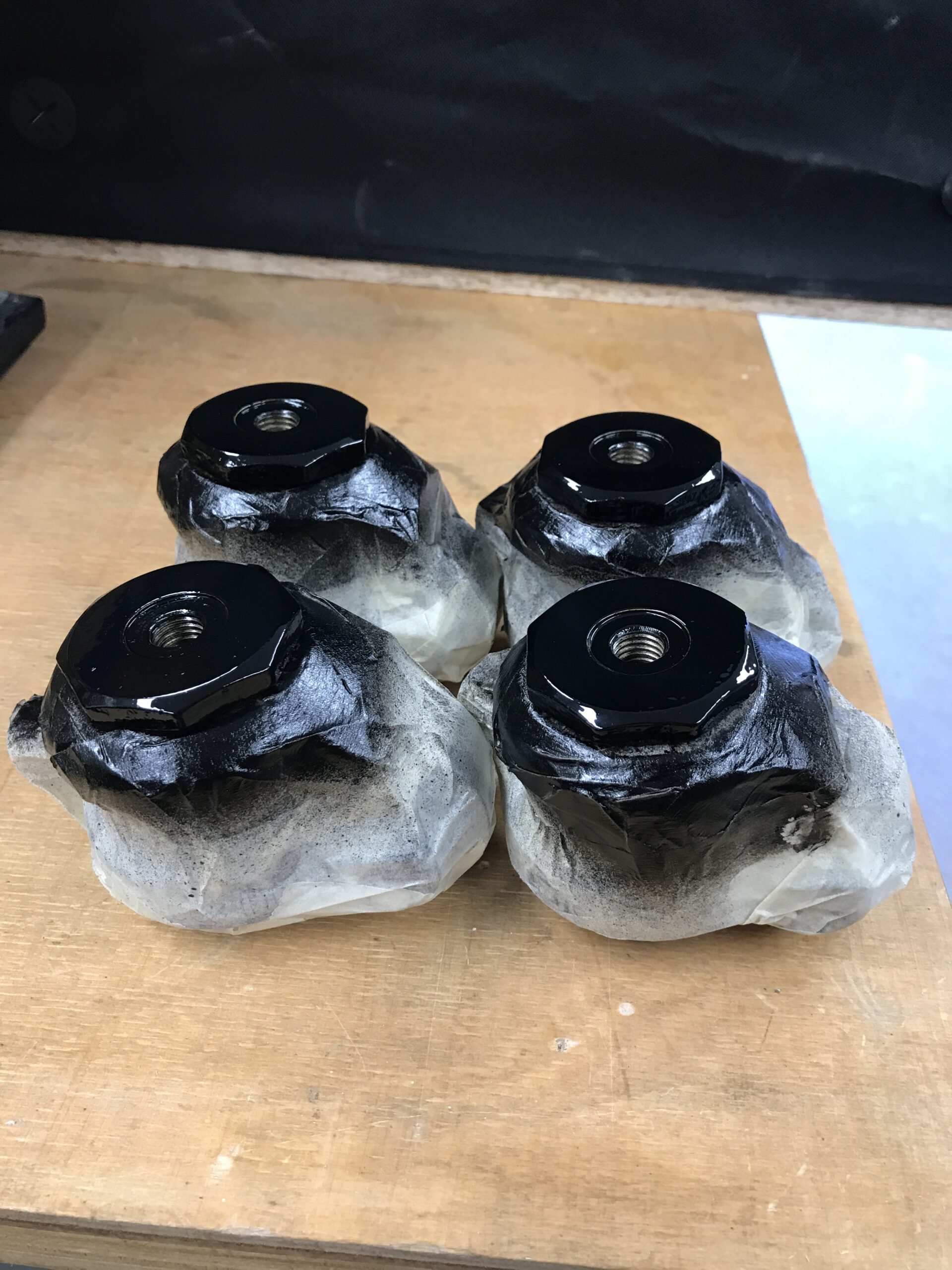
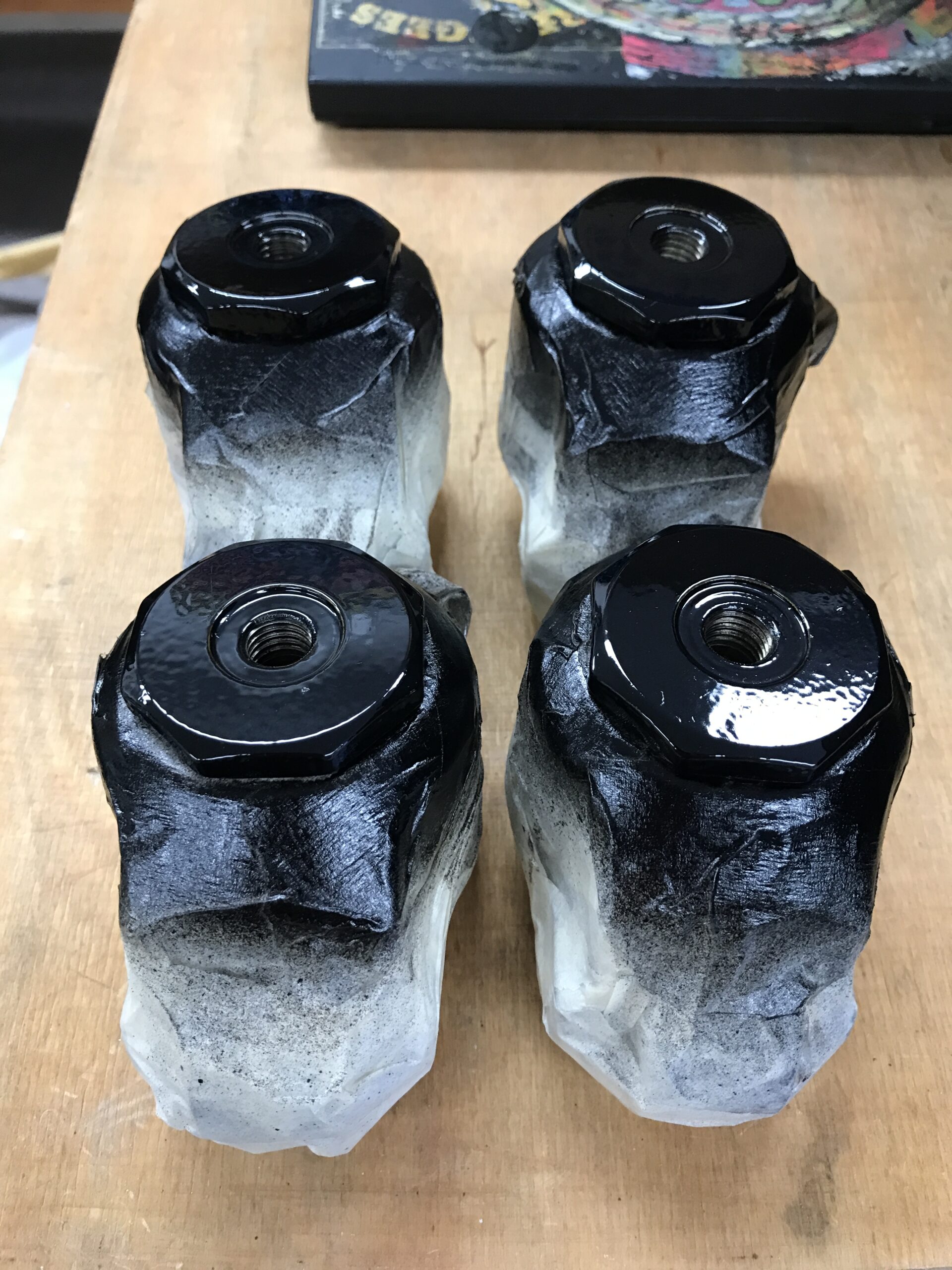
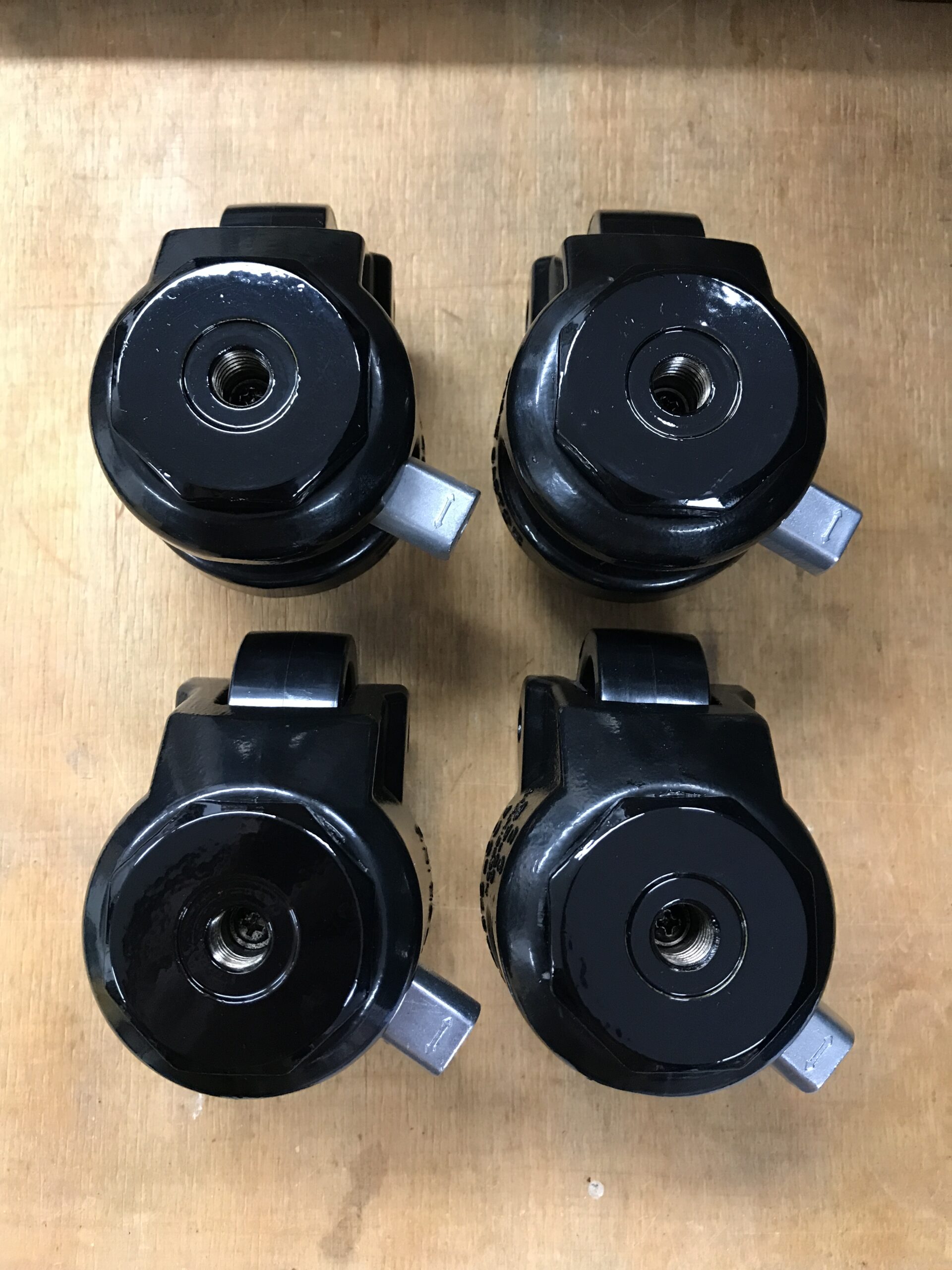
This solution is sold for workbenches and laboratory equipment, but the feet are also very well suited for my intended use. The maximum load capacity of 1000 kg with four feet is also well dimensioned, which is also the limit of the cabinet. The only thing I didn’t like was the yellow color of the hexagon for countering the M12 thread, so I painted it glossy black to match the rest of the foot: