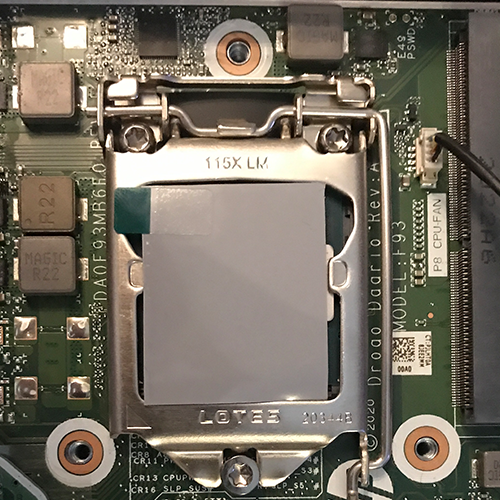
Here, too, I plan to use a Honeywell thermal interface pad, again the PTM7950, again from AliExpress. I don’t intend to replace the TIM on this mini-servers in the next few years, so a thermal interface pad makes sense.
This time, I bought an 80 x 40 mm pad, cooled it slightly, and cut it down to about 30 mm wide. I did that twice, which leaves about 20 mm of pad – that would even be enough for a smaller chip.
I documented how to apply the pad the first time I installed one; the only difference is that this time I pre-cooled it. That actually helped: peeling off the first film was a lot easier. However, the adhesion to the heat spreader was even worse.
So, as a next improvement, I would pre-cool it again, then peel off the first sheet from the pad and wait until the pad has reached room temperature again. Only then would I try to peel off the second sheet. Even so, the process isn’t fun even on the second and third tries.
Photos of the pads being applied
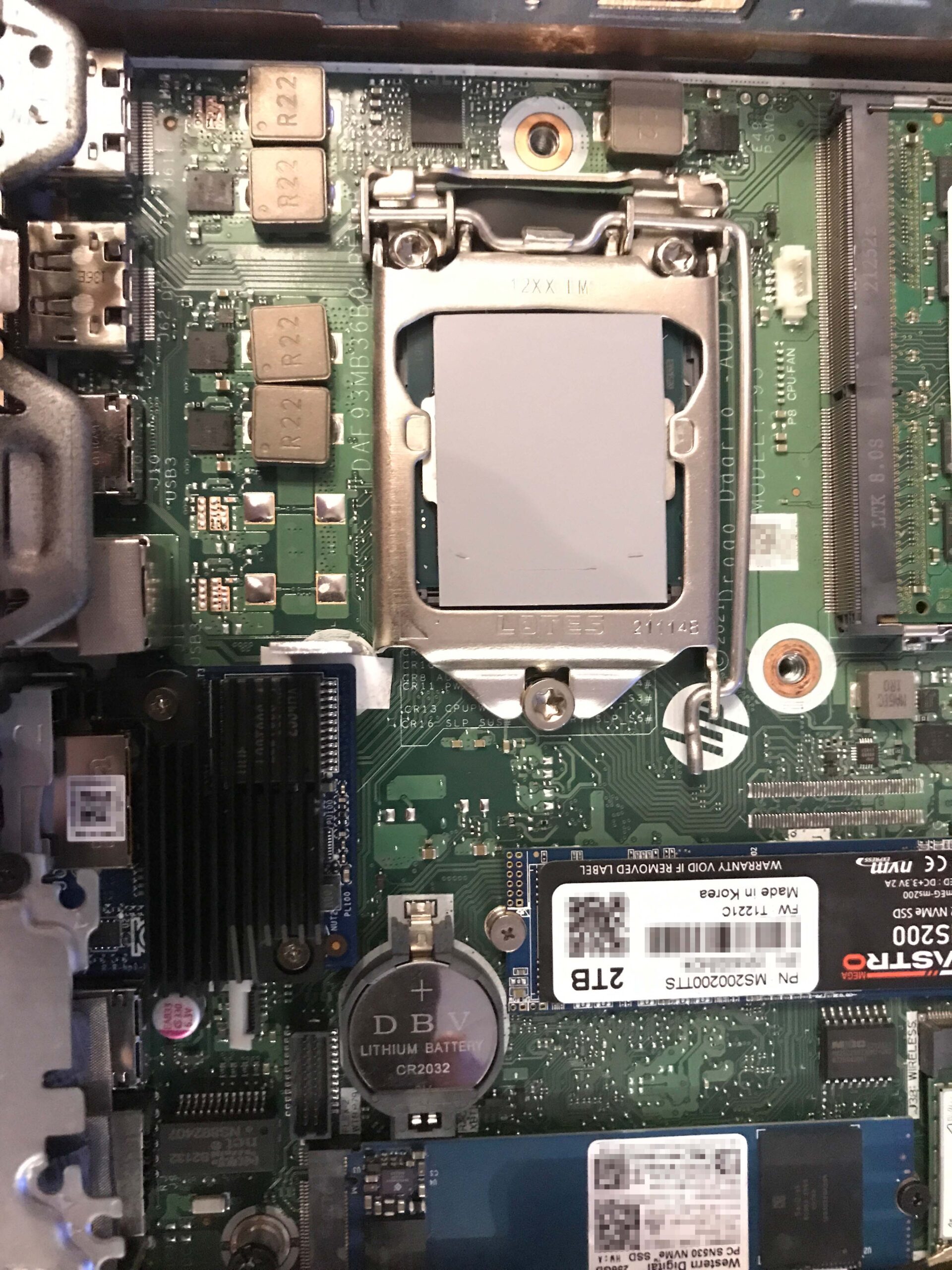
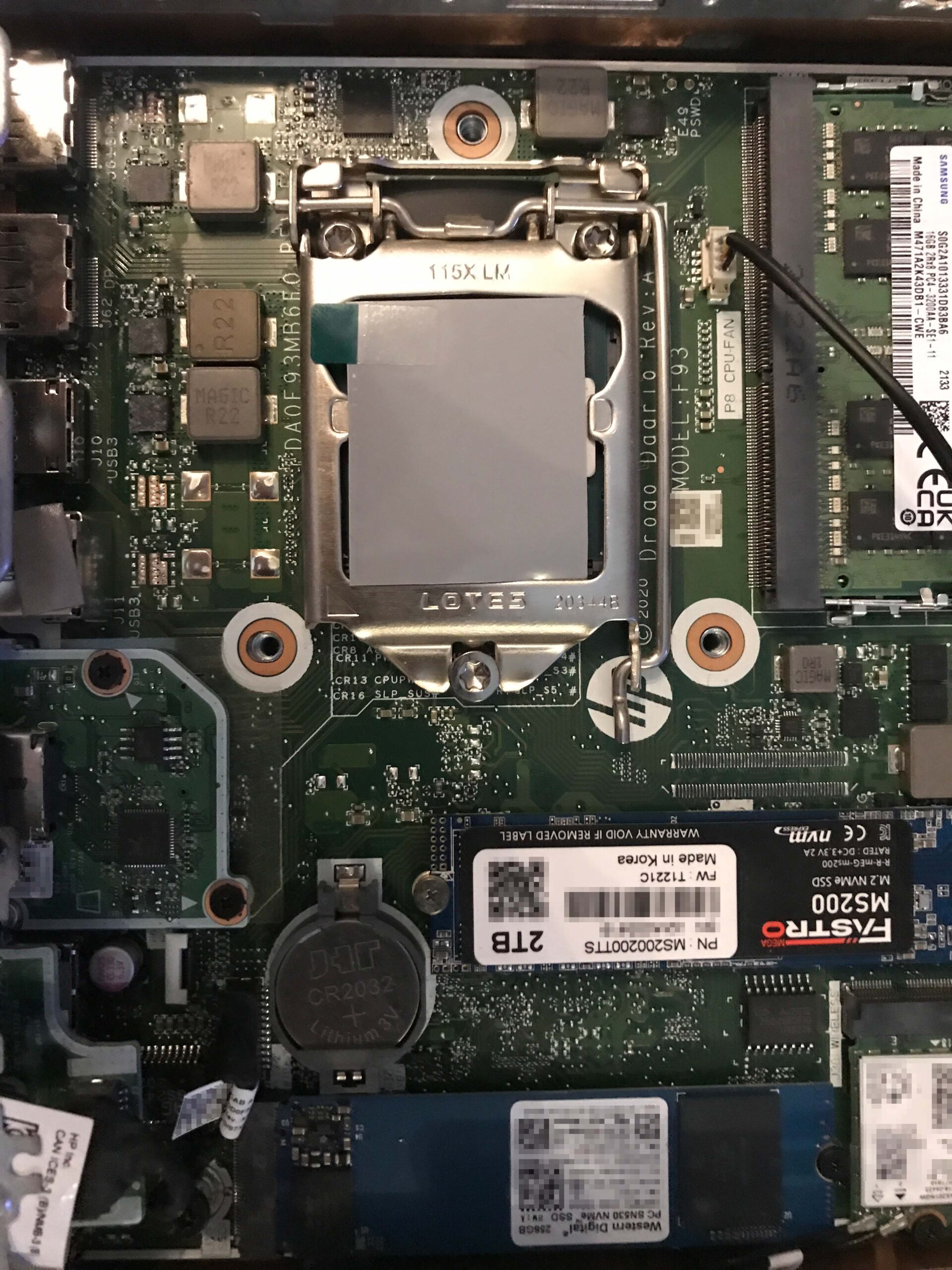
Comparative measurements: MX-4 / PTM7950
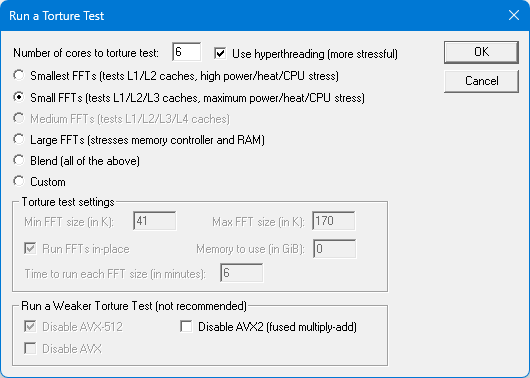
On the unmodified mini-PC, I performed meaningful comparative tests using Arctic MX-4 and Honeywell PTM7950 to demonstrate the difference. Here, too, direct-die cooling would be optimal rather than cooling via the heat spreader, and several hot-cold cycles were performed to ensure the thermal pad functioned properly. I used Prime95 with Small FFTs and AVX as the test load.
The three values in the table, from left to right, are: Minimum, Maximum, and Average. The values stated are in degrees Celsius.

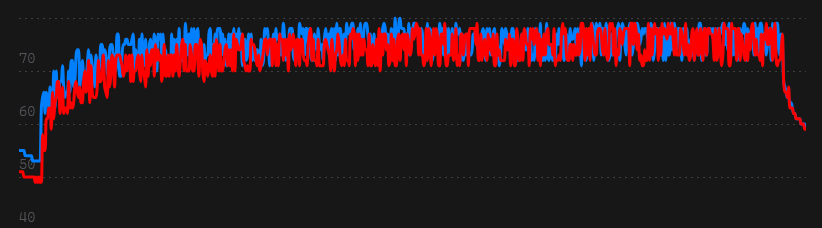
The pad improves the average by a full 1.5°C – not bad, all things considered.
Comparative measurements of both mini-PCs with the PTM7950
It’s also interesting to note the differences between the two PCs, due to the modified cooler and the apparently lower contact pressure.
The three values in the table, from left to right, are: Minimum, Maximum, and Average. The values stated are in degrees Celsius.

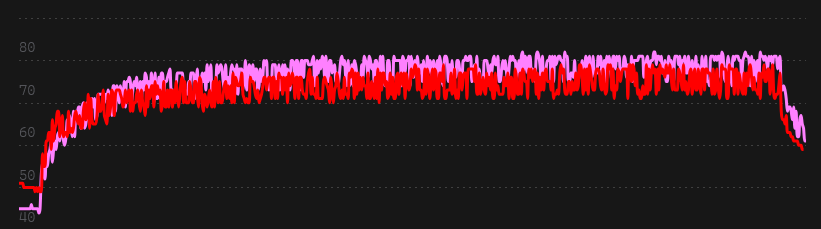
The modified cooler, which doesn’t seal perfectly, runs just under 3°C hotter. I would have expected worse, so I’m perfectly fine with that.