This post from ServeTheHome essentially presents the ideal networking solution for a Proxmox mini-PC host: A suitable HP FlexIO v2 module for 10 Gigabit Ethernet, featuring the highly power-efficient AQC113 controller from Marvell / Aquantia (HP part number 56Q71AA), which also supports the intermediate speeds of 2.5 and 5 GbE!
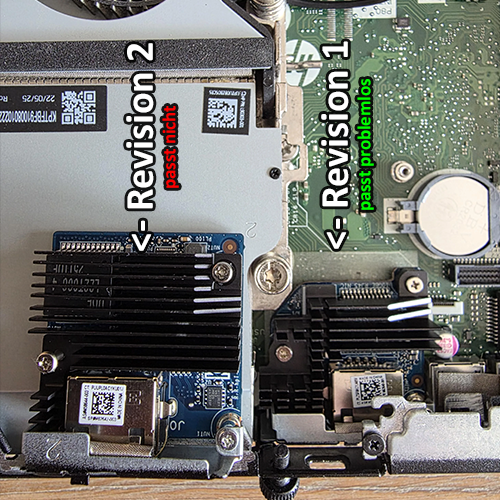
After initial excitement about the existence of this module, disillusionment set in: it’s expensive. Roughly on par with Synology – around €120–150 for a module. On top of that, after reading the comments under this STH post, it became clear that there is a first and second revision of this module, and the second revision – which is now almost exclusively available – NO LONGER fits into the Mini PCs!
What’s really annoying, though, is that the part number (56Q71AA) hasn’t changed at HP; both revisions have the same number. So it’s impossible to specifically buy the first revision, which would simply fit but apparently had certain issues and was therefore revised, without seeing actual photos of the item.
Too bad.
A 10 GbE port and the built-in 1 GbE Ethernet port would be really great. Especially since our connection to the media files also runs through a 10 GbE switch, which is connected to the DiskStation DS1819+, which has also recently been upgraded to 10 GbE. So this module would be technically perfect for our use case; the hard drives and SSDs in the NAS or mini-PC could operate at full capacity for the first time ever.
So what is the problem with the newer version – what exactly doesn’t fit?
The module covers a mounting point on the CPU cooler in such a way that it can no longer be properly secured or even installed at all. Electrically, it should still work, as the connector and mounting screws are in the same position. So it should be a purely mechanical issue.
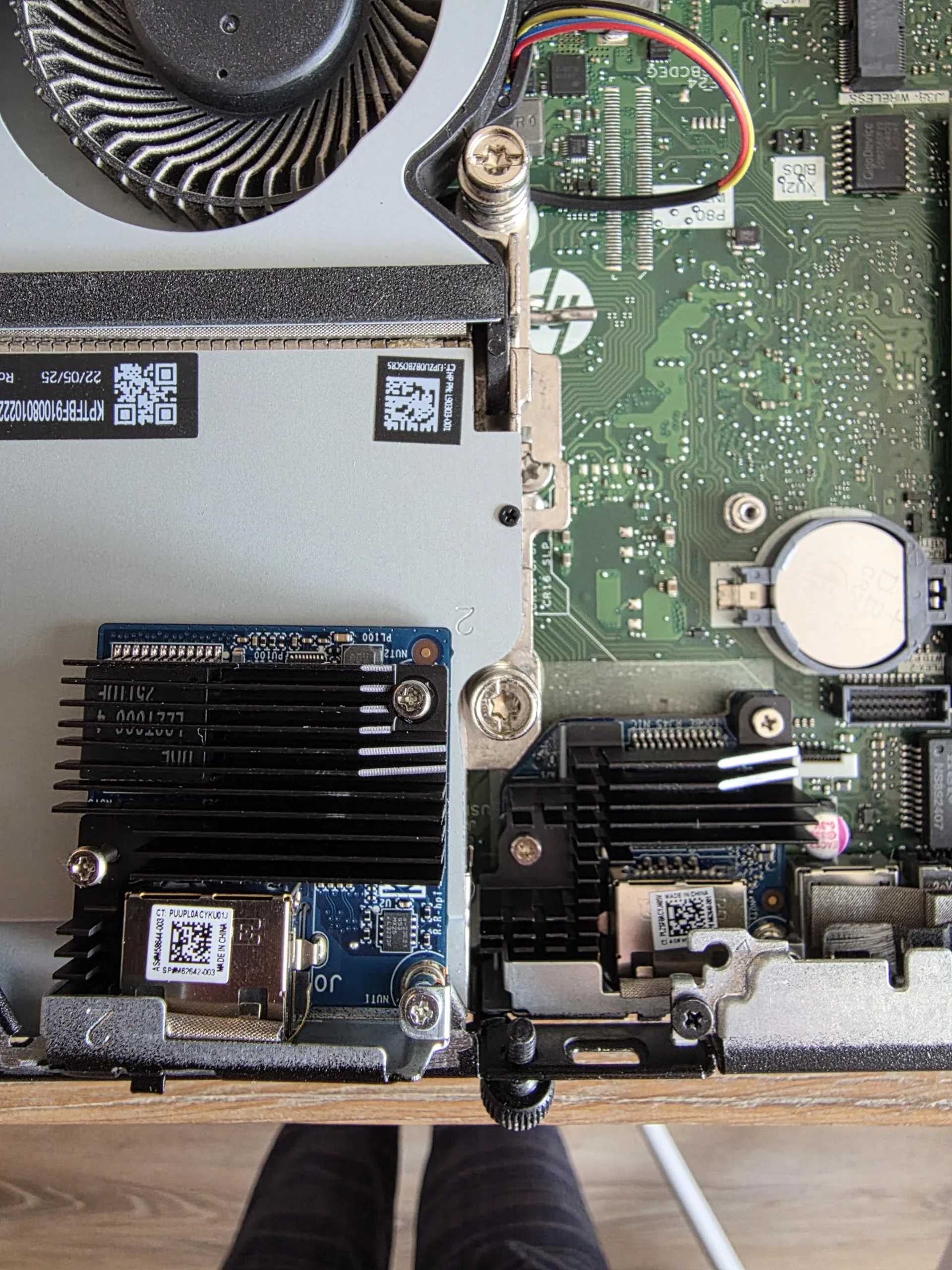
Well done, HP. But why?
After taking a closer look, I decided to try and get the whole thing working anyway. 10 GbE is just too good to pass up.
At Jacob Elektronik, I found the module as a B-grade item for just under €100 and took the risk of receiving the “wrong” module. That’s exactly what happened – Revision 2 arrived, and it doesn’t fit. Next, I looked for ways to make the whole thing work together anyway.